 Ban dino nga? Kiis
 Xeexu dino
 Rawante dino
 Fo yu ndaw yu dino
 Albomu sitikeer
 Limu TOP yu dino
 Bett ma!
Aletopelta
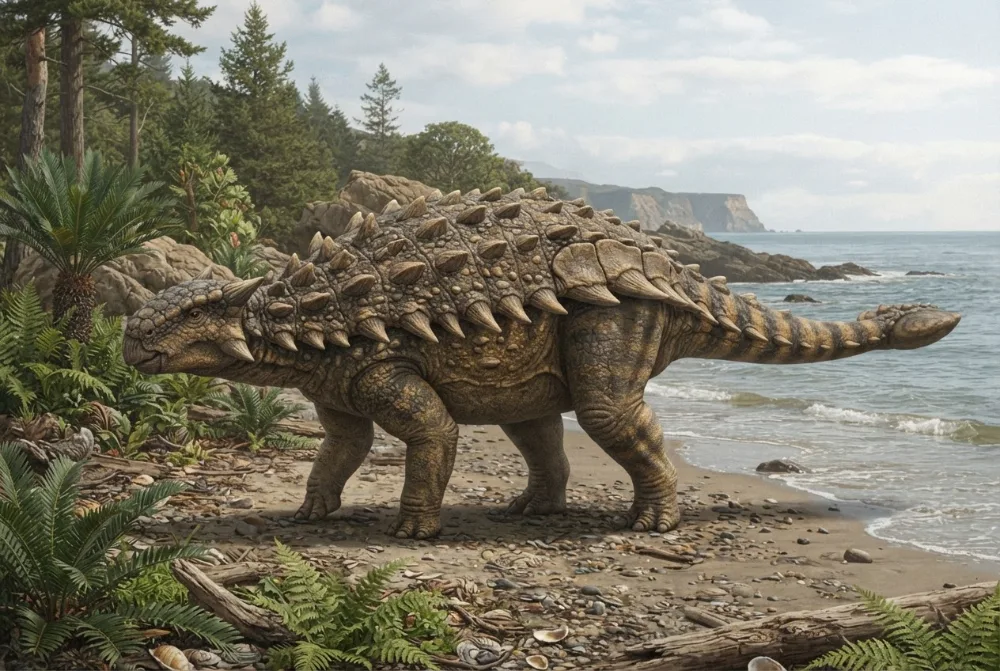
Aletopelta was an armoured dinosaur that lived near the coast of California about 75 million years ago. It was covered in bony plates and had a big shield of bone over its hips. After it died, its body floated out to sea and became a tiny reef on the ocean floor!1
Kañ la dundoon?
Naka la réyoon?
Naka la guddoon?
Naka la kawewoon?
jortu
Naka la diisoon?

 gudd ni 6 xaj, bakkan ba geen🍌gudd ni 33 banaana yu ñu topp-toppalediis ni 100 xaj🍉diis ni 400 xaal🎒diis ni 2,5 klaas yu mat yu xale yu lekkool🐻❄️diis ni 4 uurs yu weex🏃mënoon na daw 100 meetar ci 24 segond (nit ki gën a gaaw dafay soxla 9,6)
Naka la Aletopelta réyoon, bu ñu ko méngalee ak YAW?
Ay kalkil rekk ci sa navigatëer. Dara du ñu denc, dara du ñu yónne fenn.
Naka la gaawoon?


Xibaar yu neex
Aletopelta's body was carried out to sea by a stream, and it sank upside down, becoming a mini reef where oysters and other sea creatures attached to its bones.1
Sharks like Squalicorax and Scapanorhynchus scavenged the dead dinosaur, leaving hollow bones and shallow pits in its armour plates.1
The name Aletopelta means 'wanderer shield' because the tectonic plate carrying its fossils drifted north from near Mexico to California over millions of years.1
Aletopelta had a pelvic shield made of many six-sided bony plates that were fused together.1
The only known skeleton of Aletopelta might be from a young animal, because some of its bones were not fully fused.1
Laaj yi ñu gën a laaj ci Aletopelta
?How big was Aletopelta?
About 5 metres (16 feet) long and weighed about 2 tonnes (4,409 lbs). Some scientists have estimated it at 6 metres (19.7 feet) long.1
?What did Aletopelta eat?
It was a plant-eater. It foraged for plants along the edges of rivers and estuaries.3
Ngir ñi xam dino lool
- Turu xam-xam
- Aletopelta
- Ku ko tudde
- Ford and Kirkland 20015
- Kurél
- Dino yu am kiiraay
- Njaboot / klad
- Ankylosauridae5
- Klasifikasiyoŋ
- Ornithischia > Ankylosauria > Ankylosauridae > Thyreophora5
- Màggaayu doj yi
- 84 ba 72 milyoŋ at (Campanian)5
- Formasiyoŋi doj
- Point Loma5
- Réew yi
- Amerig5
- Fosil yu ñu gis
- 1 ci The Paleobiology Database5
- Gisees
- In 1987, construction workers digging a sewage pipe near Carlsbad, California, uncovered the skeleton. It was first described in 1996 by Thomas Deméré and Walter Coombs, and officially named Aletopelta coombsi in 2001 by Tracy Ford and James Kirkland.1
- Ñu ngi koy werante ba tey
- Scientists still debate whether Aletopelta was an ankylosaurid or a nodosaurid, and some have even called it a nomen dubium (doubtful name) because its fossils are incomplete.12
Fa xibaar yi jóge
- Aletopelta (en.wikipedia.org)
- PBDB Taxon (paleobiodb.org)
- The Nat | Ankylosaur (sdnhm.org)
- Ankylosaur Reef (smithsonianmag.com)
- Aletopelta in The Paleobiology Database (CC BY 4.0): at, béréb yi, formasiyoŋi doj, klasifikasiyoŋ.
Bépp xibaar ci xët wii am na lim bu wone fa mu jóge. Su nu juumee, baal nu, nun ñu bëgg dino lanu, du ab sërnaalu xam-xam. Wax nu ko ci [email protected] nu defar ko.
 Rex xiif na! Dino Wiki, mbiru ab baay la ngir doomam ju góor ju bëgg dinosoor, ci neen te amul kaamuñaate, amul tracker. Mag ñi mën nañu jox Rex tuuti ñam ngir dimbali ko mu des ci internet.Dundal Rex
 Ankylosaurus
 Sauropelta
 Pinacosaurus
 Scutellosaurus
 Struthiosaurus
 Euoplocephalus
 Tyrannosaurus
 Triceratops
 Velociraptor
 Spinosaurus
 Parasaurolophus
 Pteranodon