 Ban dino nga? Kiis
 Xeexu dino
 Rawante dino
 Fo yu ndaw yu dino
 Albomu sitikeer
 Limu TOP yu dino
 Bett ma!
Alwalkeria
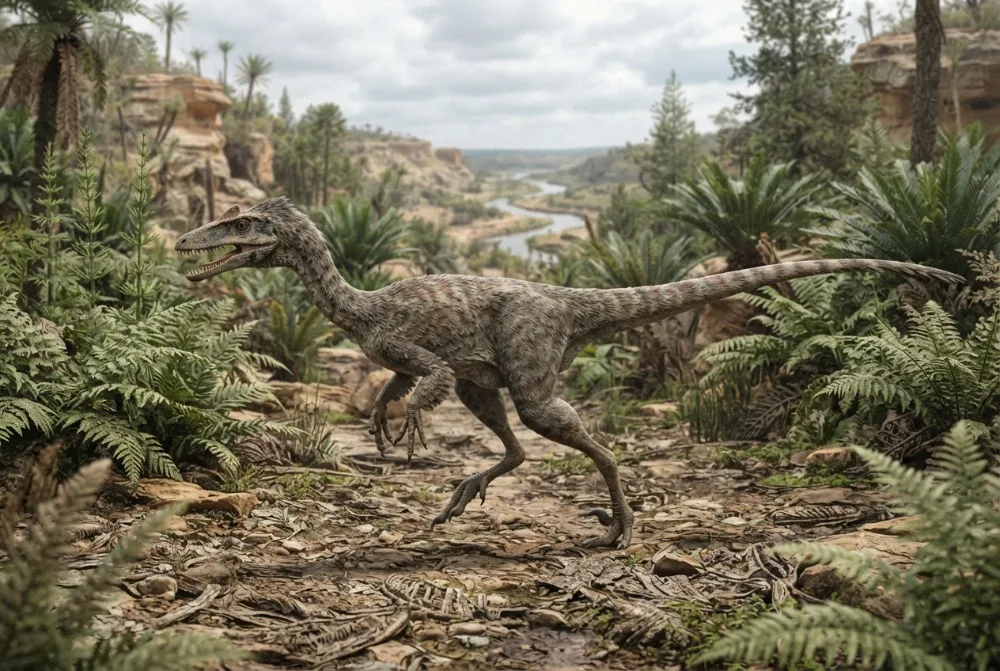
Alwalkeria was a small, early reptile that lived during the Late Triassic in what is now India. It is known from only a few bones, and scientists are still debating whether it was a dinosaur or a close relative.1
Kañ la dundoon?
Naka la réyoon?
Naka la guddoon?
Naka la kawewoon?
Naka la diisoon?
 gudd ni 3 muusu kër, bakkan ba geen🍌gudd ni 8 banaana yu ñu topp-toppalelu tollu ci diisaayu muusu kër🍌diis ni 42 banaana🪑tuuti ba mën a dox ci suufu siis🏃mënoon na daw 100 meetar ci 13 segond (nit ki gën a gaaw dafay soxla 9,6)
Naka la Alwalkeria réyoon, bu ñu ko méngalee ak YAW?
Ay kalkil rekk ci sa navigatëer. Dara du ñu denc, dara du ñu yónne fenn.
Naka la gaawoon?


Xibaar yu neex
Alwalkeria was first named Walkeria in 1987, but that name was already used for a tiny sea animal, so it was changed to Alwalkeria in 1994.1
The only known fossil of Alwalkeria is a jumble of bones from different animals, including a skull that may belong to a crocodile relative and leg bones that might be from a dinosaur.1
Alwalkeria lived about 235 to 228 million years ago, during the Carnian stage of the Triassic period.1
The leg bone of Alwalkeria looks a bit like those of early dinosaurs, but some scientists think it might belong to a different group of reptiles called pseudosuchians.1
Alwalkeria is named after British paleontologist Alick Walker, who studied ancient reptiles.1
Because the fossils are so mixed up, scientists are not sure what Alwalkeria ate or how big it was.1
Laaj yi ñu gën a laaj ci Alwalkeria
?Was Alwalkeria a dinosaur?
Yes, Alwalkeria is classified as a dinosaur. It is a basal saurischian dinosaur that lived during the Late Triassic.1
?How big was Alwalkeria?
Nobody knows for sure. The only known fossil is a jumble of bones from different animals, so scientists cannot tell how big Alwalkeria was.1
?When did Alwalkeria live?
Alwalkeria lived about 235 to 228 million years ago, during the Carnian stage of the Late Triassic period.1
?Where was Alwalkeria found?
Its fossils were found in the Lower Maleri Formation of Andhra Pradesh, India, in rocks that were once an ancient lake or river.1
Ngir ñi xam dino lool
- Turu xam-xam
- Alwalkeria
- Ku ko tudde
- Chatterjee and Creisler 19944
- Kurél
- Dinosoor yu jëkk yi
- Njaboot / klad
- Saurischia4
- Màggaayu doj yi
- 237 ba 227 milyoŋ at (Carnian)4
- Formasiyoŋi doj
- Maleri4
- Réew yi
- End4
- Fosil yu ñu gis
- 1 ci The Paleobiology Database4
- Gisees
- Alwalkeria was discovered in 1974 by Sankar Chatterjee in the Maleri Formation of Andhra Pradesh, India. It was first described in 1987 as Walkeria, but the name was changed in 1994 because it was already taken.1
- Ñu ngi koy werante ba tey
- Scientists are still debating whether Alwalkeria was a dinosaur, a close relative, or a mix of bones from different animals.1
Fa xibaar yi jóge
- Alwalkeria (en.wikipedia.org)
- Biology:Alwalkeria - HandWiki (handwiki.org)
- Alwalkeria | Small Early Theropod Dinosaur from the Late Triassic (thedinosaurs.org)
- Alwalkeria in The Paleobiology Database (CC BY 4.0): at, béréb yi, formasiyoŋi doj, klasifikasiyoŋ.
Bépp xibaar ci xët wii am na lim bu wone fa mu jóge. Su nu juumee, baal nu, nun ñu bëgg dino lanu, du ab sërnaalu xam-xam. Wax nu ko ci [email protected] nu defar ko.
 Rex xiif na! Dino Wiki, mbiru ab baay la ngir doomam ju góor ju bëgg dinosoor, ci neen te amul kaamuñaate, amul tracker. Mag ñi mën nañu jox Rex tuuti ñam ngir dimbali ko mu des ci internet.Dundal Rex
 Herrerasaurus
 Tawa
Tawa Chindesaurus
 Nyasasaurus
 Staurikosaurus
 Daemonosaurus
 Nothosaurus
 Massospondylus
 Plateosaurus
 Coelophysis
 Podokesaurus
 Simosaurus