 Ban dino nga? Kiis
 Xeexu dino
 Rawante dino
 Fo yu ndaw yu dino
 Albomu sitikeer
 Limu TOP yu dino
 Bett ma!
Bonapartesaurus
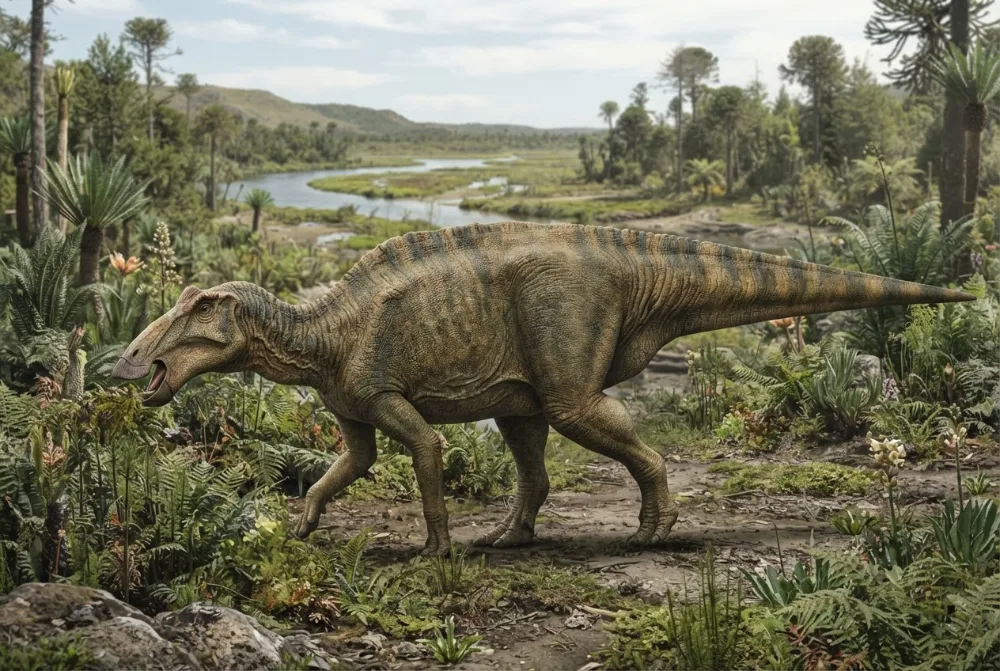
Bonapartesaurus was a duck-billed dinosaur that lived in what is now Argentina, about 72 to 66 million years ago. It walked on two legs or all fours and used its wide, toothless beak to snip off plants. This dinosaur was a hadrosaur, a group known for their amazing teeth that could grind up tough leaves.41
Kañ la dundoon?
Naka la réyoon?
Naka la guddoon?
Naka la kawewoon?
jortu
Naka la diisoon?

 gudd ni 7 xaj, bakkan ba geen🍌gudd ni 38 banaana yu ñu topp-toppalediis ni 92 xaj🍉diis ni 370 xaal🧸diis ni 97 xale yu maternel🎒diis ni 58 xale yu lekkool🐻❄️diis ni 4 uurs yu weex🏃mënoon na daw 100 meetar ci 13 segond (nit ki gën a gaaw dafay soxla 9,6)
Naka la Bonapartesaurus réyoon, bu ñu ko méngalee ak YAW?
Ay kalkil rekk ci sa navigatëer. Dara du ñu denc, dara du ñu yónne fenn.
Naka la gaawoon?


Xibaar yu neex
Bonapartesaurus had very long neural spines on its tail vertebrae, up to four times the height of the backbone center. This may have supported a tall tail fin or sail.2
Its name honors José Bonaparte, a famous Argentine paleontologist who discovered many South American dinosaurs.1
The only known skeleton is a partial, articulated specimen that includes parts of the spine, hips, legs, and feet.1
Bonapartesaurus belongs to the group Saurolophini, which includes duck-billed dinosaurs like Saurolophus and Prosaurolophus.42
Scientists think Bonapartesaurus or its ancestors migrated from North America to South America during the Late Cretaceous.2
Laaj yi ñu gën a laaj ci Bonapartesaurus
?How big was Bonapartesaurus?
No exact size is given in the sources, but it was a medium-sized hadrosaur, probably around 6 to 8 metres long based on related duck-billed dinosaurs.12
?What did Bonapartesaurus eat?
It was a herbivore that ate plants. It used its wide, toothless beak to snip off leaves and branches, and its cheek teeth ground up tough plant material.1
Ngir ñi xam dino lool
- Turu xam-xam
- Bonapartesaurus
- Ku ko tudde
- Cruzado-Caballero and Powell 20174
- Kurél
- Gémmiñu kanaar
- Njaboot / klad
- Hadrosauridae4
- Klasifikasiyoŋ
- Ornithischia > Ornithopoda > Iguanodontia > Hadrosauridae4
- Màggaayu doj yi
- 72 ba 66 milyoŋ at (Maastrichtian)4
- Formasiyoŋi doj
- Allen4
- Réew yi
- Arsantin4
- Fosil yu ñu gis
- 1 ci The Paleobiology Database4
- Gisees
- The fossils were first dug up in 1984 by paleontologist Jaime Powell and his team. In 2017, scientists Cruzado-Caballero and Powell named the new genus Bonapartesaurus after studying the bones.14
- Ñu ngi koy werante ba tey
- Scientists are not sure exactly how Bonapartesaurus is related to other duck-billed dinosaurs, because its skeleton is incomplete.2
Fa xibaar yi jóge
- Bonapartesaurus (en.wikipedia.org)
- Bonapartesaurus rionegrensis, a new hadrosaurine dinosaur from South America: implications for phylogenetic and biogeographic relations with North America (rid.unrn.edu.ar)
- Bonapartesaurus rionegrensis | Dinosaur Database by DinoAnimals.com (dinoanimals.com)
- Bonapartesaurus in The Paleobiology Database (CC BY 4.0): at, béréb yi, formasiyoŋi doj, klasifikasiyoŋ.
Bépp xibaar ci xët wii am na lim bu wone fa mu jóge. Su nu juumee, baal nu, nun ñu bëgg dino lanu, du ab sërnaalu xam-xam. Wax nu ko ci [email protected] nu defar ko.
 Rex xiif na! Dino Wiki, mbiru ab baay la ngir doomam ju góor ju bëgg dinosoor, ci neen te amul kaamuñaate, amul tracker. Mag ñi mën nañu jox Rex tuuti ñam ngir dimbali ko mu des ci internet.Dundal Rex
 Parasaurolophus
 Edmontosaurus
 Saurolophus
 Hypacrosaurus
 Corythosaurus
 Kritosaurus
 Tyrannosaurus
 Triceratops
 Velociraptor
 Spinosaurus
 Ankylosaurus
 Pteranodon