 Ban dino nga? Kiis
 Xeexu dino
 Rawante dino
 Fo yu ndaw yu dino
 Albomu sitikeer
 Limu TOP yu dino
 Bett ma!
Dilong
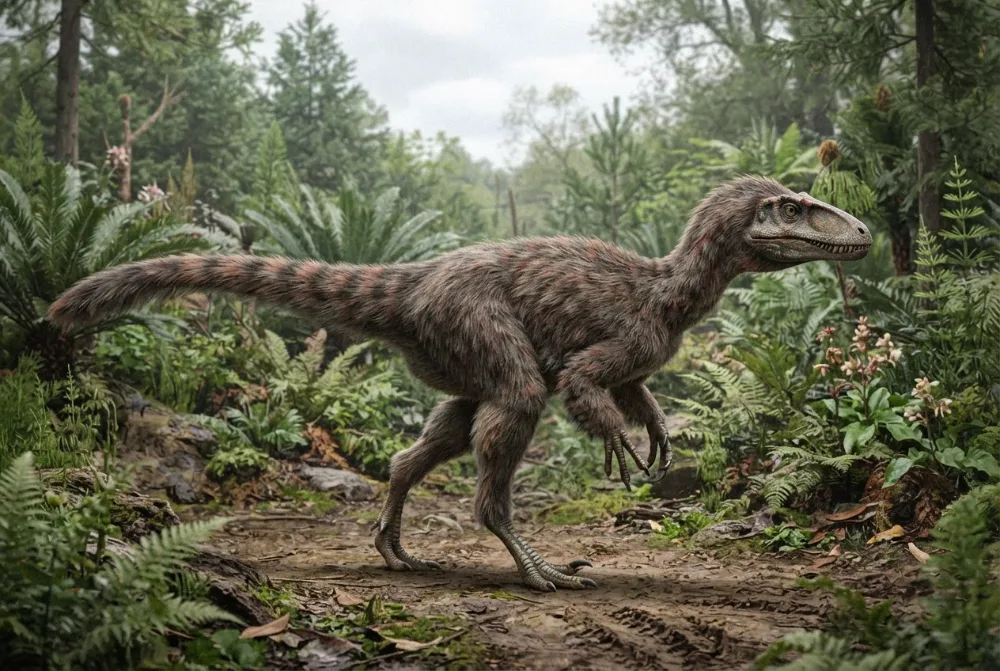
Dilong was a small, early relative of the mighty T. rex. It lived in China about 125 million years ago and had long arms with three-fingered hands. Some fossils even show that Dilong had fuzzy, feather-like coverings called protofeathers.21
Kañ la dundoon?
Naka la réyoon?
Naka la guddoon?
Naka la kawewoon?
jortu
Naka la diisoon?
 gudd ni 3 muusu kër, bakkan ba geen🍌gudd ni 9 banaana yu ñu topp-toppale🍌diis ni 83 banaana🏃mënoon na daw 100 meetar ci 10 segond (nit ki gën a gaaw dafay soxla 9,6)
Naka la Dilong réyoon, bu ñu ko méngalee ak YAW?
Ay kalkil rekk ci sa navigatëer. Dara du ñu denc, dara du ñu yónne fenn.
Naka la gaawoon?


Xibaar yu neex
Dilong is the earliest known undisputed tyrannosauroid dinosaur.2
Dilong had a long, low skull and a less robust build compared to later tyrannosaurs.1
One specimen of Dilong preserves filamentous protofeathers on the tail and near the jaw, showing that early tyrannosaurs had fuzzy coverings.21
Dilong had relatively long arms with three-fingered hands, unlike the tiny arms of later tyrannosaurs like T. rex.21
Its hind legs were built for running, with a tibia longer than the femur.1
Dilong's name comes from the Chinese words for 'emperor' and 'dragon'.1
Laaj yi ñu gën a laaj ci Dilong
?How big was Dilong?
About 1.6 to 2 metres (5 to 6.5 feet) long and weighed around 5 to 10 kilograms (11 to 22 pounds). That is about the size of a large dog.45
?Did Dilong have feathers?
Yes. Some Dilong fossils show filamentous protofeathers, which are simple, fuzzy coverings. These were not for flying, but probably kept it warm.42
?What did Dilong eat?
Dilong was a meat-eater. It probably hunted small animals like lizards, mammals and birds, using its D-shaped front teeth and three-fingered hands to hold prey.4
?Was Dilong related to T. rex?
Yes, Dilong was an early, small relative of Tyrannosaurus rex. It belonged to the same group called tyrannosauroids, but lived about 125 million years earlier.45
?How fast could Dilong run?
Probably not very fast. Its legs were short for a tyrannosaur, which suggests it was not a speedy runner.4
Ngir ñi xam dino lool
- Turu xam-xam
- Dilong
- Ku ko tudde
- Xu et al. 20046
- Kurél
- Tiranosoor yi
- Njaboot / klad
- Tyrannosauroidea6
- Klasifikasiyoŋ
- Theropoda > Tyrannosauroidea6
- Màggaayu doj yi
- 126 ba 120 milyoŋ at (Barremian / Aptian)6
- Formasiyoŋi doj
- Yixian6
- Réew yi
- Siin6
- Fosil yu ñu gis
- 2 ci The Paleobiology Database6
- Gisees
- Dilong was named in 2004 by Xu Xing and colleagues based on fossils from the Yixian Formation in Liaoning, China. The holotype specimen is a semi-articulated skeleton with an almost complete skull.21
- Ñu ngi koy werante ba tey
- Scientists debate whether some specimens referred to Dilong might actually belong to a second, closely related species.1
Fa xibaar yi jóge
- Basal tyrannosauroids from China and evidence for protofeathers in (ivpp.cas.cn)
- Basal tyrannosauroids from China and evidence for protofeathers in tyrannosauroids | Nature (nature.com)
- Dilong paradoxus (en.wikipedia.org)
- Dinosaur - Dilong paradoxus - The Australian Museum (australian.museum)
- Dilong | Description, Size, & Facts | Britannica (britannica.com)
- Dilong in The Paleobiology Database (CC BY 4.0): at, béréb yi, formasiyoŋi doj, klasifikasiyoŋ.
Bépp xibaar ci xët wii am na lim bu wone fa mu jóge. Su nu juumee, baal nu, nun ñu bëgg dino lanu, du ab sërnaalu xam-xam. Wax nu ko ci [email protected] nu defar ko.
 Rex xiif na! Dino Wiki, mbiru ab baay la ngir doomam ju góor ju bëgg dinosoor, ci neen te amul kaamuñaate, amul tracker. Mag ñi mën nañu jox Rex tuuti ñam ngir dimbali ko mu des ci internet.Dundal Rex
 Tyrannosaurus
 Tarbosaurus
 Albertosaurus
 Daspletosaurus
 Gorgosaurus
 Alectrosaurus
 Stegosaurus
 Iguanodon
 Archaeopteryx
 Giganotosaurus
 Microraptor
 Deinonychus