 Ban dino nga? Kiis
 Xeexu dino
 Rawante dino
 Fo yu ndaw yu dino
 Albomu sitikeer
 Limu TOP yu dino
 Bett ma!
Ganzhousaurus
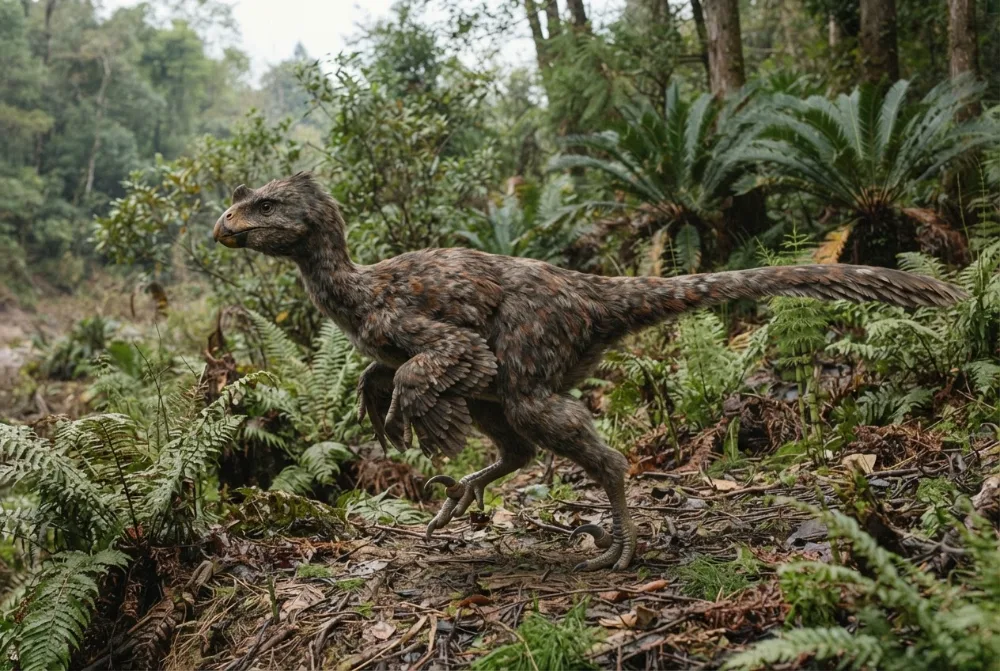
Ganzhousaurus was a small, bird-like dinosaur that lived in southern China near the end of the Age of Dinosaurs. It had a beaky mouth and probably used its strong claws and teeth to eat plants, seeds, and maybe even small animals.14
Kañ la dundoon?
Naka la réyoon?
Naka la guddoon?
Naka la kawewoon?
jortu
 gudd ni 4 muusu kër, bakkan ba geen🍌gudd ni 11 banaana yu ñu topp-toppale🏃mënoon na daw 100 meetar ci 8 segond (nit ki gën a gaaw dafay soxla 9,6)
Naka la Ganzhousaurus réyoon, bu ñu ko méngalee ak YAW?
Ay kalkil rekk ci sa navigatëer. Dara du ñu denc, dara du ñu yónne fenn.
Naka la gaawoon?


Xibaar yu neex
Ganzhousaurus lived alongside at least four other oviraptorid dinosaurs, including Banji long and Nankangia jiangxiensis, all in the same area.1
Its lower jaw had a shallow groove and a special window (the external mandibular fenestra) that was split into two parts by a bone.2
The name Ganzhousaurus means 'Ganzhou lizard' after the city in China where its fossils were found.1
Ganzhousaurus lived during the very end of the Cretaceous Period, about 72 to 66 million years ago.1
Scientists are not sure exactly where Ganzhousaurus fits in the oviraptorid family tree; some think it is related to Oviraptor, others to the 'ingeniine' group.1
This dinosaur probably had feathers, like many of its oviraptorid relatives, helping it stay warm and maybe even show off.1
Laaj yi ñu gën a laaj ci Ganzhousaurus
?How big was Ganzhousaurus?
Its exact size is not known from the sources, but it was a small oviraptorid dinosaur, similar in size to other members of its group.12
?What did Ganzhousaurus eat?
Ganzhousaurus was probably mostly herbivorous, eating plants and seeds with its beaky mouth and strong claws.1
?Did Ganzhousaurus have feathers?
Yes, like many of its oviraptorid relatives, Ganzhousaurus probably had feathers to keep warm and maybe for display.1
Ku tas léeb yu dul dëgg
Léeb: Some people think all oviraptorids were egg thieves.
Dëgg: Ganzhousaurus and its relatives probably ate plants and small animals, not just eggs. Their beaks were well-suited for crushing seeds and tough plants.1
Ngir ñi xam dino lool
- Turu xam-xam
- Ganzhousaurus
- Ku ko tudde
- Wang et al. 20134
- Kurél
- Dino yu am dun yu doy waar
- Njaboot / klad
- Oviraptoridae4
- Klasifikasiyoŋ
- Theropoda > Oviraptorosauria4
- Màggaayu doj yi
- 72 ba 66 milyoŋ at (Maastrichtian)4
- Réew yi
- Siin4
- Fosil yu ñu gis
- 1 ci The Paleobiology Database4
- Gisees
- Ganzhousaurus was named in 2013 by scientists Shuo Wang, Chengkai Sun, Corwin Sullivan, and Xing Xu, based on a single skeleton found in the Nanxiong Formation of southern China.12
- Ñu ngi koy werante ba tey
- Scientists still debate whether Ganzhousaurus was more closely related to Oviraptor or to the 'ingeniine' group of oviraptorids.1
Fa xibaar yi jóge
- Ganzhousaurus (en.wikipedia.org)
- A new oviraptorid (Dinosauria: Theropoda) from the Upper Cretaceous of southern China (mapress.com)
- Ganzhousaurus - (dinosanddesigns.com)
- Ganzhousaurus in The Paleobiology Database (CC BY 4.0): at, béréb yi, formasiyoŋi doj, klasifikasiyoŋ.
Bépp xibaar ci xët wii am na lim bu wone fa mu jóge. Su nu juumee, baal nu, nun ñu bëgg dino lanu, du ab sërnaalu xam-xam. Wax nu ko ci [email protected] nu defar ko.
 Rex xiif na! Dino Wiki, mbiru ab baay la ngir doomam ju góor ju bëgg dinosoor, ci neen te amul kaamuñaate, amul tracker. Mag ñi mën nañu jox Rex tuuti ñam ngir dimbali ko mu des ci internet.Dundal Rex
 Therizinosaurus
 Oviraptor
 Chirostenotes
 Citipes
 Leptorhynchos
 Avimimus
 Tyrannosaurus
 Triceratops
 Velociraptor
 Spinosaurus
 Ankylosaurus
 Parasaurolophus