 Ban dino nga? Kiis
 Xeexu dino
 Rawante dino
 Fo yu ndaw yu dino
 Albomu sitikeer
 Limu TOP yu dino
 Bett ma!
Imperobator
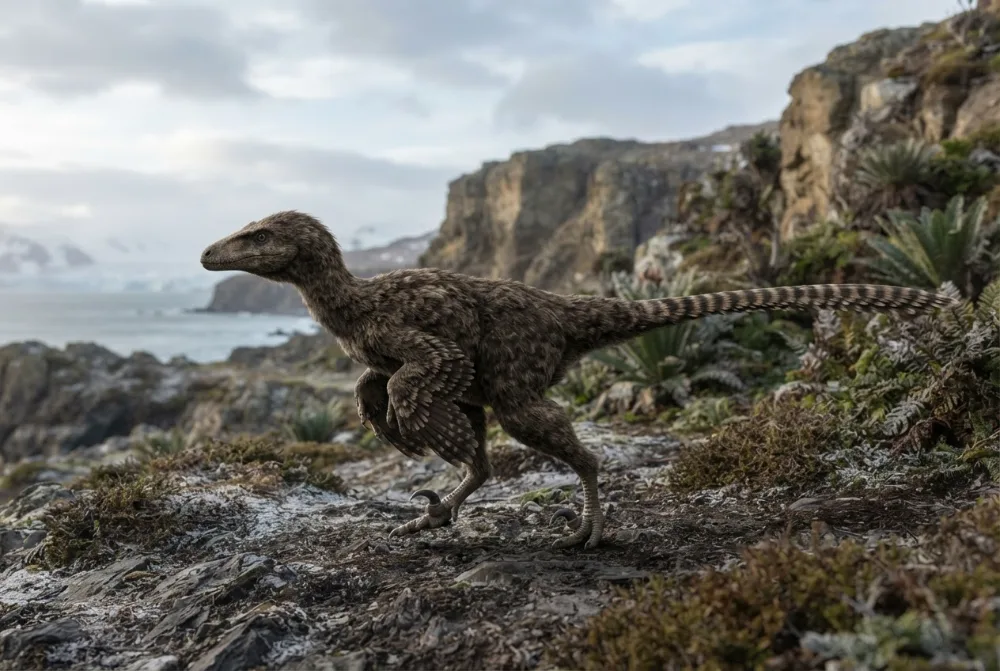
Imperobator was a meat-eating dinosaur that lived in Antarctica during the Late Cretaceous. It was one of only two non-bird theropods known from that icy continent. Scientists think it was a close cousin of the famous raptors like Velociraptor.1
Kañ la dundoon?
Naka la réyoon?
Naka la guddoon?
Naka la kawewoon?
 gudd ni 3 xaj, bakkan ba geen🍌gudd ni 17 banaana yu ñu topp-toppale🏃mënoon na daw 100 meetar ci 7,2 segond (nit ki gën a gaaw dafay soxla 9,6)
Naka la Imperobator réyoon, bu ñu ko méngalee ak YAW?
Ay kalkil rekk ci sa navigatëer. Dara du ñu denc, dara du ñu yónne fenn.
Naka la gaawoon?


Xibaar yu neex
Imperobator is one of only two non-avian theropod dinosaurs ever found in Antarctica.1
Its foot did not have the famous sickle claw that most raptors have, which surprised scientists.1
The first fossils were discovered in 2003 by a team from the University of California Museum of Paleontology.1
Imperobator lived about 71 million years ago, when Antarctica was warmer and covered in forests.1
It shared its home with the ornithopod dinosaur Morrosaurus and the bird Antarcticavis.1
Scientists are still debating whether Imperobator was a true dromaeosaur or a more primitive paravian.1
Laaj yi ñu gën a laaj ci Imperobator
?How big was Imperobator?
Imperobator was about 2 to 3 metres long, similar in size to Deinonychus. It was originally thought to be much larger, like Utahraptor, but later studies showed it was smaller.1
?Did Imperobator have a sickle claw?
No, Imperobator did not have the famous sickle claw on its foot that most raptors have. This surprised scientists and helped them figure out it was not a true dromaeosaur.1
?What did Imperobator eat?
Imperobator was a meat-eating dinosaur. Its teeth were long, curved, and bladed, just like those of other carnivorous paravians.1
?Where was Imperobator found?
Imperobator was found on James Ross Island in Antarctica. The first fossils were discovered in 2003 by a team from the University of California Museum of Paleontology.1
?When did Imperobator live?
Imperobator lived about 71 million years ago, during the Late Cretaceous period. At that time, Antarctica was warmer and covered in forests.1
?Is Imperobator a dinosaur?
Yes, Imperobator is a non-avian theropod dinosaur. It is one of only two non-bird theropods ever found in Antarctica.1
Ku tas léeb yu dul dëgg
Léeb: Imperobator had a sickle claw like Velociraptor.
Dëgg: Imperobator lacked the distinctive sickle claw on its foot, which sets it apart from typical dromaeosaurs.1
Ngir ñi xam dino lool
- Turu xam-xam
- Imperobator
- Ku ko tudde
- Ely and Case 20192
- Kurél
- Raptor yi
- Njaboot / klad
- Dromaeosauridae2
- Klasifikasiyoŋ
- Theropoda > Dromaeosauridae2
- Màggaayu doj yi
- 72 ba 66 milyoŋ at (Maastrichtian)2
- Formasiyoŋi doj
- Snow Hill Island2
- Réew yi
- Antarktik2
- Fosil yu ñu gis
- 1 ci The Paleobiology Database2
- Gisees
- Imperobator was named by Ricardo Ely and Judd Case in 2019. The fossils were first found in 2003 on James Ross Island, Antarctica, and were initially thought to be a dromaeosaur.12
- Ñu ngi koy werante ba tey
- Scientists are not sure whether Imperobator belongs to the dromaeosaur family or to a more primitive group of paravians.1
Fa xibaar yi jóge
- Imperobator (en.wikipedia.org)
- Imperobator in The Paleobiology Database (CC BY 4.0): at, béréb yi, formasiyoŋi doj, klasifikasiyoŋ.
Bépp xibaar ci xët wii am na lim bu wone fa mu jóge. Su nu juumee, baal nu, nun ñu bëgg dino lanu, du ab sërnaalu xam-xam. Wax nu ko ci [email protected] nu defar ko.
 Rex xiif na! Dino Wiki, mbiru ab baay la ngir doomam ju góor ju bëgg dinosoor, ci neen te amul kaamuñaate, amul tracker. Mag ñi mën nañu jox Rex tuuti ñam ngir dimbali ko mu des ci internet.Dundal Rex
 Velociraptor
 Microraptor
 Deinonychus
 Asiamericana
 Richardoestesia
 Saurornitholestes
 Tyrannosaurus
 Triceratops
 Spinosaurus
 Ankylosaurus
 Parasaurolophus
 Pteranodon