 Ban dino nga? Kiis
 Xeexu dino
 Rawante dino
 Fo yu ndaw yu dino
 Albomu sitikeer
 Limu TOP yu dino
 Bett ma!
Kañ la dundoon?

Naka la réyoon?
Naka la guddoon?
Naka la kawewoon?
Naka la diisoon?
 gudd ni 3 xaj, bakkan ba geen🍌gudd ni 18 banaana yu ñu topp-toppale🍉diis ni 13 xaal🧸diis ni 3 xale yu maternel🎒diis ni 2 xale yu lekkool🏃mënoon na daw 100 meetar ci 7,2 segond (nit ki gën a gaaw dafay soxla 9,6)
Naka la Richardoestesia réyoon, bu ñu ko méngalee ak YAW?
Ay kalkil rekk ci sa navigatëer. Dara du ñu denc, dara du ñu yónne fenn.
Naka la gaawoon?


Xibaar yu neex
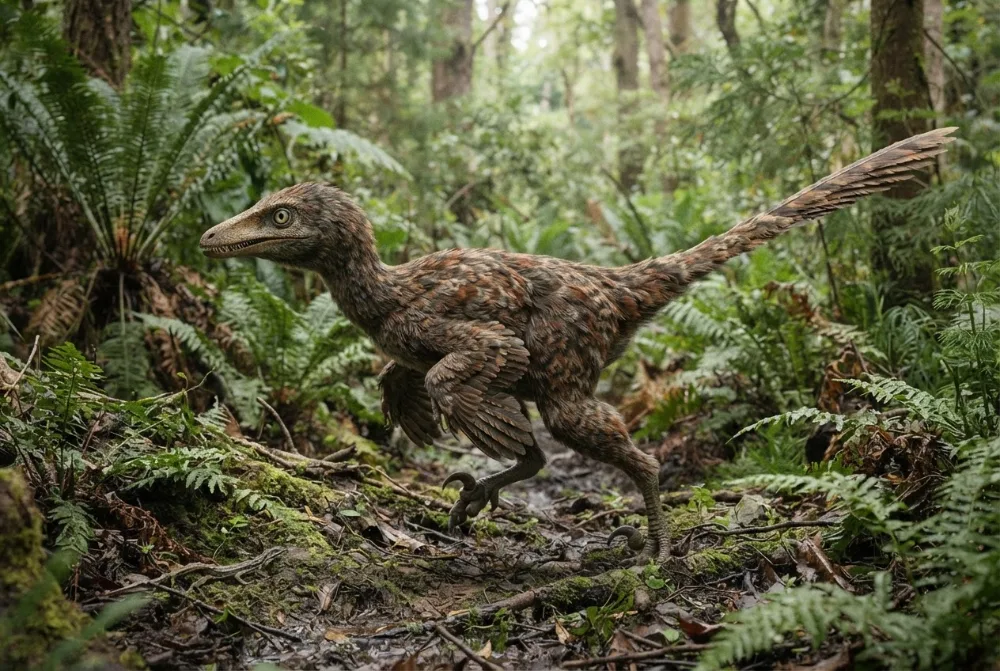
Richardoestesia is known only from its teeth, not from whole skeletons. Scientists call it a 'form taxon' because they group similar-looking teeth together.1
The teeth of Richardoestesia are very long and slender compared to other meat-eating dinosaurs. They look like thin blades.1
If all the teeth assigned to Richardoestesia really belong to the same kind of dinosaur, it would have lived for over 80 million years, from the Late Jurassic to the end of the Cretaceous.1
Richardoestesia teeth have been found all over the world, including North America, Europe, and Asia. That would make it one of the most widespread dinosaurs ever.1
The name Richardoestesia honors paleontologist Richard Estes, who studied small fossils and dinosaur teeth.1
Some scientists think Richardoestesia might have been a dromaeosaur (a raptor) or a troodontid, but nobody knows for sure because no body fossils have been found.5
Laaj yi ñu gën a laaj ci Richardoestesia
?What did Richardoestesia eat?
Richardoestesia was a meat-eating dinosaur, and some studies think it may have eaten fish because its teeth are often found in marine sites. Its long, slender teeth were good for catching small animals like lizards and mammals.14
?How big was Richardoestesia?
Nobody knows for sure because only its teeth have been found. One estimate from a tooth in Wyoming suggests it weighed about 100 kilograms (220 pounds), but scientists are not certain.4
?When did Richardoestesia live?
Richardoestesia lived during the Late Cretaceous, about 76.5 to 75 million years ago, based on teeth from the Dinosaur Park Formation. Some similar teeth are much older, from the Late Jurassic, but those may belong to different dinosaurs.1
?Was Richardoestesia a dinosaur?
Yes, Richardoestesia was a theropod dinosaur, a meat-eater related to raptors and other bird-like dinosaurs. It is known only from its teeth, not from a full skeleton.1
?Why is Richardoestesia known only from teeth?
Scientists have only found Richardoestesia's teeth, not its body fossils. That is why it is called a 'form taxon', because they group similar-looking teeth together without knowing the whole animal.1
?Could Richardoestesia swim?
Some scientists think Richardoestesia might have eaten fish because its teeth are often found in marine rocks, but nobody knows if it could swim. It was probably a land dinosaur that sometimes hunted near water.1
Ku tas léeb yu dul dëgg
Léeb: Richardoestesia is a well-known dinosaur with a complete skeleton.
Dëgg: Richardoestesia is only known from isolated teeth. No complete skeleton has ever been found, so scientists are not sure what it looked like.1
Ngir ñi xam dino lool
- Turu xam-xam
- Richardoestesia
- Ku ko tudde
- Currie et al. 19905
- Kurél
- Raptor yi
- Njaboot / klad
- Dromaeosauridae5
- Klasifikasiyoŋ
- Theropoda > Dromaeosauridae5
- Màggaayu doj yi
- 155 ba 66 milyoŋ at (Kimmeridgian / Maastrichtian)5
- Formasiyoŋi doj
- Hell Creek, Milk River, Dinosaur Park5
- Réew yi
- Amerig, Kanadaa, Españ, Usbekistaan, Rumani, Meksik5
- Fosil yu ñu gis
- 239 ci The Paleobiology Database5
- Gisees
- The first Richardoestesia fossils were jaws found in 1917 by Charles Hazelius Sternberg and his sons in Dinosaur Provincial Park, Alberta, Canada. The name was given in 1990 by paleontologist Philip Currie and colleagues.1
- Ñu ngi koy werante ba tey
- Scientists are not sure if all the teeth called Richardoestesia really belong to the same dinosaur. Many may come from different species that have not been named yet.1
Fa xibaar yi jóge
- Richardoestesia (en.wikipedia.org)
- Richardoestesia (elmirador.edu.co)
- Richardoestesia gilmorei | Dinosaur Database by DinoAnimals.com (dinoanimals.com)
- University of Colorado Museum of Natural History: Harvester Ants: Richardoestesia Tooth (cumuseum-archive.colorado.edu)
- Richardoestesia in The Paleobiology Database (CC BY 4.0): at, béréb yi, formasiyoŋi doj, klasifikasiyoŋ.
Bépp xibaar ci xët wii am na lim bu wone fa mu jóge. Su nu juumee, baal nu, nun ñu bëgg dino lanu, du ab sërnaalu xam-xam. Wax nu ko ci [email protected] nu defar ko.
 Rex xiif na! Dino Wiki, mbiru ab baay la ngir doomam ju góor ju bëgg dinosoor, ci neen te amul kaamuñaate, amul tracker. Mag ñi mën nañu jox Rex tuuti ñam ngir dimbali ko mu des ci internet.Dundal Rex
 Velociraptor
 Microraptor
 Deinonychus
 Asiamericana
 Saurornitholestes
 Troodon
 Stegosaurus
 Iguanodon
 Archaeopteryx
 Giganotosaurus
 Baryonyx
 Paronychodon