 Ban dino nga? Kiis
 Xeexu dino
 Rawante dino
 Fo yu ndaw yu dino
 Albomu sitikeer
 Limu TOP yu dino
 Bett ma!
Kañ la dundoon?

Naka la réyoon?
Naka la guddoon?
Naka la kawewoon?
Naka la diisoon?
 gudd ni 8 xaj, bakkan ba geen🍌gudd ni 42 banaana yu ñu topp-toppale🍉diis ni 220 xaal🧸diis ni 58 xale yu maternel🎒diis ni 34 xale yu lekkool🐻❄️diis ni 2,5 uurs yu weex🏃mënoon na daw 100 meetar ci 10 segond (nit ki gën a gaaw dafay soxla 9,6)
Naka la Lusovenator réyoon, bu ñu ko méngalee ak YAW?
Ay kalkil rekk ci sa navigatëer. Dara du ñu denc, dara du ñu yónne fenn.
Naka la gaawoon?


Xibaar yu neex
Lusovenator lived during the Late Jurassic and Early Cretaceous periods, about 154 to 144 million years ago.1
Its fossils were found in the Lourinhã Formation in Portugal, which is famous for many dinosaur discoveries.1
The first fossils of Lusovenator were discovered in the 1980s by a man named José Joaquim dos Santos, who later donated them to a museum.1
Lusovenator belongs to a group of large meat-eating dinosaurs called carcharodontosaurs, which includes some of the biggest predators ever.1
The known bones of Lusovenator include parts of the spine, hips, and a nearly complete right foot.1
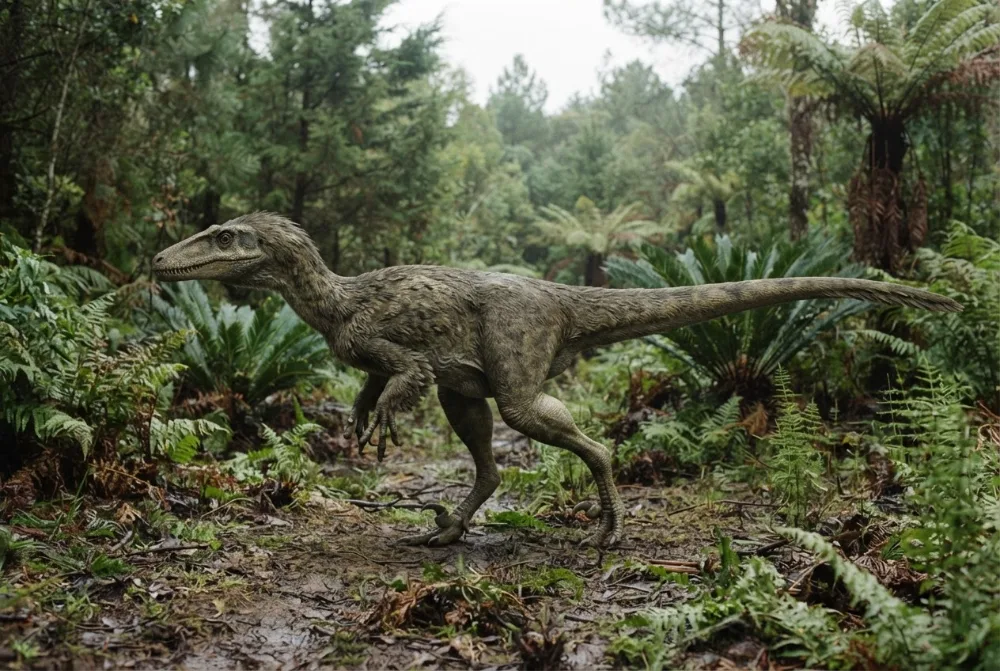
Laaj yi ñu gën a laaj ci Lusovenator
?How big was Lusovenator?
Scientists don't know its exact size because only partial bones were found, but it was a medium to large meat eater, likely around 6 to 8 metres long (20 to 26 feet).4
?What did Lusovenator eat?
Lusovenator was a carnivore, so it ate meat. It probably hunted smaller dinosaurs and other animals in its environment.4
?When did Lusovenator live?
It lived during the Late Jurassic and Early Cretaceous periods, about 154 to 144 million years ago.1
?Where was Lusovenator found?
Its fossils were found in Portugal, in the Lourinhã Formation, which is famous for many dinosaur discoveries.1
?Is Lusovenator a dinosaur?
Yes, it is a dinosaur. It belongs to a group of meat-eating dinosaurs called carcharodontosaurs.1
?Why is it called Lusovenator?
The name means 'Portuguese hunter' because it was found in Portugal and it was a predator.1
Ngir ñi xam dino lool
- Turu xam-xam
- Lusovenator
- Ku ko tudde
- Malafaia et al. 20204
- Kurél
- Dino yuy lekk yàpp
- Njaboot / klad
- Carcharodontosauria4
- Klasifikasiyoŋ
- Theropoda > Allosauroidea4
- Màggaayu doj yi
- 152 ba 143 milyoŋ at (Kimmeridgian / Tithonian)4
- Formasiyoŋi doj
- Freixial, Praia da Amoreira-Porto Novo4
- Réew yi
- Portigaal4
- Fosil yu ñu gis
- 2 ci The Paleobiology Database4
- Gisees
- Lusovenator was named in 2020 by Malafaia and colleagues. The fossils were found in Portugal by José Joaquim dos Santos in the 1980s and later studied by scientists.14
- Ñu ngi koy werante ba tey
- Scientists are not sure exactly how big Lusovenator grew, because the only skeleton found so far is from a young animal.1
Fa xibaar yi jóge
- Lusovenator (en.wikipedia.org)
- Lusovenator santosi: New Predatory Dinosaur Identified in Portugal | Paleontology World (paleontologyworld.com)
- Lusovenator santosi | Dinosaur Database by DinoAnimals.com (dinoanimals.com)
- Lusovenator in The Paleobiology Database (CC BY 4.0): at, béréb yi, formasiyoŋi doj, klasifikasiyoŋ.
Bépp xibaar ci xët wii am na lim bu wone fa mu jóge. Su nu juumee, baal nu, nun ñu bëgg dino lanu, du ab sërnaalu xam-xam. Wax nu ko ci [email protected] nu defar ko.
 Rex xiif na! Dino Wiki, mbiru ab baay la ngir doomam ju góor ju bëgg dinosoor, ci neen te amul kaamuñaate, amul tracker. Mag ñi mën nañu jox Rex tuuti ñam ngir dimbali ko mu des ci internet.Dundal Rex
 Allosaurus
 Carnotaurus
 Dilophosaurus
 Giganotosaurus
 Compsognathus
 Paronychodon
 Brachiosaurus
 Diplodocus
 Brontosaurus
 Camarasaurus
 Morosaurus
 Apatosaurus