 Ban dino nga? Kiis
 Xeexu dino
 Rawante dino
 Fo yu ndaw yu dino
 Albomu sitikeer
 Limu TOP yu dino
 Bett ma!
Kañ la dundoon?

Naka la réyoon?
Naka la guddoon?
Naka la kawewoon?
Naka la diisoon?
 gudd ni 2 oto yu ñu taxawal ci benn rëdd🍌gudd ni 50 banaana yu ñu topp-toppale
 diis ni 120 xaj🍉diis ni 500 xaal🎒diis ni 3 klaas yu mat yu xale yu lekkool🐻❄️diis ni 6 uurs yu weex🏃mënoon na daw 100 meetar ci 14 segond (nit ki gën a gaaw dafay soxla 9,6)
Naka la Maiasaura réyoon, bu ñu ko méngalee ak YAW?
Ay kalkil rekk ci sa navigatëer. Dara du ñu denc, dara du ñu yónne fenn.
Naka la gaawoon?


Xibaar yu neex
A huge nesting site was found in Montana in 1978, with nests, eggs, and baby skeletons.2
Baby Maiasaura were too big to fit inside eggs when they hatched, and their bones were not fully hardened.2
Hatchlings were about 0.5 metres (1.6 feet) long, while juveniles reached about 1 metre (3.3 feet).2
Hundreds of Maiasaura skeletons were found together in one ash bed, suggesting they lived in herds.2
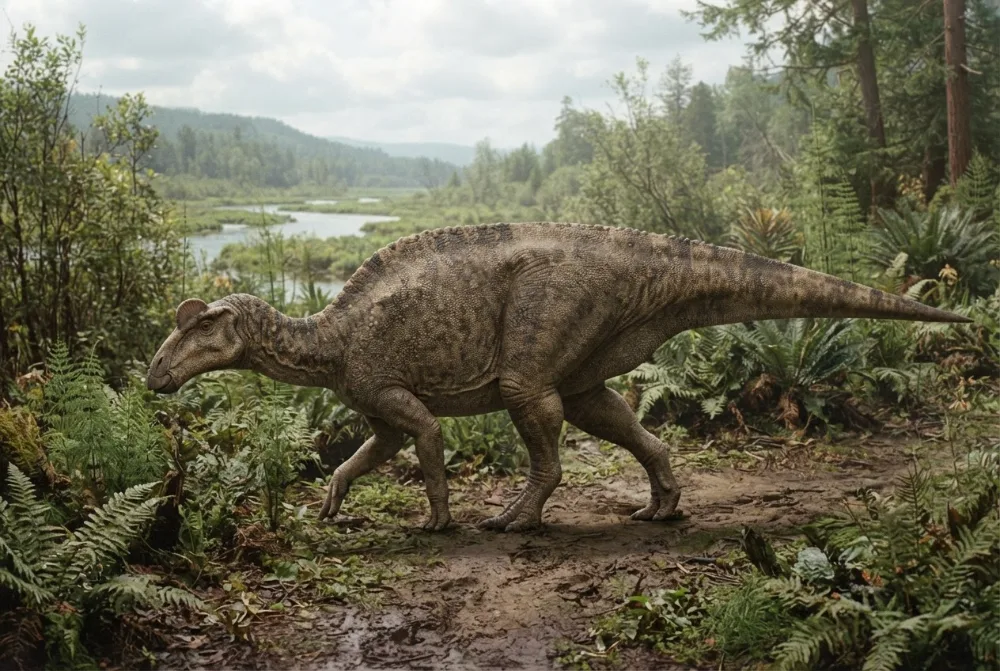
Maiasaura could walk on two legs or all fours.1
Laaj yi ñu gën a laaj ci Maiasaura
?How big was Maiasaura?
About 9 metres (30 feet) long and weighed up to 4 metric tons (4.4 short tons).4
?What did Maiasaura eat?
It was a herbivore, eating plants. It had a horny beak and rows of hundreds of teeth for chewing tough plant material.1
?When did Maiasaura live?
It lived during the Late Cretaceous Period, about 80 to 75 million years ago.1
?Where was Maiasaura found?
Fossils have been found in Montana, USA, and Alberta, Canada. A famous nesting site was discovered in Montana in 1978.42
?Why is Maiasaura called the good mother lizard?
Because fossils show that adults cared for their young in nests, which was rare for dinosaurs. The name means 'good mother lizard'.14
?Did Maiasaura live in herds?
Yes. Hundreds of skeletons found together in one ash bed suggest they lived in large herds, possibly up to 10,000 individuals.4
?Could Maiasaura walk on two legs?
Yes, it could walk on two legs or all fours. Young Maiasaura walked mostly on two legs, while adults walked more on all fours.14
?How fast could Maiasaura run?
Scientists are not sure, but like other large hadrosaurs, it probably could run fairly fast to escape predators, though no exact speed is known.4
Ngir ñi xam dino lool
- Turu xam-xam
- Maiasaura
- Ku ko tudde
- Horner and Makela 19795
- Kurél
- Gémmiñu kanaar
- Njaboot / klad
- Hadrosauridae5
- Klasifikasiyoŋ
- Ornithischia > Ornithopoda > Iguanodontia > Hadrosauridae5
- Màggaayu doj yi
- 84 ba 72 milyoŋ at (Campanian)5
- Formasiyoŋi doj
- Two Medicine5
- Réew yi
- Amerig5
- Fosil yu ñu gis
- 7 ci The Paleobiology Database5
- Gisees
- Maiasaura was named by Jack Horner and Robert Makela in 1979 after a nesting site was found in the Two Medicine Formation near Choteau, Montana.52
Fa xibaar yi jóge
- Maiasaura | Natural History Museum (nhm.ac.uk)
- Maiasaura | Herbivorous, Nesting, Cretaceous | Britannica (britannica.com)
- Maiasaura | Earth and Atmospheric Sciences | Research Starters | EBSCOhost (ebsco.com)
- Maiasaura (Wikipedia) (Wikipedia)
- Maiasaura in The Paleobiology Database (CC BY 4.0): at, béréb yi, formasiyoŋi doj, klasifikasiyoŋ.
Bépp xibaar ci xët wii am na lim bu wone fa mu jóge. Su nu juumee, baal nu, nun ñu bëgg dino lanu, du ab sërnaalu xam-xam. Wax nu ko ci [email protected] nu defar ko.
 Rex xiif na! Dino Wiki, mbiru ab baay la ngir doomam ju góor ju bëgg dinosoor, ci neen te amul kaamuñaate, amul tracker. Mag ñi mën nañu jox Rex tuuti ñam ngir dimbali ko mu des ci internet.Dundal Rex
 Parasaurolophus
 Edmontosaurus
 Saurolophus
 Hypacrosaurus
 Corythosaurus
 Kritosaurus
 Tyrannosaurus
 Triceratops
 Velociraptor
 Spinosaurus
 Ankylosaurus
 Pteranodon