 Ban dino nga? Kiis
 Xeexu dino
 Rawante dino
 Fo yu ndaw yu dino
 Albomu sitikeer
 Limu TOP yu dino
 Bett ma!
Ornithopsis
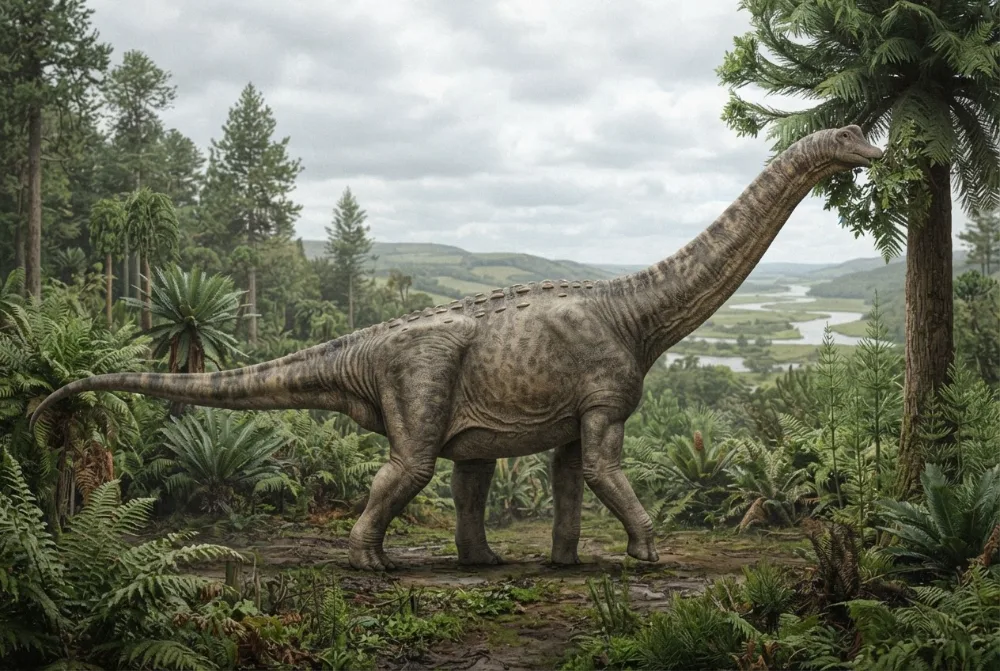
Ornithopsis was a huge, long-necked plant-eater that stomped through England and Germany during the Early Cretaceous. Its name means 'bird-likeness' because its back bones were hollow and filled with air sacs, just like birds have today.1
Kañ la dundoon?
Naka la réyoon?
Naka la guddoon?
Naka la kawewoon?
jortu
 gudd ni 4 oto yu ñu taxawal ci benn rëdd🍌gudd ni 100 banaana yu ñu topp-toppale🏃mënoon na daw 100 meetar ci 28 segond (nit ki gën a gaaw dafay soxla 9,6)
Naka la Ornithopsis réyoon, bu ñu ko méngalee ak YAW?
Ay kalkil rekk ci sa navigatëer. Dara du ñu denc, dara du ñu yónne fenn.
Naka la gaawoon?


Xibaar yu neex
Ornithopsis was one of the first dinosaurs whose bones were recognized as having air sacs, like modern birds and pterosaurs.1
The only known species is Ornithopsis hulkei, named after the scientist John Whitaker Hulke.1
Its back bones were very light because they were filled with big cavities called camellae.1
Scientists think Ornithopsis was about 16 to 18 metres long, as long as two school buses.1
A possible German fossil of Ornithopsis came from a slightly smaller individual.1
Ornithopsis belongs to a group of sauropods called Titanosauriformes, which includes some of the biggest land animals ever.1
Laaj yi ñu gën a laaj ci Ornithopsis
?What does the name Ornithopsis mean?
Ornithopsis means 'bird-likeness' in Greek, named for its bird-like hollow bones. The name comes from 'ornis' (bird) and 'opsis' (likeness).12
?How big was Ornithopsis?
Ornithopsis was about 16 to 18 metres long. A possible German fossil came from a slightly smaller individual.13
?What did Ornithopsis eat?
Ornithopsis was a herbivore, eating tough vegetation with its chisel-like teeth. It was a long-necked browser.3
Ku tas léeb yu dul dëgg
Léeb: Ornithopsis was a flying animal like a pterosaur.
Dëgg: Ornithopsis was a sauropod dinosaur that walked on land. Its name 'bird-likeness' refers to its air-filled bones, not to flying.1
Ngir ñi xam dino lool
- Turu xam-xam
- Ornithopsis
- Ku ko tudde
- Seeley 18704
- Kurél
- Baat yu gudd
- Njaboot / klad
- Titanosauriformes4
- Klasifikasiyoŋ
- Sauropodomorpha > Sauropoda > Macronaria4
- Màggaayu doj yi
- 145 ba 120 milyoŋ at (Tithonian / Aptian)4
- Formasiyoŋi doj
- Wessex, Portland Stone4
- Réew yi
- Angalteer, Almaañ4
- Fosil yu ñu gis
- 6 ci The Paleobiology Database4
- Gisees
- Harry Govier Seeley named Ornithopsis in 1870 based on two vertebrae from the Isle of Wight, England. He thought it was a creature between pterosaurs and birds, but later scientists showed it was a sauropod dinosaur.1
- Ñu ngi koy werante ba tey
- Scientists are not sure if the German fossil really belongs to Ornithopsis because it is poorly preserved.1
Fa xibaar yi jóge
- Ornithopsis (en.wikipedia.org)
- ORNITHOPSIS - DinoChecker dinosaur archive (dinochecker.com)
- Ornithopsis, an Isle of Wight Brachiosaur - DinoWight (dinowight.org.uk)
- Ornithopsis in The Paleobiology Database (CC BY 4.0): at, béréb yi, formasiyoŋi doj, klasifikasiyoŋ.
Bépp xibaar ci xët wii am na lim bu wone fa mu jóge. Su nu juumee, baal nu, nun ñu bëgg dino lanu, du ab sërnaalu xam-xam. Wax nu ko ci [email protected] nu defar ko.
 Rex xiif na! Dino Wiki, mbiru ab baay la ngir doomam ju góor ju bëgg dinosoor, ci neen te amul kaamuñaate, amul tracker. Mag ñi mën nañu jox Rex tuuti ñam ngir dimbali ko mu des ci internet.Dundal Rex
 Brachiosaurus
 Diplodocus
 Brontosaurus
 Argentinosaurus
 Camarasaurus
 Morosaurus
 Stegosaurus
 Iguanodon
 Archaeopteryx
 Giganotosaurus
 Microraptor
 Deinonychus