 Ban dino nga? Kiis
 Xeexu dino
 Rawante dino
 Fo yu ndaw yu dino
 Albomu sitikeer
 Limu TOP yu dino
 Bett ma!
Pararhabdodon
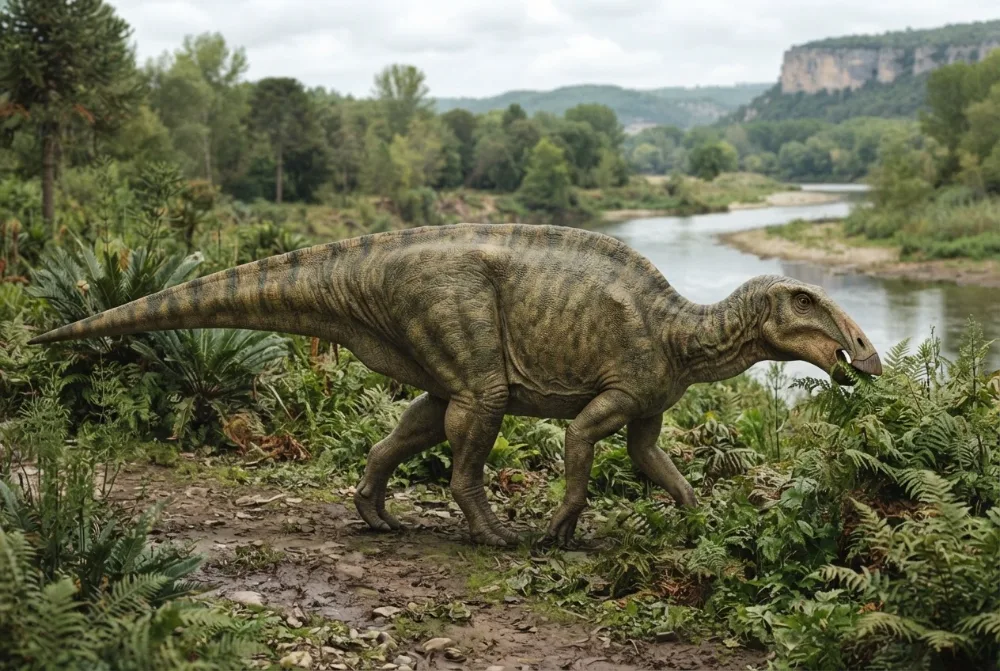
Pararhabdodon was a big duck-billed dinosaur that lived in Spain near the end of the Age of Dinosaurs. It walked on two legs or all fours and munched on plants with its toothy beak.1
Kañ la dundoon?
Naka la réyoon?
Naka la guddoon?
 gudd ni 2 oto yu ñu taxawal ci benn rëdd🍌gudd ni 50 banaana yu ñu topp-toppale🏃mënoon na daw 100 meetar ci 15 segond (nit ki gën a gaaw dafay soxla 9,6)
Naka la Pararhabdodon réyoon, bu ñu ko méngalee ak YAW?
Ay kalkil rekk ci sa navigatëer. Dara du ñu denc, dara du ñu yónne fenn.
Naka la gaawoon?


Xibaar yu neex
Pararhabdodon was one of the very last non-bird dinosaurs, living just before the big extinction 66 million years ago.1
It was the first lambeosaurine hadrosaur ever found on the European continent.1
Even though it lived on an island, it did not shrink like some other island dinosaurs; it may have grown as large as its relatives in North America and Asia.1
Scientists think it could walk on two legs or on all fours, depending on what it was doing.1
Some bones from France and other Spanish sites were once thought to belong to Pararhabdodon, but later studies questioned those ideas.1
A bonebed called Basturs Poble has many hadrosaur bones, and some scientists thought they belonged to Pararhabdodon, but that is not certain.1
Laaj yi ñu gën a laaj ci Pararhabdodon
?How big was Pararhabdodon?
The holotype specimen was about 6 metres (20 ft) long, but it was not fully grown. Adults likely reached around 9 metres (30 ft), similar to relatives like Corythosaurus and Tsintaosaurus.1
?What did Pararhabdodon eat?
It was a herbivore, meaning it ate plants. It used its toothy beak to munch on vegetation.1
?Where was Pararhabdodon found?
Its fossils were discovered in the Tremp Group of Spain, near Isona in the Pyrenees. Some bones from France were once thought to belong to it, but that is now questioned.1
?Is Pararhabdodon a dinosaur?
Yes, it is a dinosaur. Specifically, it is a lambeosaurine hadrosaurid, a type of duck-billed dinosaur.1
Ku tas léeb yu dul dëgg
Léeb: Some people think Pararhabdodon was a small dinosaur because it lived on an island.
Dëgg: The holotype was not fully grown, and adults likely reached about 9 metres long, similar to other lambeosaurines.1
Ngir ñi xam dino lool
- Turu xam-xam
- Pararhabdodon
- Ku ko tudde
- Casanovas Cladellas 19922
- Kurél
- Gémmiñu kanaar
- Njaboot / klad
- Hadrosauridae2
- Klasifikasiyoŋ
- Ornithischia > Ornithopoda > Iguanodontia > Hadrosauridae2
- Màggaayu doj yi
- 72 ba 66 milyoŋ at (Maastrichtian)2
- Formasiyoŋi doj
- Conques, Talarn, La Posa2
- Réew yi
- Españ2
- Fosil yu ñu gis
- 7 ci The Paleobiology Database2
- Gisees
- Fossils were first dug up in 1985 at Sant Romà d'Abella in Spain, and in 1993 scientists named the species Pararhabdodon isonensis.1
- Ñu ngi koy werante ba tey
- Scientists still debate whether some other Spanish hadrosaurs, like Blasisaurus and Arenysaurus, were actually the same animal as Pararhabdodon.1
Fa xibaar yi jóge
- Pararhabdodon (en.wikipedia.org)
- Pararhabdodon in The Paleobiology Database (CC BY 4.0): at, béréb yi, formasiyoŋi doj, klasifikasiyoŋ.
Bépp xibaar ci xët wii am na lim bu wone fa mu jóge. Su nu juumee, baal nu, nun ñu bëgg dino lanu, du ab sërnaalu xam-xam. Wax nu ko ci [email protected] nu defar ko.
 Rex xiif na! Dino Wiki, mbiru ab baay la ngir doomam ju góor ju bëgg dinosoor, ci neen te amul kaamuñaate, amul tracker. Mag ñi mën nañu jox Rex tuuti ñam ngir dimbali ko mu des ci internet.Dundal Rex
 Parasaurolophus
 Edmontosaurus
 Saurolophus
 Hypacrosaurus
 Corythosaurus
 Kritosaurus
 Tyrannosaurus
 Triceratops
 Velociraptor
 Spinosaurus
 Ankylosaurus
 Pteranodon