 Ban dino nga? Kiis
 Xeexu dino
 Rawante dino
 Fo yu ndaw yu dino
 Albomu sitikeer
 Limu TOP yu dino
 Bett ma!
Qiupanykus
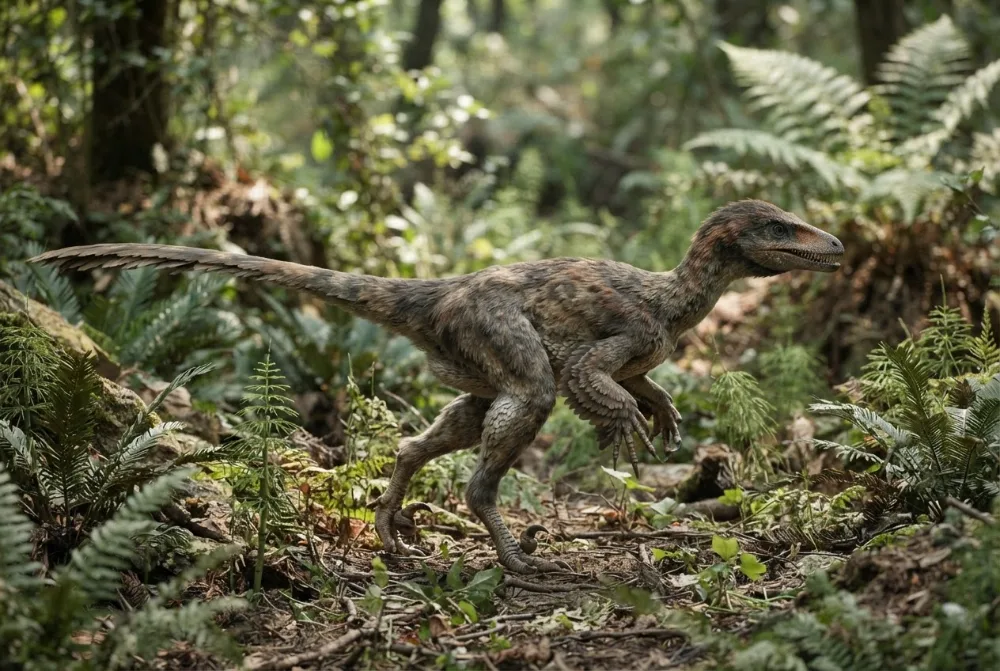
Qiupanykus was a tiny, speedy dinosaur that lived at the very end of the age of dinosaurs. It had strong claws on its short arms and may have used them to crack open eggs for a snack. This little hunter was one of the last non-bird dinosaurs to walk the Earth.1
Kañ la dundoon?
Naka la réyoon?
Naka la diisoon?
Naka la Qiupanykus réyoon, bu ñu ko méngalee ak YAW?
Ay kalkil rekk ci sa navigatëer. Dara du ñu denc, dara du ñu yónne fenn.
Naka la gaawoon?


Xibaar yu neex
Qiupanykus was very small, weighing less than a kilogram (about 2 pounds). Its leg bones were only about 25 cm (10 inches) long.1
Its fossils were found right next to broken eggshells from an oviraptorosaur. Scientists think Qiupanykus used its strong claws to crack those eggs open.12
Qiupanykus lived about 72 to 66 million years ago, during the Maastrichtian stage of the Late Cretaceous. That means it was alive right before the big dinosaur extinction.13
Like other alvarezsaurids, Qiupanykus had a special foot called an arctometatarsus, which helped it run fast.1
No skull bones of Qiupanykus have been found yet, so scientists are not sure what its head looked like.1
The name Qiupanykus means 'claw from the Qiupa Formation', because its fossils were found in the Qiupa Formation in China.1
Ku tas léeb yu dul dëgg
Léeb: Some people think all small dinosaurs were plant-eaters.
Dëgg: Qiupanykus was a small dinosaur, but it was a meat-eater. It may have eaten eggs and small animals.1
Ngir ñi xam dino lool
- Turu xam-xam
- Qiupanykus
- Ku ko tudde
- Lü et al. 20184
- Kurél
- Dino yuy lekk yàpp
- Njaboot / klad
- Alvarezsauroidea4
- Klasifikasiyoŋ
- Theropoda4
- Màggaayu doj yi
- 72 ba 66 milyoŋ at (Maastrichtian)4
- Formasiyoŋi doj
- Qiupa4
- Réew yi
- Siin4
- Fosil yu ñu gis
- 1 ci The Paleobiology Database4
- Gisees
- Qiupanykus was named in 2018 by Lü Junchang and his team. The fossils were found near the village of Guanping in Luanchuan County, Henan Province, China. The species name zhangi honors Shuancheng Zhang, who helped find the fossils.1
- Ñu ngi koy werante ba tey
- Scientists are not sure whether Qiupanykus mostly ate eggs or also hunted small animals. They also debate if the eggshells found with it belonged to another dinosaur or to Qiupanykus itself.1
Fa xibaar yi jóge
- Qiupanykus (en.wikipedia.org)
- A new alvarezsaurid dinosaur from the Late Cretaceous Qiupa Formation of Luanchuan, Henan Province, central China (exa.ai)
- PBDB Taxon (paleobiodb.org)
- Qiupanykus in The Paleobiology Database (CC BY 4.0): at, béréb yi, formasiyoŋi doj, klasifikasiyoŋ.
Bépp xibaar ci xët wii am na lim bu wone fa mu jóge. Su nu juumee, baal nu, nun ñu bëgg dino lanu, du ab sërnaalu xam-xam. Wax nu ko ci [email protected] nu defar ko.
 Rex xiif na! Dino Wiki, mbiru ab baay la ngir doomam ju góor ju bëgg dinosoor, ci neen te amul kaamuñaate, amul tracker. Mag ñi mën nañu jox Rex tuuti ñam ngir dimbali ko mu des ci internet.Dundal Rex
 Allosaurus
 Carnotaurus
 Dilophosaurus
 Giganotosaurus
 Compsognathus
 Paronychodon
 Tyrannosaurus
 Triceratops
 Velociraptor
 Spinosaurus
 Ankylosaurus
 Parasaurolophus