 Ban dino nga? Kiis
 Xeexu dino
 Rawante dino
 Fo yu ndaw yu dino
 Albomu sitikeer
 Limu TOP yu dino
 Bett ma!
Tamarro
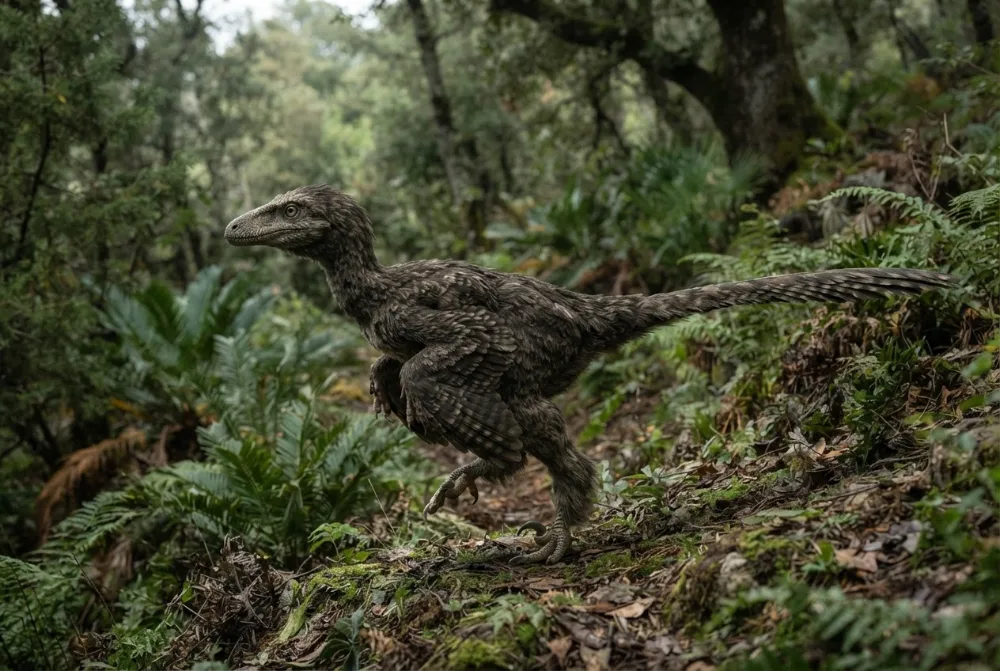
Tamarro was a small, fast-growing dinosaur that lived on an ancient island in what is now Spain. It was a troodontid, a group of bird-like, meat-eating dinosaurs. Scientists only know it from a single foot bone, but that bone has a unique hole not seen in any other troodontid.1
Kañ la dundoon?
Naka la réyoon?
Naka la guddoon?
Naka la kawewoon?
Naka la diisoon?
 gudd ni 4 muusu kër, bakkan ba geen🍌gudd ni 11 banaana yu ñu topp-toppale🍉diis ni 4 xaal🏃mënoon na daw 100 meetar ci 8,4 segond (nit ki gën a gaaw dafay soxla 9,6)
Naka la Tamarro réyoon, bu ñu ko méngalee ak YAW?
Ay kalkil rekk ci sa navigatëer. Dara du ñu denc, dara du ñu yónne fenn.
Naka la gaawoon?


Xibaar yu neex
Tamarro lived at the very end of the Cretaceous period, within 200,000 years of the asteroid that wiped out the dinosaurs.1
Its foot bone shows that Tamarro was a fast grower, reaching nearly adult size quickly, like many island animals.1
Tamarro is the first troodontid dinosaur ever found in Europe.1
The only known fossil of Tamarro is a single right second metatarsal, a bone from the foot.1
This foot bone has a special hole (a foramen) that is not found in any other troodontid, which helped scientists identify it as a new species.1
Tamarro lived on the Ibero-Armorican island, a large island that included parts of modern Spain, Portugal, and France.1
Scientists think Tamarro may have migrated from Asia to Europe, either by land bridges or by island hopping.1
Laaj yi ñu gën a laaj ci Tamarro
?What did Tamarro eat?
Tamarro was a meat-eating dinosaur, a troodontid, so it likely ate small animals. Scientists know this from its group, not from its single foot bone.31
?How big was Tamarro?
Tamarro was a small, mid-sized troodontid, but its exact size is unknown because only a foot bone has been found. It was a fast grower, reaching nearly adult size quickly.13
Ngir ñi xam dino lool
- Turu xam-xam
- Tamarro
- Ku ko tudde
- Sellés et al. 20214
- Kurél
- Raptor yi
- Njaboot / klad
- Troodontidae4
- Klasifikasiyoŋ
- Theropoda > Troodontidae4
- Màggaayu doj yi
- 72 ba 66 milyoŋ at (Maastrichtian)4
- Formasiyoŋi doj
- Talarn4
- Réew yi
- Españ4
- Fosil yu ñu gis
- 1 ci The Paleobiology Database4
- Gisees
- Tamarro was discovered in September 2003 by a team from the Museu de la Conca Dellà at the Sant Romà d'Abella site in Spain. It was named in 2021 by Sellés and colleagues.1
- Ñu ngi koy werante ba tey
- Scientists are not sure whether Tamarro was a dwarf species, like many other dinosaurs that lived on islands, or if it was just a young animal that hadn't finished growing.1
Fa xibaar yi jóge
- A fast-growing basal troodontid (Dinosauria: Theropoda) from the latest Cretaceous of Europe | Scientific Reports (nature.com)
- Tamarro insperatus, uno de los últimos dinosaurios que vivió en los Pirineos (nationalgeographic.com.es)
- Tamarro (en.wikipedia.org)
- Tamarro in The Paleobiology Database (CC BY 4.0): at, béréb yi, formasiyoŋi doj, klasifikasiyoŋ.
Bépp xibaar ci xët wii am na lim bu wone fa mu jóge. Su nu juumee, baal nu, nun ñu bëgg dino lanu, du ab sërnaalu xam-xam. Wax nu ko ci [email protected] nu defar ko.
 Rex xiif na! Dino Wiki, mbiru ab baay la ngir doomam ju góor ju bëgg dinosoor, ci neen te amul kaamuñaate, amul tracker. Mag ñi mën nañu jox Rex tuuti ñam ngir dimbali ko mu des ci internet.Dundal Rex
 Velociraptor
 Microraptor
 Deinonychus
 Asiamericana
 Richardoestesia
 Saurornitholestes
 Tyrannosaurus
 Triceratops
 Spinosaurus
 Ankylosaurus
 Parasaurolophus
 Pteranodon