 Ban dino nga? Kiis
 Xeexu dino
 Rawante dino
 Fo yu ndaw yu dino
 Albomu sitikeer
 Limu TOP yu dino
 Bett ma!
Xingxiulong
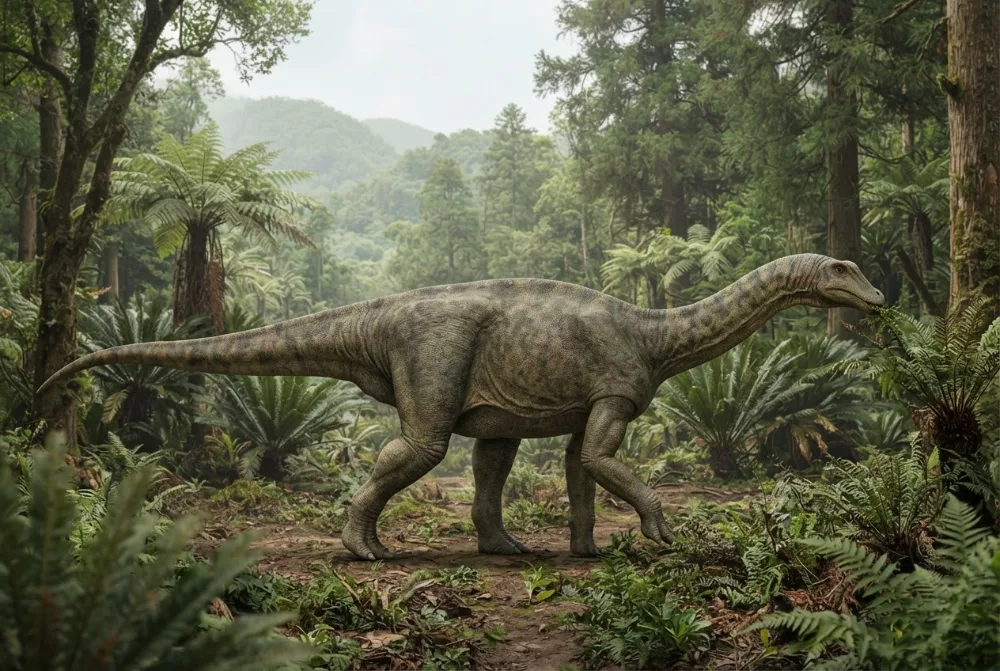
Xingxiulong was a long-necked plant-eater that lived in China during the Early Jurassic. It walked on two legs and had a strong, heavy body like a small sauropod. Three skeletons were found buried together, including two adults and a teenager.21
Kañ la dundoon?
Naka la réyoon?
Naka la guddoon?
Naka la kawewoon?
 gudd ni 5 xaj, bakkan ba geen🍌gudd ni 28 banaana yu ñu topp-toppale🏃mënoon na daw 100 meetar ci 10 segond (nit ki gën a gaaw dafay soxla 9,6)
Naka la Xingxiulong réyoon, bu ñu ko méngalee ak YAW?
Ay kalkil rekk ci sa navigatëer. Dara du ñu denc, dara du ñu yónne fenn.
Naka la gaawoon?


Xibaar yu neex
Xingxiulong had four vertebrae in its sacrum (hip region), which is a feature usually seen in true sauropods.21
Its pubis (hip bone) had a very long top plate, about 40% of the total length of the bone.2
Xingxiulong was bipedal, meaning it walked on two legs, unlike later sauropods that used all four legs.1
The three skeletons were found together in purple silty mudstone from the Shawan Member of the Lufeng Formation.21
One skeleton was about 14% smaller than the others and had unfused vertebrae, showing it was a subadult.21
Xingxiulong is one of the oldest and most primitive members of the group Sauropodiformes, which includes all sauropods.2
Laaj yi ñu gën a laaj ci Xingxiulong
?How big was Xingxiulong?
About 4 to 5 metres (13 to 16 ft) long and 1 to 1.5 metres (3.3 to 4.9 ft) tall at the hip for the first species. A second species was larger, at 8 to 10 metres (26 to 33 ft) long.12
?Did Xingxiulong walk on two legs?
Yes, it was bipedal. Unlike later sauropods that used all four legs, Xingxiulong walked on two legs.12
?What did Xingxiulong eat?
It was a plant-eater. Its strong, heavy body and large gut helped it digest tough plants.1
Ngir ñi xam dino lool
- Turu xam-xam
- Xingxiulong
- Ku ko tudde
- Wang et al. 20173
- Kurél
- Baat yu gudd
- Njaboot / klad
- Sauropodiformes3
- Klasifikasiyoŋ
- Sauropodomorpha3
- Màggaayu doj yi
- 201 ba 175 milyoŋ at (Hettangian / Toarcian)3
- Formasiyoŋi doj
- Lufeng3
- Réew yi
- Siin3
- Fosil yu ñu gis
- 2 ci The Paleobiology Database3
- Gisees
- Xingxiulong was named in 2017 by Wang, You, and Wang. The fossils were dug up in 2013 near Sankeshu Village in Lufeng County, China.21
- Ñu ngi koy werante ba tey
- Scientists are not sure whether Xingxiulong was more closely related to Jingshanosaurus or to other sauropodiformes.1
Fa xibaar yi jóge
- Xingxiulong (en.wikipedia.org)
- A new basal sauropodiform dinosaur from the Lower Jurassic of Yunnan Province, China | Scientific Reports (nature.com)
- Xingxiulong in The Paleobiology Database (CC BY 4.0): at, béréb yi, formasiyoŋi doj, klasifikasiyoŋ.
Bépp xibaar ci xët wii am na lim bu wone fa mu jóge. Su nu juumee, baal nu, nun ñu bëgg dino lanu, du ab sërnaalu xam-xam. Wax nu ko ci [email protected] nu defar ko.
 Rex xiif na! Dino Wiki, mbiru ab baay la ngir doomam ju góor ju bëgg dinosoor, ci neen te amul kaamuñaate, amul tracker. Mag ñi mën nañu jox Rex tuuti ñam ngir dimbali ko mu des ci internet.Dundal Rex
 Brachiosaurus
 Diplodocus
 Brontosaurus
 Argentinosaurus
 Camarasaurus
 Morosaurus
 Dilophosaurus
 Stenopterygius
 Dorygnathus
 Scutellosaurus
 Sinosaurus
 Temnodontosaurus