 Ban dino nga? Kiis
 Xeexu dino
 Rawante dino
 Fo yu ndaw yu dino
 Albomu sitikeer
 Limu TOP yu dino
 Bett ma!
Xiongguanlong
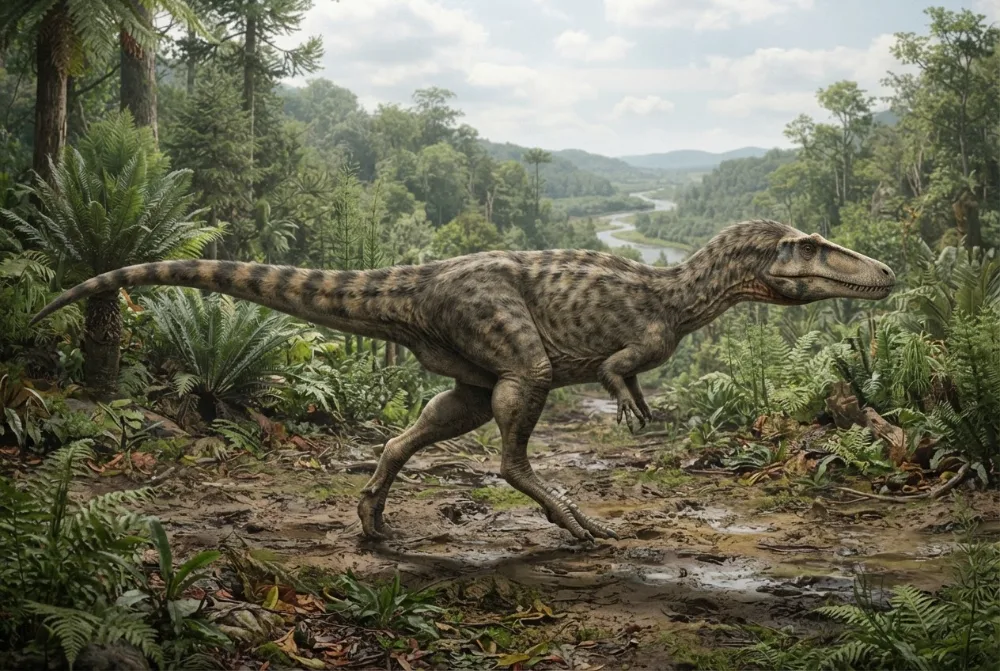
Xiongguanlong was an early cousin of the mighty T. rex. It had a long, narrow snout and lived in what is now China about 120 million years ago. It was a meat-eater that could run after its prey.12
Kañ la dundoon?
Naka la réyoon?
Naka la guddoon?
Naka la kawewoon?
jortu
Naka la diisoon?
 gudd ni 5 xaj, bakkan ba geen🍌gudd ni 28 banaana yu ñu topp-toppale🍉diis ni 54 xaal🧸diis ni 14 xale yu maternel🎒diis ni 8 xale yu lekkool🏃mënoon na daw 100 meetar ci 7,5 segond (nit ki gën a gaaw dafay soxla 9,6)
Naka la Xiongguanlong réyoon, bu ñu ko méngalee ak YAW?
Ay kalkil rekk ci sa navigatëer. Dara du ñu denc, dara du ñu yónne fenn.
Naka la gaawoon?


Xibaar yu neex
Xiongguanlong had a narrow and long muzzle, similar to the later tyrannosaur Alioramus.1
It is the sister taxon to Tyrannosauridae plus Appalachiosaurus, meaning it is closely related to the family that includes T. rex.1
Xiongguanlong shows several features that later became hallmarks of tyrannosaurids, like a sharp crest on the top of its skull and a boxy braincase.1
Its premaxillary teeth had a ridge on the inner side, a feature seen in later tyrannosaurids.1
The slender, unornamented nasals of Xiongguanlong suggest that the evolution of tyrannosaur feeding adaptations was more complex than previously thought.1
Xiongguanlong lived during the Aptian to Albian stages, about 121.4 to 113.2 million years ago.2
Laaj yi ñu gën a laaj ci Xiongguanlong
?How big was Xiongguanlong?
About 5 metres (16 feet) long and weighed around 270 kilograms (600 pounds).34
?What did Xiongguanlong eat?
It was a meat-eater that hunted small- to medium-sized animals.4
Ngir ñi xam dino lool
- Turu xam-xam
- Xiongguanlong
- Ku ko tudde
- Li et al. 20095
- Kurél
- Tiranosoor yi
- Njaboot / klad
- Tyrannosauroidea5
- Klasifikasiyoŋ
- Theropoda > Tyrannosauroidea5
- Màggaayu doj yi
- 121 ba 113 milyoŋ at (Aptian)5
- Formasiyoŋi doj
- Xiagou5
- Réew yi
- Siin5
- Fosil yu ñu gis
- 1 ci The Paleobiology Database5
- Gisees
- Xiongguanlong was named by Daqing Li and colleagues in 2009 based on a fossil found in the Xinminpu Group of Gansu, China.1
- Ñu ngi koy werante ba tey
- Scientists are still debating how body size evolved in tyrannosauroids, and whether the trend of increasing size seen in North American tyrannosaurids extends through the whole group.1
Fa xibaar yi jóge
- A longirostrine tyrannosauroid from the Early Cretaceous of China (royalsocietypublishing.org)
- PBDB Taxon (paleobiodb.org)
- Xiongguanlong (en.wikipedia.org)
- Dinosaur - Xiongguanlong baimoensis - The Australian Museum (australian.museum)
- Xiongguanlong in The Paleobiology Database (CC BY 4.0): at, béréb yi, formasiyoŋi doj, klasifikasiyoŋ.
Bépp xibaar ci xët wii am na lim bu wone fa mu jóge. Su nu juumee, baal nu, nun ñu bëgg dino lanu, du ab sërnaalu xam-xam. Wax nu ko ci [email protected] nu defar ko.
 Rex xiif na! Dino Wiki, mbiru ab baay la ngir doomam ju góor ju bëgg dinosoor, ci neen te amul kaamuñaate, amul tracker. Mag ñi mën nañu jox Rex tuuti ñam ngir dimbali ko mu des ci internet.Dundal Rex
 Tyrannosaurus
 Tarbosaurus
 Albertosaurus
 Daspletosaurus
 Gorgosaurus
 Alectrosaurus
 Stegosaurus
 Iguanodon
 Archaeopteryx
 Giganotosaurus
 Microraptor
 Deinonychus