 Ban dino nga? Kiis
 Xeexu dino
 Rawante dino
 Fo yu ndaw yu dino
 Albomu sitikeer
 Limu TOP yu dino
 Bett ma!
Yamatosaurus
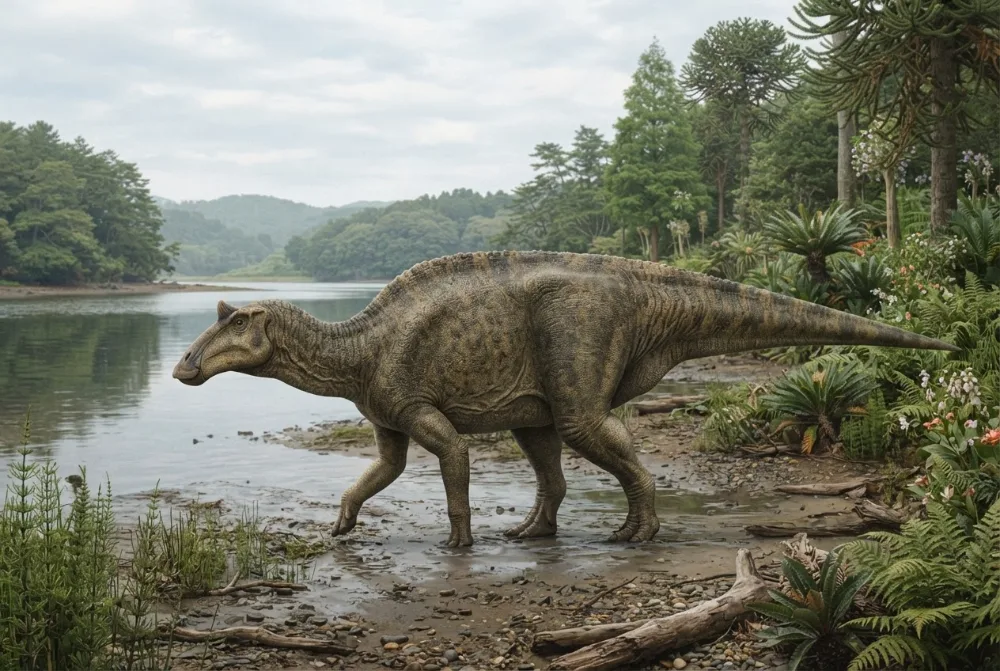
Yamatosaurus was a duck-billed dinosaur that lived in Japan near the end of the age of dinosaurs. It had a special jaw with only one tooth at a time in each spot, which is different from most other duck-billed dinosaurs. This plant-eater probably lived in coastal areas.21
Kañ la dundoon?
Naka la réyoon?
Naka la guddoon?
Naka la kawewoon?
Naka la diisoon?
 gudd ni 2 oto yu ñu taxawal ci benn rëdd🍌gudd ni 56 banaana yu ñu topp-toppale
 diis ni 85 xaj🍉diis ni 340 xaal🧸diis ni 89 xale yu maternel🎒diis ni 53 xale yu lekkool🐻❄️diis ni 4 uurs yu weex🏃mënoon na daw 100 meetar ci 13 segond (nit ki gën a gaaw dafay soxla 9,6)
Naka la Yamatosaurus réyoon, bu ñu ko méngalee ak YAW?
Ay kalkil rekk ci sa navigatëer. Dara du ñu denc, dara du ñu yónne fenn.
Naka la gaawoon?


Xibaar yu neex
Yamatosaurus had only one tooth in each tooth socket at a time, which is very unusual for a duck-billed dinosaur.2
It lived about 72 to 66 million years ago during the Maastrichtian stage of the Late Cretaceous.3
The fossils were found in marine rocks, meaning the dinosaur's body was washed into the sea after it died.2
Yamatosaurus is one of the oldest known hadrosaurids, or duck-billed dinosaurs, from Japan.2
Its shoulder bone, the coracoid, lacks a bump called the biceps tubercle, which is a primitive feature.2
The name Yamatosaurus comes from Yamato, an ancient name for Japan.1
Laaj yi ñu gën a laaj ci Yamatosaurus
?How big was Yamatosaurus?
Scientists do not know its exact size because only a partial skeleton has been found, including parts of the jaw, neck bones, and shoulder bone.12
?What did Yamatosaurus eat?
It was a plant-eater, like other duck-billed dinosaurs. Its teeth were adapted for chewing plants.1
Ngir ñi xam dino lool
- Turu xam-xam
- Yamatosaurus
- Ku ko tudde
- Kobayashi et al. 20215
- Kurél
- Gémmiñu kanaar
- Njaboot / klad
- Hadrosauridae5
- Klasifikasiyoŋ
- Ornithischia > Ornithopoda > Iguanodontia > Hadrosauridae5
- Màggaayu doj yi
- 72 ba 66 milyoŋ at (Maastrichtian)5
- Formasiyoŋi doj
- Kita-ama5
- Réew yi
- Sapoŋ5
- Fosil yu ñu gis
- 1 ci The Paleobiology Database5
- Gisees
- An amateur fossil collector named Shingo Kishimoto discovered the partial skeleton in May 2004 on Awaji Island, Japan. Scientists Yoshitsugu Kobayashi and colleagues named it Yamatosaurus izanagii in 2021.12
- Ñu ngi koy werante ba tey
- Scientists are not sure exactly how Yamatosaurus is related to other duck-billed dinosaurs, but they think it is a very early member of the group.2
Fa xibaar yi jóge
- Yamatosaurus (en.wikipedia.org)
- nature.com (nature.com)
- PBDB Taxon (paleobiodb.org)
- Yamatosaurus izanagii | Dinosaur Database by DinoAnimals.com (dinoanimals.com)
- Yamatosaurus in The Paleobiology Database (CC BY 4.0): at, béréb yi, formasiyoŋi doj, klasifikasiyoŋ.
Bépp xibaar ci xët wii am na lim bu wone fa mu jóge. Su nu juumee, baal nu, nun ñu bëgg dino lanu, du ab sërnaalu xam-xam. Wax nu ko ci [email protected] nu defar ko.
 Rex xiif na! Dino Wiki, mbiru ab baay la ngir doomam ju góor ju bëgg dinosoor, ci neen te amul kaamuñaate, amul tracker. Mag ñi mën nañu jox Rex tuuti ñam ngir dimbali ko mu des ci internet.Dundal Rex
 Parasaurolophus
 Edmontosaurus
 Saurolophus
 Hypacrosaurus
 Corythosaurus
 Kritosaurus
 Tyrannosaurus
 Triceratops
 Velociraptor
 Spinosaurus
 Ankylosaurus
 Pteranodon