 Ban dino nga? Kiis
 Xeexu dino
 Rawante dino
 Fo yu ndaw yu dino
 Albomu sitikeer
 Limu TOP yu dino
 Bett ma!
Yizhousaurus
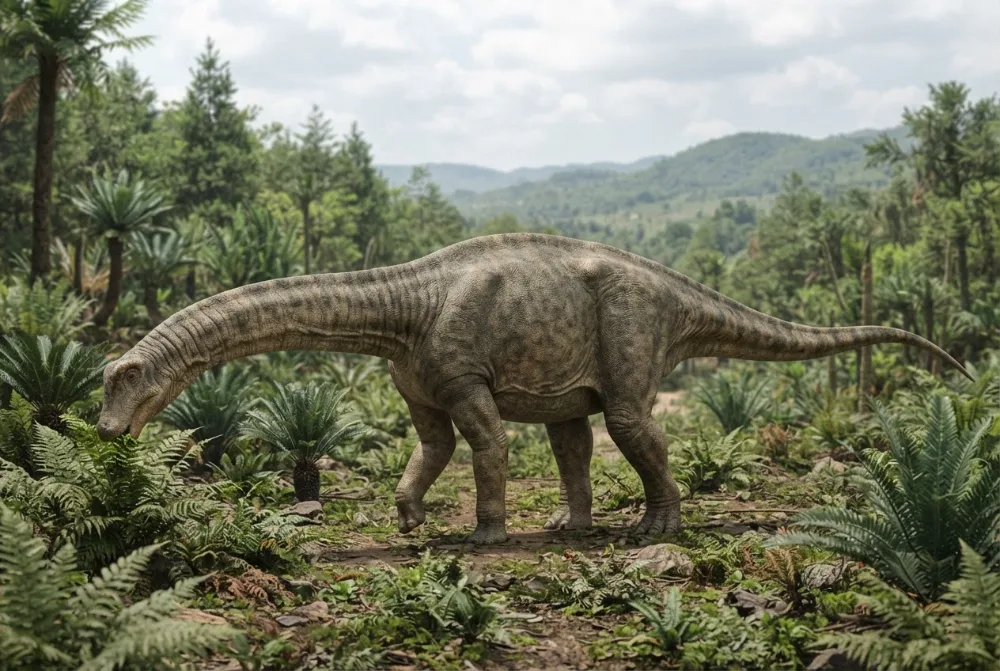
Yizhousaurus was an early long-necked dinosaur that lived in what is now China during the Early Jurassic. It had a beautifully preserved skull, which is rare for its kind. This plant-eater walked on four legs and grew to about the size of a small bus.21
Kañ la dundoon?
Naka la réyoon?
Naka la guddoon?
Naka la kawewoon?
jortu
 gudd ni 7 xaj, bakkan ba geen🍌gudd ni 39 banaana yu ñu topp-toppale🏃mënoon na daw 100 meetar ci 12 segond (nit ki gën a gaaw dafay soxla 9,6)
Naka la Yizhousaurus réyoon, bu ñu ko méngalee ak YAW?
Ay kalkil rekk ci sa navigatëer. Dara du ñu denc, dara du ñu yónne fenn.
Naka la gaawoon?


Xibaar yu neex
Yizhousaurus is one of the most complete early sauropodiform dinosaurs ever found, with a nearly whole skull and skeleton.1
Its skull had a short snout and a high, dome-shaped profile, which is unusual for early long-necked dinosaurs.2
The holotype skeleton was discovered in 2002 and excavated over about a month in October and November.1
Yizhousaurus lived during the Sinemurian age of the Early Jurassic, about 199 to 193 million years ago.3
Its name was first used in a 2010 scientific meeting, but it was not officially described until 2018.1
The fourth and fifth tail vertebrae of the holotype are fused together, which scientists think was a result of disease or injury.2
Ngir ñi xam dino lool
- Turu xam-xam
- Yizhousaurus
- Ku ko tudde
- Zhang et al. 20183
- Kurél
- Baat yu gudd
- Njaboot / klad
- Sauropodiformes3
- Klasifikasiyoŋ
- Sauropodomorpha3
- Màggaayu doj yi
- 200 ba 193 milyoŋ at (Sinemurian)3
- Formasiyoŋi doj
- Lufeng3
- Réew yi
- Siin3
- Fosil yu ñu gis
- 1 ci The Paleobiology Database3
- Gisees
- The only known skeleton of Yizhousaurus was found in 2002 near Duwafang Village in Yunnan, China. It was named and described by scientists in 2018, after being mentioned at a conference in 2010.12
- Ñu ngi koy werante ba tey
- Scientists are still debating exactly where Yizhousaurus sits on the family tree of sauropodiforms, because its skeleton has a mix of old and new features.2
Fa xibaar yi jóge
- Yizhousaurus (en.wikipedia.org)
- A new sauropodiform dinosaur with a ‘sauropodan’ skull from the Lower Jurassic Lufeng Formation of Yunnan Province, China (nature.com)
- Yizhousaurus in The Paleobiology Database (CC BY 4.0): at, béréb yi, formasiyoŋi doj, klasifikasiyoŋ.
Bépp xibaar ci xët wii am na lim bu wone fa mu jóge. Su nu juumee, baal nu, nun ñu bëgg dino lanu, du ab sërnaalu xam-xam. Wax nu ko ci [email protected] nu defar ko.
 Rex xiif na! Dino Wiki, mbiru ab baay la ngir doomam ju góor ju bëgg dinosoor, ci neen te amul kaamuñaate, amul tracker. Mag ñi mën nañu jox Rex tuuti ñam ngir dimbali ko mu des ci internet.Dundal Rex
 Brachiosaurus
 Diplodocus
 Brontosaurus
 Argentinosaurus
 Camarasaurus
 Morosaurus
 Dilophosaurus
 Stenopterygius
 Dorygnathus
 Scutellosaurus
 Sinosaurus
 Temnodontosaurus