 Uyiyiphi idayinaso? Ikwizi
 Idabi leedayinaso
 Ugqatso lweedayinaso
 Imidlalo emincinci yeedayinaso
 I-albhamu yezitikha
 Iilisti ze-TOP zeedayinaso
 Ndothuse!
Anabisetia
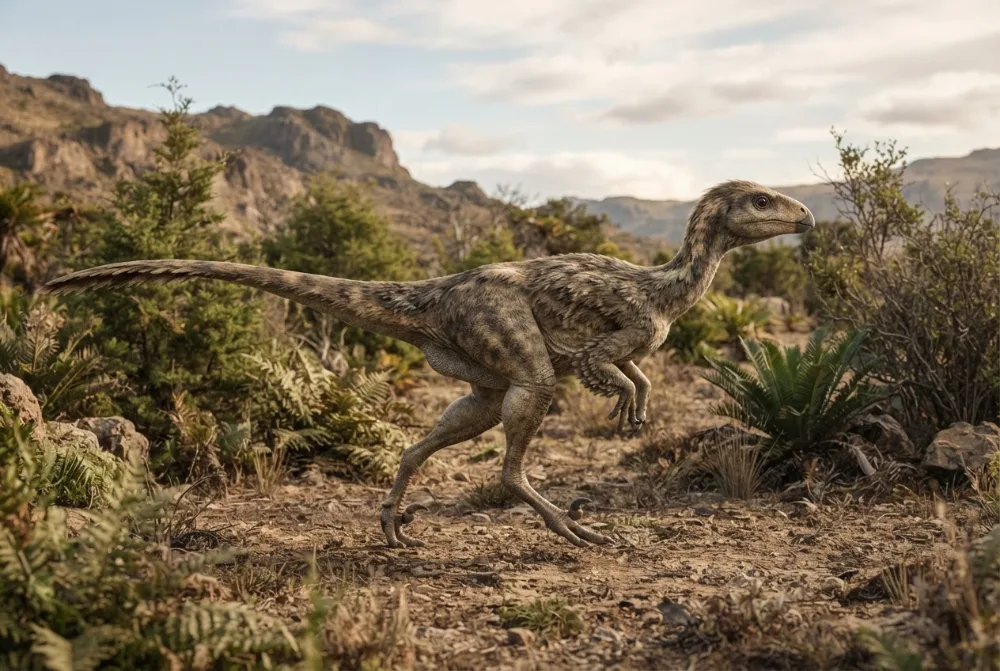
Anabisetia was a small, plant-eating dinosaur that walked on two legs. It lived in what is now Argentina, about 95 to 92 million years ago, during the Late Cretaceous Period.1
Yaphila nini?
Yayinkulu kangakanani?
Yayinde kangakanani?
Yayiphakame kangakanani?
Yayinzima kangakanani?
 inde njengeekati zasekhaya ezingama-4, impumlo ukuya emsileni🍌inde njengeebhanana ezingama-11 zilandelelana🍉inzima njengamavatala angama-4🏃ibinokubaleka iimitha ezili-100 ngemizuzwana engama-9.2 (oyena mntu ukhawulezayo udinga i-9,6)
Anabisetia wayemkhulu kangakanani xa ethelekiswa NAWE?
Yimathematika nje kwibhrawuza yakho. Akukho nto igcinwayo okanye ithunyelwe naphi na.
Yayikhawuleza kangakanani?


Iinyani ezimnandi
Anabisetia is known from four specimens, and together they show almost the whole skeleton except for the skull.1
The shoulder blade of Anabisetia had an extension called the acromial process that was the largest ever found in its group, the Euornithopoda.1
In its hand, the fifth metacarpal bone was flattened with straight edges, instead of being rounded like in most other dinosaurs.1
The hip bone, or ilium, had a front blade that made up more than half of the total ilium length and extended in front of the prepubis.1
At the back of the head, the connection with the neck, called the occipital condyle, pointed downwards.1
The fossils were found in rocks of the Cerro Lisandro Formation, which preserve a swamp that existed from about 95 to 92 million years ago.1
Eyona mibuzo ibuzwa kakhulu: Anabisetia
?How big was Anabisetia?
About 2 metres (6.6 feet) long and weighed around 20 kilograms (44 pounds).1
?What did Anabisetia eat?
It was a plant-eater, or herbivore, with teeth specialized for grinding vegetation.1
?When did Anabisetia live?
It lived about 95 to 92 million years ago, during the Late Cretaceous Period.1
?Where was Anabisetia found?
Its fossils were found in the Neuquén Province of Argentina, in South America.1
Kwiingcali zeedayinaso
- Igama lenzululwazi
- Anabisetia
- Inikwe igama ngu:
- Coria and Calvo 20024
- Iqela
- Izitya-zityalo ezinemilomo
- Usapho / iclade
- Elasmaria4
- Ukuhlelwa
- Ornithischia > Ornithopoda > Iguanodontia4
- Ubudala bamatye
- 94 ukuya ku-90 izigidi zeminyaka (Turonian)4
- Izakhiwo zamatye
- Cerro Lisandro4
- Amazwe
- i-Argentina4
- Iirekhodi zeefosili
- 2 kwi-Paleobiology Database4
- Ukufunyanwa
- The fossils were discovered in 1985 by a local farmer named Roberto Saldivia Blanco, who brought them to scientists in 1993. Argentine paleontologists Rodolfo Coria and Jorge Orlando Calvo named Anabisetia in 2002.1
- Kusaxoxwa ngayo
- Scientists are not sure exactly where Anabisetia fits in the dinosaur family tree. It may be closely related to Gasparinisaura, but the lack of skull material makes it hard to place with precision.1
Apho iinyani zivela khona
- Anabisetia (en.wikipedia.org)
- Dinosaurios del Neuquén - Dinosaurios del Neuquén – Anabisetia saldiviai → Más Neuquén (masneuquen.com)
- Anabisetia | Part of the Ornithopod Family of Dinosaurs (dinosaurmadness.com)
- Anabisetia in The Paleobiology Database (CC BY 4.0): ubudala, iindawo, izakhiwo zamatye, ukuhlelwa.
Yonke inyani ekweli phepha inenombolo ebonisa umthombo wayo. Ukuba siphosisile, uxolo, sithanda iidayinaso, asiyojenali yenzululwazi. Sixelele apha: [email protected], siya kuyilungisa.
 URex ulambile! I-Dino Wiki yiprojekthi katata ukwenzela unyana wakhe othanda iidayinaso, isimahla, ayinazintengiso, ayinazilandeli. Abantu abadala banokuphakela uRex isidlwana ukuze incede ihlale kwi-intanethi.Phakela uRex
 Iguanodon
 Tenontosaurus
 Thescelosaurus
 Zalmoxes
 Camptosaurus
 Rhabdodon
 Tyrannosaurus
 Triceratops
 Velociraptor
 Spinosaurus
 Ankylosaurus
 Parasaurolophus