 Uyiyiphi idayinaso? Ikwizi
 Idabi leedayinaso
 Ugqatso lweedayinaso
 Imidlalo emincinci yeedayinaso
 I-albhamu yezitikha
 Iilisti ze-TOP zeedayinaso
 Ndothuse!
Yaphila nini?

Yayinkulu kangakanani?
Yayinde kangakanani?
Yayiphakame kangakanani?
uqikelelo
Yayinzima kangakanani?
 inde njengezinja ezingama-3, impumlo ukuya emsileni🍌inde njengeebhanana ezingama-16 zilandelelana🍉inzima njengamavatala angama-22🧸inzima njengabantwana basenkulisa abangama-6🎒inzima njengabantwana besikolo abangama-3🏃ibinokubaleka iimitha ezili-100 ngemizuzwana engama-7.5 (oyena mntu ukhawulezayo udinga i-9,6)
Citipati wayemkhulu kangakanani xa ethelekiswa NAWE?
Yimathematika nje kwibhrawuza yakho. Akukho nto igcinwayo okanye ithunyelwe naphi na.
Yayikhawuleza kangakanani?


Iinyani ezimnandi
Citipati means 'funeral pyre lord' in Sanskrit, named after a skeleton-like spirit in Tibetan folklore.1
One famous Citipati fossil is nicknamed 'Big Mama' because it was found sitting on a nest of eggs.1
Citipati had a pygostyle, a fused tailbone that supported a fan of feathers, just like modern birds.1
Its arms and tail were covered in long feathers that probably helped shade and protect its eggs and babies.1
Citipati was one of the largest oviraptorids, about the size of an emu, and weighed as much as a large dog.1
Scientists think Citipati may have brought small dinosaurs to its nest to feed its hatchlings.1
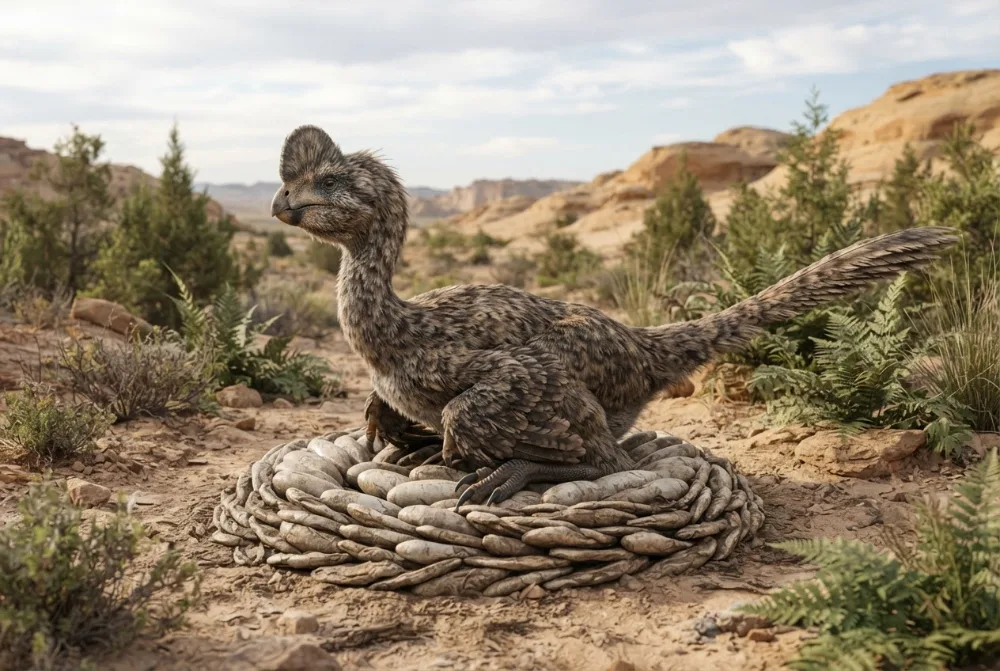
Eyona mibuzo ibuzwa kakhulu: Citipati
?How big was Citipati?
Citipati was about 2.5 to 2.9 metres long and weighed 75 to 110 kilograms. That is much larger than an emu.1
?What did Citipati eat?
Citipati was probably omnivorous, meaning it ate both plants and meat. Scientists think it may have brought small dinosaurs to its nest to feed its babies.12
?Did Citipati have feathers?
Yes, Citipati had long feathers on its arms and tail. These feathers probably helped protect its eggs and babies from sun, wind, and rain.1
?Why did Citipati sit on its eggs?
Citipati sat on its eggs to keep them warm and safe, just like birds do today. Its arms spread over the nest helped shade and protect the eggs.13
Inyaniso ngeentsomi
Intsomi: Oviraptorids like Citipati were egg thieves.
Inyaniso: The name Oviraptor means 'egg thief', but fossils show Citipati was a caring parent that brooded its own eggs, not a robber.1
Kwiingcali zeedayinaso
- Igama lenzululwazi
- Citipati
- Inikwe igama ngu:
- Clark et al. 20014
- Iqela
- Iidayinaso ezingaqhelekanga ezineentsiba
- Usapho / iclade
- Oviraptoridae4
- Ukuhlelwa
- Theropoda > Oviraptorosauria4
- Ubudala bamatye
- 84 ukuya ku-72 izigidi zeminyaka (Campanian)4
- Izakhiwo zamatye
- Djadokhta4
- Amazwe
- iMongolia4
- Iirekhodi zeefosili
- 2 kwi-Paleobiology Database4
- Ukufunyanwa
- Citipati was named in 2001 by paleontologists James Clark, Mark Norell, and Rinchen Barsbold. The first fossils were found in the 1990s at Ukhaa Tolgod in Mongolia.12
- Kusaxoxwa ngayo
- Scientists are not sure if Citipati was mostly a plant-eater or an omnivore that also ate meat.1
Apho iinyani zivela khona
- Citipati (en.wikipedia.org)
- Citipati | Natural History Museum (nhm.ac.uk)
- Citipati Osmolskae: Get to Know a Dino | AMNH (amnh.org)
- Citipati in The Paleobiology Database (CC BY 4.0): ubudala, iindawo, izakhiwo zamatye, ukuhlelwa.
Yonke inyani ekweli phepha inenombolo ebonisa umthombo wayo. Ukuba siphosisile, uxolo, sithanda iidayinaso, asiyojenali yenzululwazi. Sixelele apha: [email protected], siya kuyilungisa.
 URex ulambile! I-Dino Wiki yiprojekthi katata ukwenzela unyana wakhe othanda iidayinaso, isimahla, ayinazintengiso, ayinazilandeli. Abantu abadala banokuphakela uRex isidlwana ukuze incede ihlale kwi-intanethi.Phakela uRex
Ezinye ezivela kwiqela elinye: Iidayinaso ezingaqhelekanga ezineentsiba
 TherizinosaurusIidayinaso ezingaqhelekanga ezineentsiba
 OviraptorIidayinaso ezingaqhelekanga ezineentsiba
 ChirostenotesIidayinaso ezingaqhelekanga ezineentsiba
 CitipesIidayinaso ezingaqhelekanga ezineentsiba
 LeptorhynchosIidayinaso ezingaqhelekanga ezineentsiba
 AvimimusIidayinaso ezingaqhelekanga ezineentsiba
 Tyrannosaurus
 Triceratops
 Velociraptor
 Spinosaurus
 Ankylosaurus
 Parasaurolophus