 Uyiyiphi idayinaso? Ikwizi
 Idabi leedayinaso
 Ugqatso lweedayinaso
 Imidlalo emincinci yeedayinaso
 I-albhamu yezitikha
 Iilisti ze-TOP zeedayinaso
 Ndothuse!
Ganzhousaurus
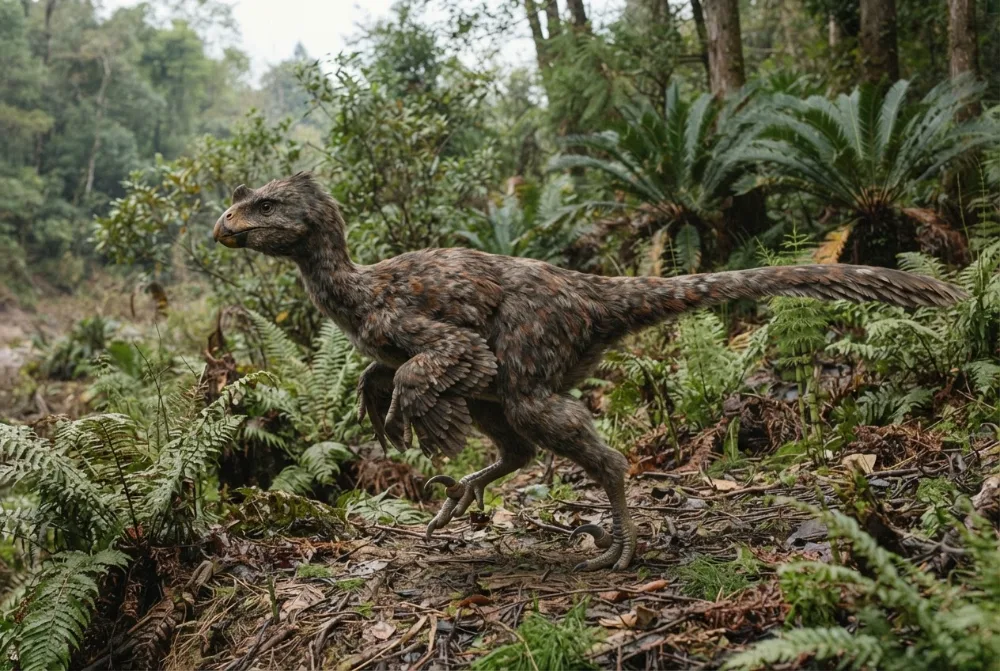
Ganzhousaurus was a small, bird-like dinosaur that lived in southern China near the end of the Age of Dinosaurs. It had a beaky mouth and probably used its strong claws and teeth to eat plants, seeds, and maybe even small animals.14
Yaphila nini?
Yayinkulu kangakanani?
Yayinde kangakanani?
Yayiphakame kangakanani?
uqikelelo
 inde njengeekati zasekhaya ezingama-4, impumlo ukuya emsileni🍌inde njengeebhanana ezingama-11 zilandelelana🏃ibinokubaleka iimitha ezili-100 ngemizuzwana engama-8 (oyena mntu ukhawulezayo udinga i-9,6)
Ganzhousaurus wayemkhulu kangakanani xa ethelekiswa NAWE?
Yimathematika nje kwibhrawuza yakho. Akukho nto igcinwayo okanye ithunyelwe naphi na.
Yayikhawuleza kangakanani?


Iinyani ezimnandi
Ganzhousaurus lived alongside at least four other oviraptorid dinosaurs, including Banji long and Nankangia jiangxiensis, all in the same area.1
Its lower jaw had a shallow groove and a special window (the external mandibular fenestra) that was split into two parts by a bone.2
The name Ganzhousaurus means 'Ganzhou lizard' after the city in China where its fossils were found.1
Ganzhousaurus lived during the very end of the Cretaceous Period, about 72 to 66 million years ago.1
Scientists are not sure exactly where Ganzhousaurus fits in the oviraptorid family tree; some think it is related to Oviraptor, others to the 'ingeniine' group.1
This dinosaur probably had feathers, like many of its oviraptorid relatives, helping it stay warm and maybe even show off.1
Eyona mibuzo ibuzwa kakhulu: Ganzhousaurus
?How big was Ganzhousaurus?
Its exact size is not known from the sources, but it was a small oviraptorid dinosaur, similar in size to other members of its group.12
?What did Ganzhousaurus eat?
Ganzhousaurus was probably mostly herbivorous, eating plants and seeds with its beaky mouth and strong claws.1
?Did Ganzhousaurus have feathers?
Yes, like many of its oviraptorid relatives, Ganzhousaurus probably had feathers to keep warm and maybe for display.1
Inyaniso ngeentsomi
Intsomi: Some people think all oviraptorids were egg thieves.
Inyaniso: Ganzhousaurus and its relatives probably ate plants and small animals, not just eggs. Their beaks were well-suited for crushing seeds and tough plants.1
Kwiingcali zeedayinaso
- Igama lenzululwazi
- Ganzhousaurus
- Inikwe igama ngu:
- Wang et al. 20134
- Iqela
- Iidayinaso ezingaqhelekanga ezineentsiba
- Usapho / iclade
- Oviraptoridae4
- Ukuhlelwa
- Theropoda > Oviraptorosauria4
- Ubudala bamatye
- 72 ukuya ku-66 izigidi zeminyaka (Maastrichtian)4
- Amazwe
- iTshayina4
- Iirekhodi zeefosili
- 1 kwi-Paleobiology Database4
- Ukufunyanwa
- Ganzhousaurus was named in 2013 by scientists Shuo Wang, Chengkai Sun, Corwin Sullivan, and Xing Xu, based on a single skeleton found in the Nanxiong Formation of southern China.12
- Kusaxoxwa ngayo
- Scientists still debate whether Ganzhousaurus was more closely related to Oviraptor or to the 'ingeniine' group of oviraptorids.1
Apho iinyani zivela khona
- Ganzhousaurus (en.wikipedia.org)
- A new oviraptorid (Dinosauria: Theropoda) from the Upper Cretaceous of southern China (mapress.com)
- Ganzhousaurus - (dinosanddesigns.com)
- Ganzhousaurus in The Paleobiology Database (CC BY 4.0): ubudala, iindawo, izakhiwo zamatye, ukuhlelwa.
Yonke inyani ekweli phepha inenombolo ebonisa umthombo wayo. Ukuba siphosisile, uxolo, sithanda iidayinaso, asiyojenali yenzululwazi. Sixelele apha: [email protected], siya kuyilungisa.
 URex ulambile! I-Dino Wiki yiprojekthi katata ukwenzela unyana wakhe othanda iidayinaso, isimahla, ayinazintengiso, ayinazilandeli. Abantu abadala banokuphakela uRex isidlwana ukuze incede ihlale kwi-intanethi.Phakela uRex
Ezinye ezivela kwiqela elinye: Iidayinaso ezingaqhelekanga ezineentsiba
 TherizinosaurusIidayinaso ezingaqhelekanga ezineentsiba
 OviraptorIidayinaso ezingaqhelekanga ezineentsiba
 ChirostenotesIidayinaso ezingaqhelekanga ezineentsiba
 CitipesIidayinaso ezingaqhelekanga ezineentsiba
 LeptorhynchosIidayinaso ezingaqhelekanga ezineentsiba
 AvimimusIidayinaso ezingaqhelekanga ezineentsiba
 Tyrannosaurus
 Triceratops
 Velociraptor
 Spinosaurus
 Ankylosaurus
 Parasaurolophus