 Uyiyiphi idayinaso? Ikwizi
 Idabi leedayinaso
 Ugqatso lweedayinaso
 Imidlalo emincinci yeedayinaso
 I-albhamu yezitikha
 Iilisti ze-TOP zeedayinaso
 Ndothuse!
Gonkoken
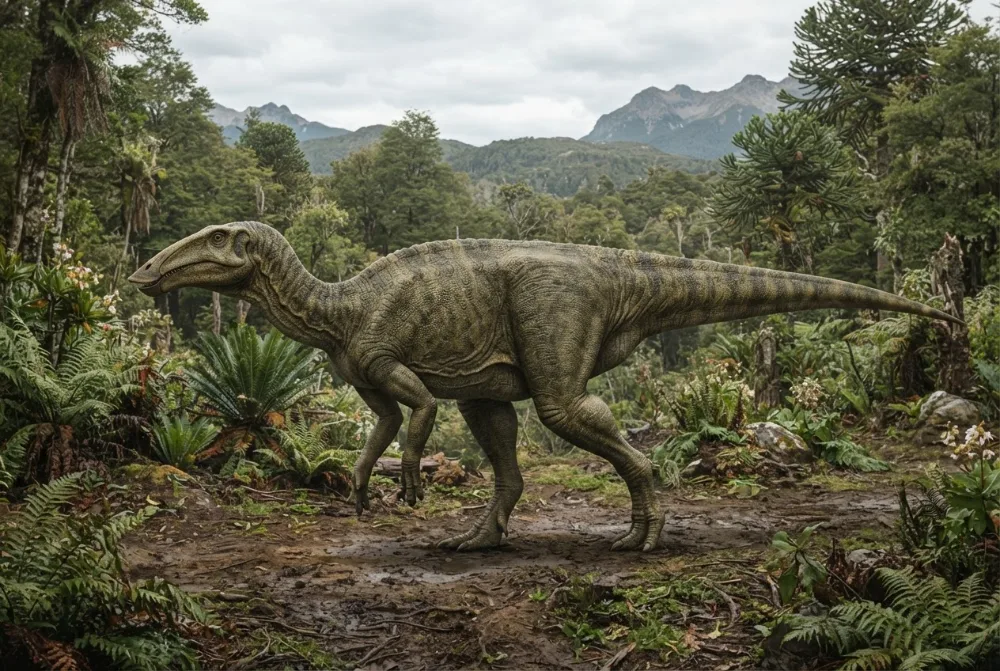
Gonkoken was a small duck-billed dinosaur that lived in what is now southern Chile, near Antarctica. It was about as long as a car and used its hundreds of teeth to chew tough plants. This dinosaur is special because it is not a true hadrosaurid, but a more ancient cousin that survived until the very end of the dinosaur age.24
Yaphila nini?
Yayinkulu kangakanani?
Yayinde kangakanani?
Yayiphakame kangakanani?
uqikelelo
Yayinzima kangakanani?
 inde njengezinja ezingama-4, impumlo ukuya emsileni🍌inde njengeebhanana ezingama-22 zilandelelana🍉inzima njengamavatala angama-200🧸inzima njengabantwana basenkulisa abangama-53🎒inzima njengabantwana besikolo abangama-31🐻❄️inzima njengeebhere ezimhlophe ezingama-2🏃ibinokubaleka iimitha ezili-100 ngemizuzwana engama-11 (oyena mntu ukhawulezayo udinga i-9,6)
Gonkoken wayemkhulu kangakanani xa ethelekiswa NAWE?
Yimathematika nje kwibhrawuza yakho. Akukho nto igcinwayo okanye ithunyelwe naphi na.
Yayikhawuleza kangakanani?


Iinyani ezimnandi
Gonkoken is a 'transitional' duckbill, meaning it is closely related to true hadrosaurids but not one itself. Its ancestors came from North America and arrived in South America earlier than the more advanced duckbills.2
The name Gonkoken comes from the Aónik’enk language, spoken by the indigenous people of the region. 'Gon' means 'similar to' and 'koken' means 'wild duck or swan'.21
Fossils of Gonkoken were found in a bonebed containing at least three individuals. The site is still being excavated and may hold many more bones.2
Gonkoken lived about 71.7 to 70.5 million years ago, during the early Maastrichtian stage of the Late Cretaceous. This was just a few million years before the asteroid impact that ended the age of dinosaurs.2
Unlike true hadrosaurids, Gonkoken had fewer than 30 tooth positions in its lower jaw, and its tooth rows did not extend beyond the coronoid process.2
Gonkoken is the first duck-billed dinosaur described from a subantarctic region. Its discovery suggests that some alleged hadrosaurid fossils from Antarctica might actually belong to non-hadrosaurid duckbills like Gonkoken.2
Eyona mibuzo ibuzwa kakhulu: Gonkoken
?How big was Gonkoken?
Gonkoken was a small duck-billed dinosaur, about 4 metres (13 feet) long. That is roughly the length of a small car.12
?When did Gonkoken live?
Gonkoken lived about 71.7 to 70.5 million years ago, during the early Maastrichtian stage of the Late Cretaceous. That was just a few million years before the asteroid hit.12
Inyaniso ngeentsomi
Intsomi: All duck-billed dinosaurs are hadrosaurids (true duckbills).
Inyaniso: Gonkoken is a duck-billed dinosaur but not a hadrosaurid. It belongs to a more ancient lineage that survived alongside true duckbills in the far south.2
Kwiingcali zeedayinaso
- Igama lenzululwazi
- Gonkoken
- Inikwe igama ngu:
- Alarcón-Muñoz et al. 20234
- Iqela
- Izitya-zityalo ezinemilomo
- Usapho / iclade
- Hadrosauroidea4
- Ukuhlelwa
- Ornithischia > Ornithopoda > Iguanodontia4
- Ubudala bamatye
- 72 ukuya ku-66 izigidi zeminyaka (Maastrichtian)4
- Izakhiwo zamatye
- Dorotea4
- Amazwe
- iChile4
- Iirekhodi zeefosili
- 1 kwi-Paleobiology Database4
- Ukufunyanwa
- Gonkoken was named in 2023 by Alarcón-Muñoz and colleagues. The first bones were found by Mario 'Nano' Ulloa in the Río de las Chinas Valley, and excavations began in 2013, uncovering many disarticulated remains.24
- Kusaxoxwa ngayo
- Scientists debate whether all alleged hadrosaurid fossils from Antarctica and subantarctic regions actually belong to non-hadrosaurid duckbills like Gonkoken, rather than true hadrosaurids.2
Apho iinyani zivela khona
- Gonkoken (en.wikipedia.org)
- Relict duck-billed dinosaurs survived into the last age of the dinosaurs in subantarctic Chile (science.org)
- Scientists discover duck-billed dinosaur roamed Chile 72 million years ago | Reuters (reuters.com)
- Gonkoken in The Paleobiology Database (CC BY 4.0): ubudala, iindawo, izakhiwo zamatye, ukuhlelwa.
Yonke inyani ekweli phepha inenombolo ebonisa umthombo wayo. Ukuba siphosisile, uxolo, sithanda iidayinaso, asiyojenali yenzululwazi. Sixelele apha: [email protected], siya kuyilungisa.
 URex ulambile! I-Dino Wiki yiprojekthi katata ukwenzela unyana wakhe othanda iidayinaso, isimahla, ayinazintengiso, ayinazilandeli. Abantu abadala banokuphakela uRex isidlwana ukuze incede ihlale kwi-intanethi.Phakela uRex
 Iguanodon
 Tenontosaurus
 Thescelosaurus
 Zalmoxes
 Camptosaurus
 Rhabdodon
 Tyrannosaurus
 Triceratops
 Velociraptor
 Spinosaurus
 Ankylosaurus
 Parasaurolophus