 Uyiyiphi idayinaso? Ikwizi
 Idabi leedayinaso
 Ugqatso lweedayinaso
 Imidlalo emincinci yeedayinaso
 I-albhamu yezitikha
 Iilisti ze-TOP zeedayinaso
 Ndothuse!
Hagryphus
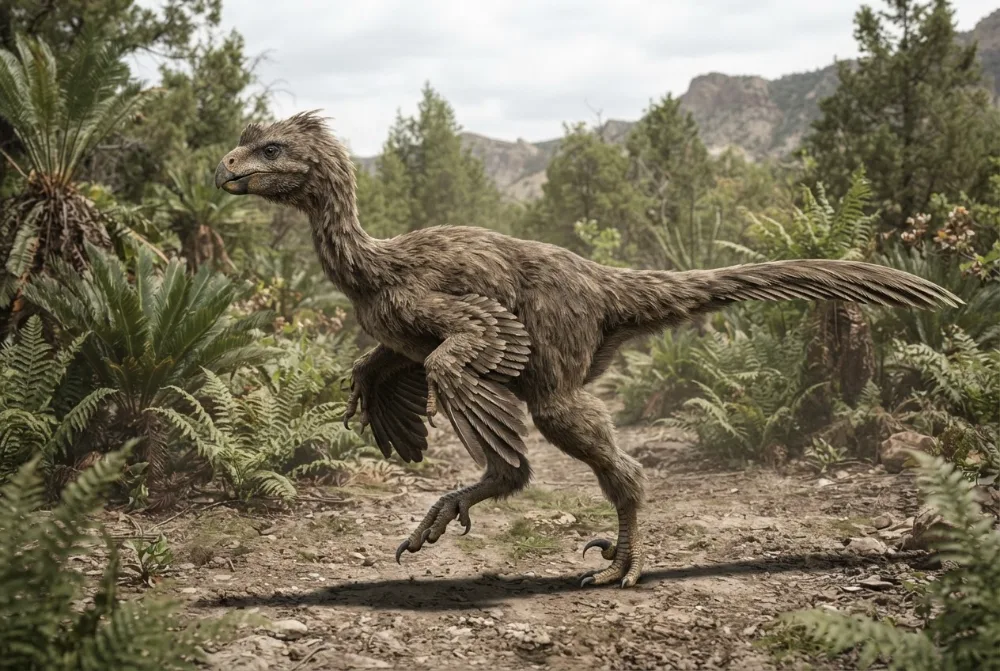
Hagryphus was a big, feathered dinosaur that lived in what is now Utah, USA, about 76 million years ago. It was one of the largest oviraptorosaurs in North America, and it probably used its toothless beak to eat plants and small animals.12
Yaphila nini?
Yayinkulu kangakanani?
Yayinde kangakanani?
Yayiphakame kangakanani?
uqikelelo
Yayinzima kangakanani?
 inde njengezinja ezingama-3, impumlo ukuya emsileni🍌inde njengeebhanana ezingama-17 zilandelelana
 inzima njengeekati zasekhaya ezingama-12🍉inzima njengamavatala angama-10🧸inzima njengabantwana basenkulisa abangama-2.5🎒inzima njengabantwana besikolo abangama-1.5🏃ibinokubaleka iimitha ezili-100 ngemizuzwana engama-7.7 (oyena mntu ukhawulezayo udinga i-9,6)
Hagryphus wayemkhulu kangakanani xa ethelekiswa NAWE?
Yimathematika nje kwibhrawuza yakho. Akukho nto igcinwayo okanye ithunyelwe naphi na.
Yayikhawuleza kangakanani?


Iinyani ezimnandi
Hagryphus was about 30 to 40 percent larger than the next largest North American oviraptorosaur, Chirostenotes.1
The only known fossil includes a nearly complete left hand, which was about a foot long, and some foot bones.1
Hagryphus lived near the shore of a huge inland sea called the Western Interior Seaway, in a wet, humid environment with swamps and lakes.1
It was probably covered in feathers, like other oviraptorosaurs, and some scientists think it might have been a true bird.1
The hand of Hagryphus had a very robust first finger, with a claw that was especially thick and strong.1
Eyona mibuzo ibuzwa kakhulu: Hagryphus
?How big was Hagryphus?
About 2.4 to 3 metres long and weighed around 50 kilograms.1
?Did Hagryphus have feathers?
Yes, evidence suggests it was feathered, like other oviraptorosaurs.1
?What did Hagryphus eat?
It had a toothless beak and probably ate plants or small animals, not just eggs.1
?When did Hagryphus live?
It lived about 76 million years ago, during the Late Cretaceous period.1
Inyaniso ngeentsomi
Intsomi: Some people think Hagryphus ate only eggs because it had no teeth.
Inyaniso: Scientists now think it likely ate plants and small vertebrates, not just eggs.1
Kwiingcali zeedayinaso
- Igama lenzululwazi
- Hagryphus
- Inikwe igama ngu:
- Zanno and Sampson 20052
- Iqela
- Iidayinaso ezingaqhelekanga ezineentsiba
- Usapho / iclade
- Caenagnathidae2
- Ukuhlelwa
- Theropoda > Oviraptorosauria2
- Ubudala bamatye
- 84 ukuya ku-72 izigidi zeminyaka (Campanian)2
- Izakhiwo zamatye
- Kaiparowits2
- Amazwe
- iUSA2
- Iirekhodi zeefosili
- 1 kwi-Paleobiology Database2
- Ukufunyanwa
- The fossil was found in 2002 by Michael Getty in southern Utah, and it was named Hagryphus giganteus by Lindsay Zanno and Scott Sampson in 2005.1
- Kusaxoxwa ngayo
- Scientists still debate whether Hagryphus was a member of the Caenagnathidae family or a more general oviraptorosaur, and whether it was a bird.1
Apho iinyani zivela khona
- Hagryphus (en.wikipedia.org)
- Hagryphus in The Paleobiology Database (CC BY 4.0): ubudala, iindawo, izakhiwo zamatye, ukuhlelwa.
Yonke inyani ekweli phepha inenombolo ebonisa umthombo wayo. Ukuba siphosisile, uxolo, sithanda iidayinaso, asiyojenali yenzululwazi. Sixelele apha: [email protected], siya kuyilungisa.
 URex ulambile! I-Dino Wiki yiprojekthi katata ukwenzela unyana wakhe othanda iidayinaso, isimahla, ayinazintengiso, ayinazilandeli. Abantu abadala banokuphakela uRex isidlwana ukuze incede ihlale kwi-intanethi.Phakela uRex
Ezinye ezivela kwiqela elinye: Iidayinaso ezingaqhelekanga ezineentsiba
 TherizinosaurusIidayinaso ezingaqhelekanga ezineentsiba
 OviraptorIidayinaso ezingaqhelekanga ezineentsiba
 ChirostenotesIidayinaso ezingaqhelekanga ezineentsiba
 CitipesIidayinaso ezingaqhelekanga ezineentsiba
 LeptorhynchosIidayinaso ezingaqhelekanga ezineentsiba
 AvimimusIidayinaso ezingaqhelekanga ezineentsiba
 Tyrannosaurus
 Triceratops
 Velociraptor
 Spinosaurus
 Ankylosaurus
 Parasaurolophus