 Uyiyiphi idayinaso? Ikwizi
 Idabi leedayinaso
 Ugqatso lweedayinaso
 Imidlalo emincinci yeedayinaso
 I-albhamu yezitikha
 Iilisti ze-TOP zeedayinaso
 Ndothuse!
Helioceratops
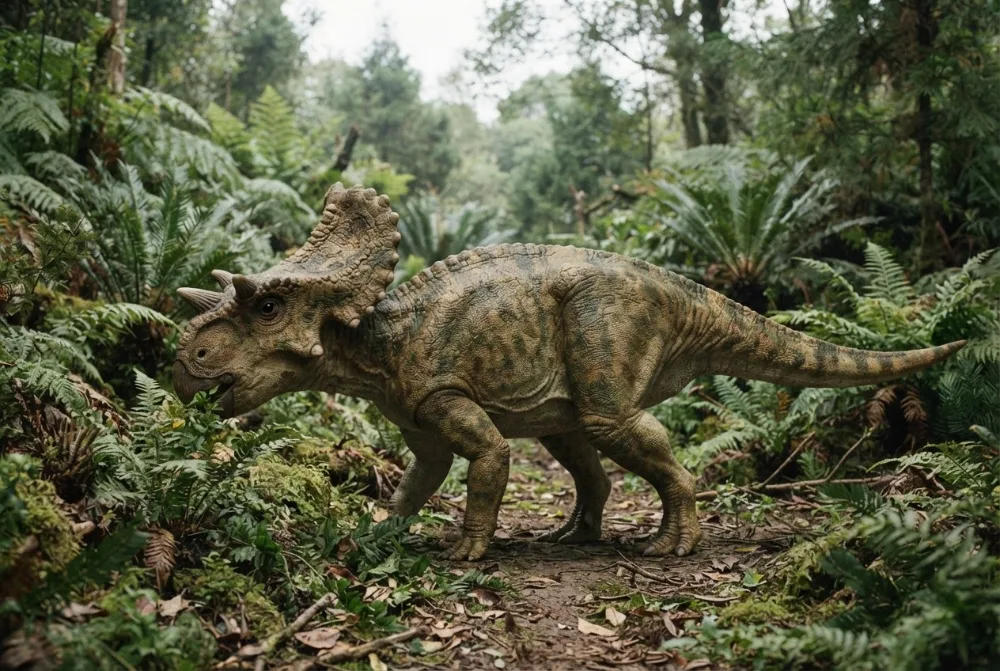
Helioceratops was a small, plant-eating dinosaur that lived about 100 million years ago in what is now China. It had a short lower jaw and walked on four legs. Its name means 'sun horned face' because scientists think horned dinosaurs like it first appeared in the East, where the sun rises.1
Yaphila nini?
Yayinkulu kangakanani?
Yayinde kangakanani?
Yayiphakame kangakanani?
Yayinzima kangakanani?
 inde njengeekati zasekhaya ezingama-2.5, impumlo ukuya emsileni🍌inde njengeebhanana ezingama-7 zilandelelana🍉inzima njengamavatala angama-4🏃ibinokubaleka iimitha ezili-100 ngemizuzwana engama-11 (oyena mntu ukhawulezayo udinga i-9,6)
Helioceratops wayemkhulu kangakanani xa ethelekiswa NAWE?
Yimathematika nje kwibhrawuza yakho. Akukho nto igcinwayo okanye ithunyelwe naphi na.
Yayikhawuleza kangakanani?


Iinyani ezimnandi
Helioceratops is known from only two jaw bones: a right lower jaw (the holotype) and a left upper jaw (the paratype). They were found close together and may belong to the same animal.1
Its lower jaw is very short and deep. The tooth row is only 60% longer than the height of the jawbone.1
The teeth of Helioceratops have an unusual pattern of ridges: up to nine ridges in front of the main ridge but only four behind it.1
Helioceratops lived during the Albian to Cenomanian stages, about 100 million years ago, at the boundary between the Early and Late Cretaceous.1
Scientists think Helioceratops is a close relative of Auroraceratops, which means 'dawn horned face'.1
Eyona mibuzo ibuzwa kakhulu: Helioceratops
?How big was Helioceratops?
Helioceratops was a relatively small dinosaur. In 2010, Gregory S. Paul estimated it was about 1.3 metres (4.3 feet) long and weighed about 20 kilograms (44 pounds).1
?What did Helioceratops eat?
Helioceratops was a herbivore, meaning it ate plants. It lived on land and likely shared its habitat with another plant-eating dinosaur called Changchunsaurus.1
?When did Helioceratops live?
Helioceratops lived about 100 million years ago, during the Albian to Cenomanian stages, which is the boundary between the Early and Late Cretaceous. Its fossils were found in the Quantou Formation in China.14
?Why is it called Helioceratops?
The name means 'sun horned face' because scientists think horned dinosaurs first appeared in the East, where the sun rises. It also refers to its close relationship with Auroraceratops, the 'dawn horned face'.1
Kwiingcali zeedayinaso
- Igama lenzululwazi
- Helioceratops
- Inikwe igama ngu:
- Jin et al. 20094
- Iqela
- Iidayinaso ezineempondo
- Usapho / iclade
- Leptoceratopsidae4
- Ukuhlelwa
- Ornithischia > Ceratopsia4
- Ubudala bamatye
- 121 ukuya ku-100 izigidi zeminyaka (Aptian / Albian)4
- Izakhiwo zamatye
- Quantou4
- Amazwe
- iTshayina4
- Iirekhodi zeefosili
- 1 kwi-Paleobiology Database4
- Ukufunyanwa
- Helioceratops was named in 2009 by Jin Liyong, Chen Jun, Zan Shuqin and Pascal Godefroit. The fossils were dug up in 2000 and 2002 at the Liufangzi site in Jilin Province, China.12
- Kusaxoxwa ngayo
- Scientists are not sure whether Helioceratops had horns. No horn cores have been found, but it is a ceratopsian, so it may have had small horns on its face.1
Apho iinyani zivela khona
- Helioceratops (en.wikipedia.org)
- Newly Discovered Dinosaur Speicies Named 'Helioceratops' -- Beijing Review (bjreview.com)
- Helioceratops | The Sun-Horned Face of Cretaceous China (thedinosaurs.org)
- Helioceratops in The Paleobiology Database (CC BY 4.0): ubudala, iindawo, izakhiwo zamatye, ukuhlelwa.
Yonke inyani ekweli phepha inenombolo ebonisa umthombo wayo. Ukuba siphosisile, uxolo, sithanda iidayinaso, asiyojenali yenzululwazi. Sixelele apha: [email protected], siya kuyilungisa.
 URex ulambile! I-Dino Wiki yiprojekthi katata ukwenzela unyana wakhe othanda iidayinaso, isimahla, ayinazintengiso, ayinazilandeli. Abantu abadala banokuphakela uRex isidlwana ukuze incede ihlale kwi-intanethi.Phakela uRex
 Triceratops
 Protoceratops
 Ojoceratops
 Tatankaceratops
 Psittacosaurus
 Centrosaurus
 Stegosaurus
 Iguanodon
 Archaeopteryx
 Giganotosaurus
 Microraptor
 Deinonychus