 Uyiyiphi idayinaso? Ikwizi
 Idabi leedayinaso
 Ugqatso lweedayinaso
 Imidlalo emincinci yeedayinaso
 I-albhamu yezitikha
 Iilisti ze-TOP zeedayinaso
 Ndothuse!
Macrogryphosaurus
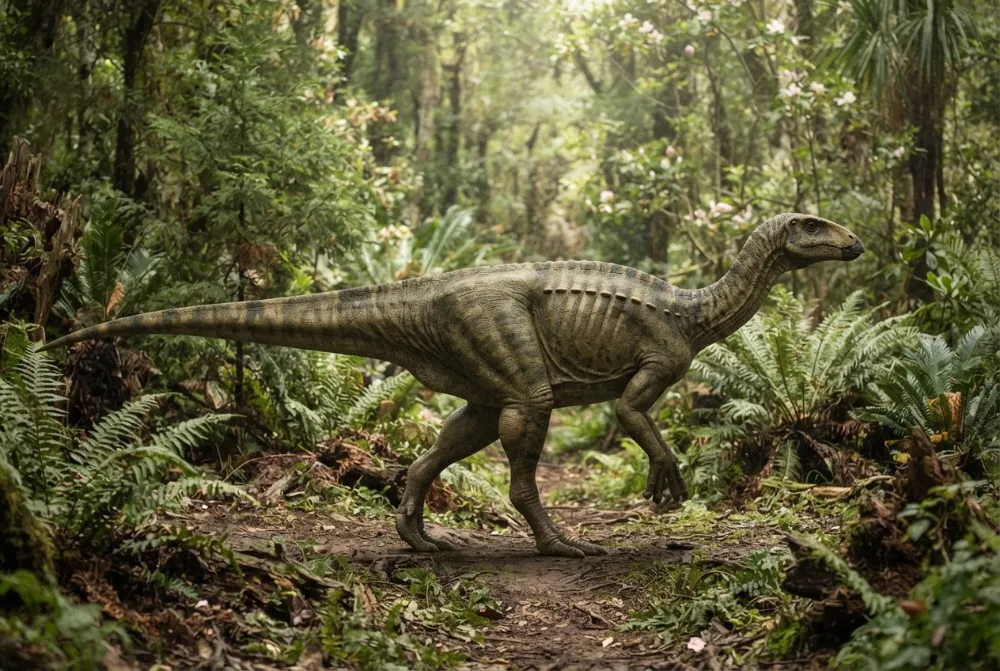
Macrogryphosaurus was a big, gentle plant-eater that wandered the forests of ancient Argentina. It had a long neck and tail, and bony plates along its ribs that might have helped it breathe or stayed stiff. This dinosaur is the largest known member of its group, the elasmarian ornithopods.1
Yaphila nini?
Yayinkulu kangakanani?
Yayinde kangakanani?
Yayiphakame kangakanani?
uqikelelo
Yayinzima kangakanani?
 inde njengezinja ezingama-6, impumlo ukuya emsileni🍌inde njengeebhanana ezingama-33 zilandelelana🍉inzima njengamavatala angama-60🧸inzima njengabantwana basenkulisa abangama-16🎒inzima njengabantwana besikolo abangama-9🏃ibinokubaleka iimitha ezili-100 ngemizuzwana engama-8.8 (oyena mntu ukhawulezayo udinga i-9,6)
Macrogryphosaurus wayemkhulu kangakanani xa ethelekiswa NAWE?
Yimathematika nje kwibhrawuza yakho. Akukho nto igcinwayo okanye ithunyelwe naphi na.
Yayikhawuleza kangakanani?


Iinyani ezimnandi
Macrogryphosaurus had bony plates along its ribs, called intercostal plates, which made its torso stiff and bird-like.1
It is the largest known elasmarian dinosaur, reaching about 6 metres (20 feet) long.1
Its name means 'big enigmatic lizard', because scientists were puzzled by its features.1
Macrogryphosaurus had a long neck and a tail similar to a coelurosaur, a group of theropod dinosaurs, which is unusual for an ornithopod.1
Fossils of Macrogryphosaurus were discovered by a young boy named Rafael Moyano in 1999 near Lake Mari Menuco in Argentina.1
Only one nearly complete skeleton of Macrogryphosaurus has been found, so scientists are still learning about it.1
Eyona mibuzo ibuzwa kakhulu: Macrogryphosaurus
?How big was Macrogryphosaurus?
It was about 6 metres (20 feet) long, though one estimate says 5 metres (16 feet) and 300 kg (660 lb). It is the largest known elasmarian dinosaur.1
?What did Macrogryphosaurus eat?
It was a plant-eater, so it ate plants. The Paleobiology Database lists it as a ground-dwelling herbivore.3
?When did Macrogryphosaurus live?
It lived about 89 million years ago, during the Late Cretaceous Period, in what is now Argentina.1
?Why did Macrogryphosaurus have plates on its ribs?
Scientists are not sure. The plates, called intercostal plates, made its torso stiff and bird-like, but their exact purpose is still a mystery.1
Inyaniso ngeentsomi
Intsomi: Some people think Macrogryphosaurus was a slow, heavy dinosaur.
Inyaniso: Actually, it was lightly built and graceful, with a slender body compared to many other big ornithopods.1
Kwiingcali zeedayinaso
- Igama lenzululwazi
- Macrogryphosaurus
- Inikwe igama ngu:
- Calvo et al. 20073
- Iqela
- Izitya-zityalo ezinemilomo
- Usapho / iclade
- Elasmaria3
- Ukuhlelwa
- Ornithischia > Ornithopoda > Iguanodontia3
- Ubudala bamatye
- 90 ukuya ku-86 izigidi zeminyaka (Coniacian)3
- Izakhiwo zamatye
- Sierra Barrosa3
- Amazwe
- i-Argentina3
- Iirekhodi zeefosili
- 1 kwi-Paleobiology Database3
- Ukufunyanwa
- Macrogryphosaurus was discovered in 1999 by a boy named Rafael Moyano near Lake Mari Menuco in Argentina. Scientists Jorge Calvo, Juan Porfiri, and Fernando Novas named it in 2007.1
- Kusaxoxwa ngayo
- Scientists are still debating how many species of Macrogryphosaurus existed, and whether some other ornithopod fossils belong to this genus.1
Apho iinyani zivela khona
- Macrogryphosaurus (en.wikipedia.org)
- Macrogryphosaurus Calvo et al. 2007 - Encyclopedia of Life (eol.org)
- Macrogryphosaurus in The Paleobiology Database (CC BY 4.0): ubudala, iindawo, izakhiwo zamatye, ukuhlelwa.
Yonke inyani ekweli phepha inenombolo ebonisa umthombo wayo. Ukuba siphosisile, uxolo, sithanda iidayinaso, asiyojenali yenzululwazi. Sixelele apha: [email protected], siya kuyilungisa.
 URex ulambile! I-Dino Wiki yiprojekthi katata ukwenzela unyana wakhe othanda iidayinaso, isimahla, ayinazintengiso, ayinazilandeli. Abantu abadala banokuphakela uRex isidlwana ukuze incede ihlale kwi-intanethi.Phakela uRex
 Iguanodon
 Tenontosaurus
 Thescelosaurus
 Zalmoxes
 Camptosaurus
 Rhabdodon
 Tyrannosaurus
 Triceratops
 Velociraptor
 Spinosaurus
 Ankylosaurus
 Parasaurolophus