 Uyiyiphi idayinaso? Ikwizi
 Idabi leedayinaso
 Ugqatso lweedayinaso
 Imidlalo emincinci yeedayinaso
 I-albhamu yezitikha
 Iilisti ze-TOP zeedayinaso
 Ndothuse!
Obelignathus
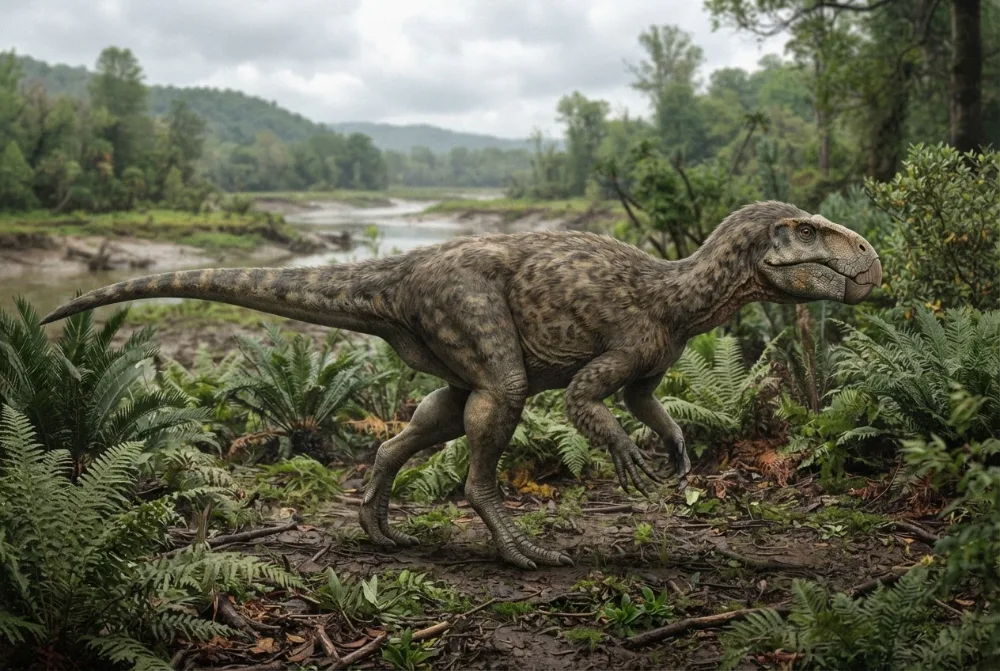
Obelignathus was a medium-sized plant-eating dinosaur that lived in what is now southern France. It had a very thick and strong lower jaw, which helped it chew tough plants. Its name comes from a cartoon character known for being super strong!21
Yaphila nini?
Yayinkulu kangakanani?
Yayinde kangakanani?
Yayiphakame kangakanani?
uqikelelo
 inde njengezinja ezingama-3, impumlo ukuya emsileni🍌inde njengeebhanana ezingama-17 zilandelelana🏃ibinokubaleka iimitha ezili-100 ngemizuzwana engama-7.8 (oyena mntu ukhawulezayo udinga i-9,6)
Obelignathus wayemkhulu kangakanani xa ethelekiswa NAWE?
Yimathematika nje kwibhrawuza yakho. Akukho nto igcinwayo okanye ithunyelwe naphi na.
Yayikhawuleza kangakanani?


Iinyani ezimnandi
Obelignathus is known from only a single jaw bone, a right dentary, found in 1990.2
Its jaw is about three times longer than it is high, which is shorter and thicker than in its relatives.1
Obelignathus lived between about 83 and 66 million years ago, during the Late Cretaceous period.3
This dinosaur was originally thought to be a species of Rhabdodon, but scientists later gave it its own genus in 2025.21
Obelignathus belonged to a group called rhabdodontomorphs, which were plant-eating dinosaurs that lived on islands in Europe.1
The name Obelignathus combines 'Obelix' (a strong cartoon character) and the Greek word for 'jaw'.1
Eyona mibuzo ibuzwa kakhulu: Obelignathus
?What did Obelignathus eat?
Obelignathus was a plant-eating dinosaur. Its strong jaw helped it chew tough plants.5
?How big was Obelignathus?
Obelignathus was a medium-sized dinosaur. Its jaw bone is about 130 to 140 mm long, so it was probably a few metres long.1
?When did Obelignathus live?
Obelignathus lived between about 83 and 66 million years ago, during the Late Cretaceous period.25
?Is Obelignathus a dinosaur?
No, Obelignathus is not a dinosaur. It is a prehistoric reptile from the group called rhabdodontomorphs.2
Kwiingcali zeedayinaso
- Igama lenzululwazi
- Obelignathus
- Inikwe igama ngu:
- Czepiński and Madzia 20255
- Iqela
- Izitya-zityalo ezinemilomo
- Usapho / iclade
- Rhabdodontomorpha5
- Ukuhlelwa
- Ornithischia > Ornithopoda > Iguanodontia5
- Ubudala bamatye
- 84 ukuya ku-66 izigidi zeminyaka (Campanian / Maastrichtian)5
- Izakhiwo zamatye
- Grès à Reptiles5
- Amazwe
- iFransi5
- Iirekhodi zeefosili
- 2 kwi-Paleobiology Database5
- Ukufunyanwa
- The jaw bone was found in 1990 near Montouliers, France. It was first named Rhabdodon septimanicus by Éric Buffetaut and Jean Le Loeuff in 1991. In 2025, Czepiński and Madzia renamed it Obelignathus.21
- Kusaxoxwa ngayo
- Scientists are not sure exactly where Obelignathus fits in the dinosaur family tree, because only its jaw bone has been found.1
Apho iinyani zivela khona
- Exploring the diversity and disparity of rhabdodontomorph ornithopods from the Late Cretaceous European archipelago | Scientific Reports (nature.com)
- Obelignathus (en.wikipedia.org)
- PBDB Taxon (paleobiodb.org)
- Obelignathus septimanicus | Dinosaur Database by DinoAnimals.com (dinoanimals.com)
- Obelignathus in The Paleobiology Database (CC BY 4.0): ubudala, iindawo, izakhiwo zamatye, ukuhlelwa.
Yonke inyani ekweli phepha inenombolo ebonisa umthombo wayo. Ukuba siphosisile, uxolo, sithanda iidayinaso, asiyojenali yenzululwazi. Sixelele apha: [email protected], siya kuyilungisa.
 URex ulambile! I-Dino Wiki yiprojekthi katata ukwenzela unyana wakhe othanda iidayinaso, isimahla, ayinazintengiso, ayinazilandeli. Abantu abadala banokuphakela uRex isidlwana ukuze incede ihlale kwi-intanethi.Phakela uRex
 Iguanodon
 Tenontosaurus
 Thescelosaurus
 Zalmoxes
 Camptosaurus
 Rhabdodon
 Tyrannosaurus
 Triceratops
 Velociraptor
 Spinosaurus
 Ankylosaurus
 Parasaurolophus