 Uyiyiphi idayinaso? Ikwizi
 Idabi leedayinaso
 Ugqatso lweedayinaso
 Imidlalo emincinci yeedayinaso
 I-albhamu yezitikha
 Iilisti ze-TOP zeedayinaso
 Ndothuse!
Yaphila nini?

Yayinkulu kangakanani?
Yayinde kangakanani?
Yayiphakame kangakanani?
uqikelelo
Pegomastax wayemkhulu kangakanani xa ethelekiswa NAWE?
Yimathematika nje kwibhrawuza yakho. Akukho nto igcinwayo okanye ithunyelwe naphi na.
Yayikhawuleza kangakanani?


Iinyani ezimnandi
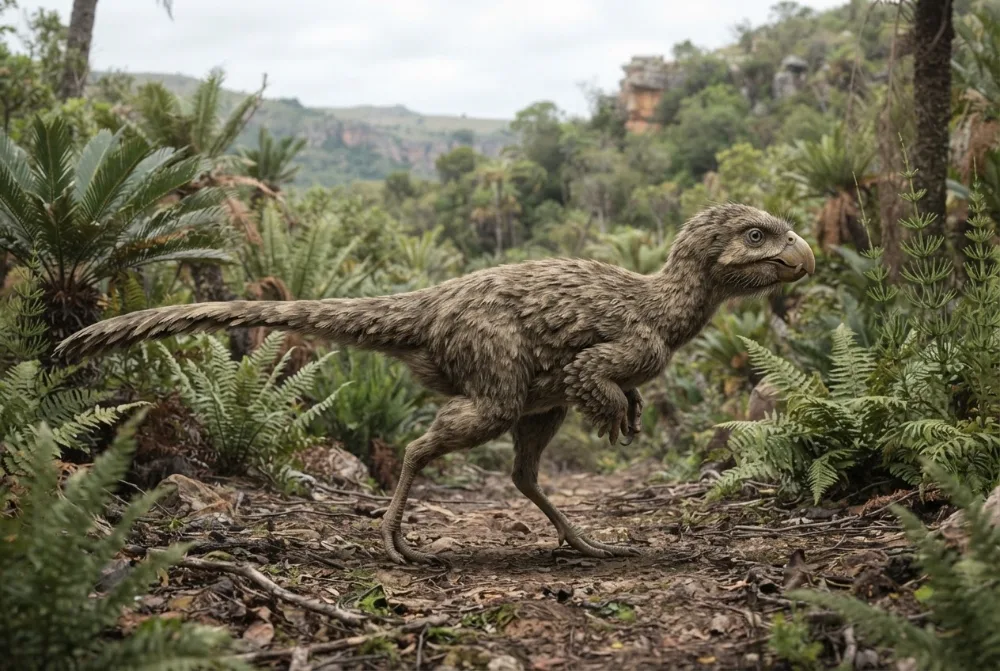
Pegomastax had a very deep, parrot-like beak at the front of its jaw, which helped it bite into tough plants.1
Its skull was only about 73 mm (2.9 inches) long, smaller than a chicken's skull.1
Pegomastax lived alongside many other dinosaurs, including the long-necked Massospondylus and the small ornithischian Lesothosaurus.1
The only fossil of Pegomastax is a partial skull with a well-preserved lower jaw and teeth, found in the upper Elliot Formation.1
Scientists think Pegomastax may have been most closely related to a South American dinosaur called Manidens.1
Pegomastax had a mobile predentary bone in its lower jaw, which helped it move its beak up and down while chewing.1
Eyona mibuzo ibuzwa kakhulu: Pegomastax
?Did Pegomastax have feathers?
Scientists think it was covered in porcupine-like quills, not feathers.4
?What did Pegomastax eat?
It was a plant-eater. It used its beak and cheek teeth like scissors to shear tough plants.14
?Why did Pegomastax have fangs?
It used its fangs for self-defense and competing for mates, like some modern plant-eating deer and peccaries.4
?When did Pegomastax live?
It lived during the Early Jurassic, about 200 to 190 million years ago.1
?Where was Pegomastax found?
Its only fossil was found in the upper Elliot Formation in South Africa.1
Kwiingcali zeedayinaso
- Igama lenzululwazi
- Pegomastax
- Inikwe igama ngu:
- Sereno 20126
- Iqela
- Izitya-zityalo ezinemilomo
- Usapho / iclade
- Heterodontosauridae6
- Ukuhlelwa
- Ornithischia > Heterodontosauridae6
- Ubudala bamatye
- 201 ukuya ku-193 izigidi zeminyaka (Hettangian / Sinemurian)6
- Izakhiwo zamatye
- Elliot6
- Amazwe
- uMzantsi Afrika6
- Iirekhodi zeefosili
- 1 kwi-Paleobiology Database6
- Ukufunyanwa
- Pegomastax was named by American paleontologist Paul Sereno in 2012, based on a partial skull discovered in the 1966 to 1967 expedition to the Transkei District of Cape Province, South Africa.1
- Kusaxoxwa ngayo
- Scientists are still debating whether the large canine teeth of Pegomastax were used for defense, display, or occasional omnivory.1
Apho iinyani zivela khona
- Pegomastax (en.wikipedia.org)
- PBDB Taxon (paleobiodb.org)
- Dwarf species of fanged dinosaur emerges from southern Africa | University of Chicago News (news.uchicago.edu)
- New Fanged Dwarf Dinosaur Found—"Would Be Nice Pet" | National Geographic (nationalgeographic.com)
- Dwarf 'vampire' dinosaur was a plant eater - BBC News (bbc.com)
- Pegomastax in The Paleobiology Database (CC BY 4.0): ubudala, iindawo, izakhiwo zamatye, ukuhlelwa.
Yonke inyani ekweli phepha inenombolo ebonisa umthombo wayo. Ukuba siphosisile, uxolo, sithanda iidayinaso, asiyojenali yenzululwazi. Sixelele apha: [email protected], siya kuyilungisa.
 URex ulambile! I-Dino Wiki yiprojekthi katata ukwenzela unyana wakhe othanda iidayinaso, isimahla, ayinazintengiso, ayinazilandeli. Abantu abadala banokuphakela uRex isidlwana ukuze incede ihlale kwi-intanethi.Phakela uRex
 Iguanodon
 Tenontosaurus
 Thescelosaurus
 Zalmoxes
 Camptosaurus
 Rhabdodon
 Dilophosaurus
 Stenopterygius
 Dorygnathus
 Lufengosaurus
 Scutellosaurus
 Yunnanosaurus