 Uyiyiphi idayinaso? Ikwizi
 Idabi leedayinaso
 Ugqatso lweedayinaso
 Imidlalo emincinci yeedayinaso
 I-albhamu yezitikha
 Iilisti ze-TOP zeedayinaso
 Ndothuse!
Yaphila nini?

Yayinkulu kangakanani?
Yayinde kangakanani?
Yayiphakame kangakanani?
uqikelelo
Yayinzima kangakanani?
 inde njengezinja ezingama-3, impumlo ukuya emsileni🍌inde njengeebhanana ezingama-18 zilandelelana🍉inzima njengamavatala angama-70🧸inzima njengabantwana basenkulisa abangama-18🎒inzima njengabantwana besikolo abangama-11🏃ibinokubaleka iimitha ezili-100 ngemizuzwana engama-11 (oyena mntu ukhawulezayo udinga i-9,6)
Serendipaceratops wayemkhulu kangakanani xa ethelekiswa NAWE?
Yimathematika nje kwibhrawuza yakho. Akukho nto igcinwayo okanye ithunyelwe naphi na.
Yayikhawuleza kangakanani?


Iinyani ezimnandi
Serendipaceratops is known from just one bone, a left ulna (lower arm bone) that is about 16 centimetres long.1
The bone was discovered in 1993 during the Dinosaur Cove project, in a small area of sea-floor protected by a dam.1
Scientists first thought the bone might be from a theropod, but later noticed it looked like the arm bone of a horned dinosaur called Leptoceratops.1
The species name, arthurcclarkei, honors science fiction writer Arthur C. Clarke, who was a friend of the scientists that named it.1
Some scientists think Serendipaceratops might actually be an ankylosaur, not a horned dinosaur, because the arm bone is robust.1
The fossil was found in the Wonthaggi Formation, which is about 115 million years old.1
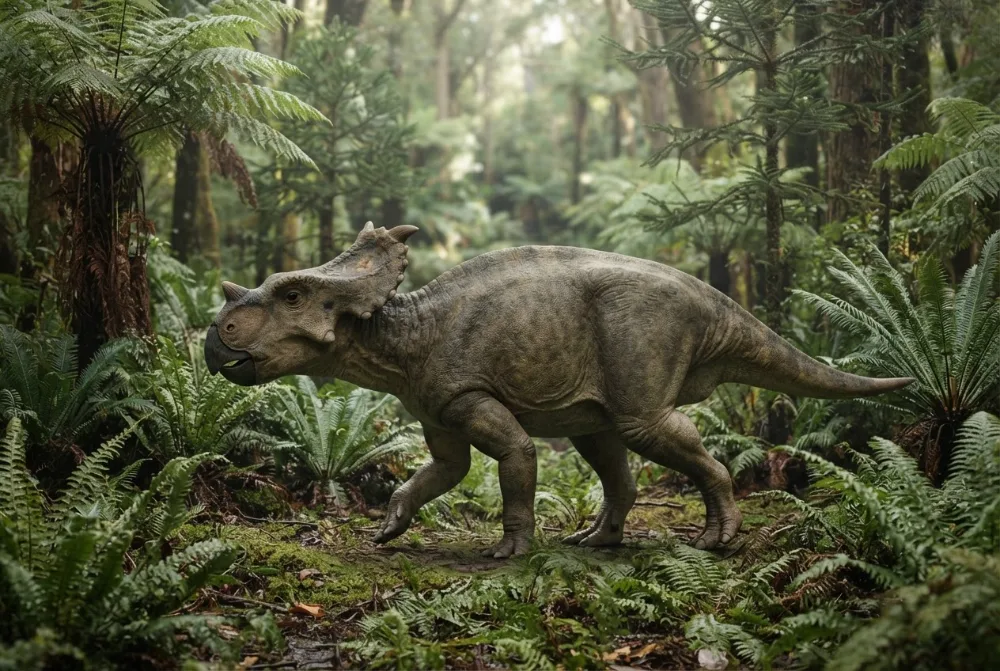
Eyona mibuzo ibuzwa kakhulu: Serendipaceratops
?What did Serendipaceratops eat?
Serendipaceratops was a herbivore, meaning it ate plants.1
?How big was Serendipaceratops?
Nobody knows for sure, because only one arm bone has been found. That bone is about 16 centimetres (6 inches) long.1
?When did Serendipaceratops live?
It lived during the Early Cretaceous Period, about 115 million years ago.1
?Was Serendipaceratops a dinosaur?
It is a type of ornithischian dinosaur, possibly an ankylosaur.1
?Why is it called Serendipaceratops?
The name means 'serendipitous horned face', because scientists were surprised to find a horned dinosaur bone in Australia. It was named by luck or serendipity.1
?Was Serendipaceratops a ceratopsian?
Scientists disagree. Some think it was a ceratopsian, but others think it was an ankylosaur because the arm bone is robust.1
Inyaniso ngeentsomi
Intsomi: Some people think Serendipaceratops was definitely a horned dinosaur like Triceratops.
Inyaniso: Scientists are not sure. Some studies say it is a ceratopsian, but others say it might be an ankylosaur because the arm bone is robust.1
Kwiingcali zeedayinaso
- Igama lenzululwazi
- Serendipaceratops
- Inikwe igama ngu:
- Rich and Vickers-Rich 20033
- Iqela
- Iidayinaso ezineempondo
- Usapho / iclade
- Ceratopsia3
- Ukuhlelwa
- Ornithischia > Ceratopsia3
- Ubudala bamatye
- 121 ukuya ku-120 izigidi zeminyaka (Aptian)3
- Izakhiwo zamatye
- Wonthaggi3
- Amazwe
- i-Ostreliya3
- Iirekhodi zeefosili
- 1 kwi-Paleobiology Database3
- Ukufunyanwa
- The bone was found in 1993 near Kilcunda, Australia, and the dinosaur was named by Tom Rich and Patricia Vickers-Rich in 2003. The name came after a colleague pointed out the bone looked like a horned dinosaur's arm bone.1
- Kusaxoxwa ngayo
- Scientists still debate whether Serendipaceratops is a ceratopsian or an ankylosaur, because only one bone is known and it may be deformed.1
Apho iinyani zivela khona
- Serendipaceratops (en.wikipedia.org)
- Serendipaceratops arthurcclarkei | Dinosaur Database by DinoAnimals.com (dinoanimals.com)
- Serendipaceratops in The Paleobiology Database (CC BY 4.0): ubudala, iindawo, izakhiwo zamatye, ukuhlelwa.
Yonke inyani ekweli phepha inenombolo ebonisa umthombo wayo. Ukuba siphosisile, uxolo, sithanda iidayinaso, asiyojenali yenzululwazi. Sixelele apha: [email protected], siya kuyilungisa.
 URex ulambile! I-Dino Wiki yiprojekthi katata ukwenzela unyana wakhe othanda iidayinaso, isimahla, ayinazintengiso, ayinazilandeli. Abantu abadala banokuphakela uRex isidlwana ukuze incede ihlale kwi-intanethi.Phakela uRex
 Triceratops
 Protoceratops
 Ojoceratops
 Tatankaceratops
 Psittacosaurus
 Centrosaurus
 Stegosaurus
 Iguanodon
 Archaeopteryx
 Giganotosaurus
 Microraptor
 Deinonychus