 Uyiyiphi idayinaso? Ikwizi
 Idabi leedayinaso
 Ugqatso lweedayinaso
 Imidlalo emincinci yeedayinaso
 I-albhamu yezitikha
 Iilisti ze-TOP zeedayinaso
 Ndothuse!
Yaphila nini?

Yayikhawuleza kangakanani?


Iinyani ezimnandi
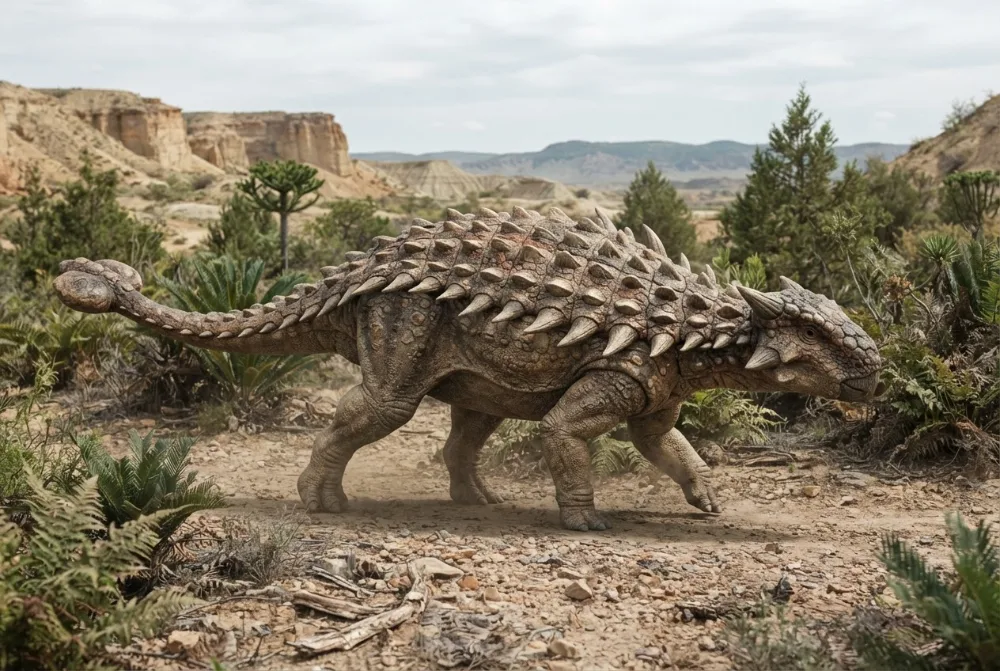
Zaraapelta's skull was covered in bumpy armour plates called osteoderms, and it had an especially fancy pattern of bumps and grooves behind its eye.12
The horns on the back of its skull had a smooth ridge on top, which is different from any other ankylosaur.13
Scientists think the fancy skull ornaments might have been used to attract mates, like a peacock's tail feathers.2
The only known fossil is a skull missing the snout tip, and it probably belonged to a young adult.1
Eyona mibuzo ibuzwa kakhulu: Zaraapelta
?How big was Zaraapelta?
The only known skull is about 40 centimetres long, so Zaraapelta was a medium-sized ankylosaur.1
?What did Zaraapelta eat?
It was a herbivore, eating plants.1
?Who discovered Zaraapelta?
It was discovered in 2000 by a team led by Phil Currie, and named in 2014 by Victoria Arbour.12
?What was Zaraapelta's closest relative?
Its closest known relative is Tarchia, another ankylosaur from Mongolia.1
Inyaniso ngeentsomi
Intsomi: Some people think all armoured dinosaurs had tail clubs.
Inyaniso: Zaraapelta is known only from a skull, so scientists don't know if it had a tail club. Many ankylosaurs did, but not all.1
Kwiingcali zeedayinaso
- Igama lenzululwazi
- Zaraapelta
- Inikwe igama ngu:
- Arbour et al. 20144
- Iqela
- Iidayinaso ezinesikrweqe
- Usapho / iclade
- Ankylosauridae4
- Ukuhlelwa
- Ornithischia > Ankylosauria > Ankylosauridae > Thyreophora4
- Ubudala bamatye
- 100 ukuya ku-84 izigidi zeminyaka (Cenomanian / Santonian)4
- Izakhiwo zamatye
- Baynshire4
- Amazwe
- iMongolia4
- Iirekhodi zeefosili
- 1 kwi-Paleobiology Database4
- Ukufunyanwa
- The skull was found in 2000 by a team led by Phil Currie in the Gobi Desert. In 2014, Victoria Arbour, Philip Currie, and Demchig Badamgarav named it Zaraapelta nomadis.12
- Kusaxoxwa ngayo
- Scientists are still debating exactly how Zaraapelta is related to other ankylosaurs, and whether its fancy head ornaments were for protection or for showing off.12
Apho iinyani zivela khona
- Zaraapelta (en.wikipedia.org)
- UAlberta paleontologists name new armoured dinosaur (ualberta.ca)
- PBDB Taxon (paleobiodb.org)
- Zaraapelta in The Paleobiology Database (CC BY 4.0): ubudala, iindawo, izakhiwo zamatye, ukuhlelwa.
Yonke inyani ekweli phepha inenombolo ebonisa umthombo wayo. Ukuba siphosisile, uxolo, sithanda iidayinaso, asiyojenali yenzululwazi. Sixelele apha: [email protected], siya kuyilungisa.
 URex ulambile! I-Dino Wiki yiprojekthi katata ukwenzela unyana wakhe othanda iidayinaso, isimahla, ayinazintengiso, ayinazilandeli. Abantu abadala banokuphakela uRex isidlwana ukuze incede ihlale kwi-intanethi.Phakela uRex
 Ankylosaurus
 Sauropelta
 Pinacosaurus
 Scutellosaurus
 Struthiosaurus
 Euoplocephalus
 Tyrannosaurus
 Triceratops
 Velociraptor
 Spinosaurus
 Parasaurolophus
 Pteranodon