 你是哪種恐龍?測驗
 恐龍對決
恐龍對決 恐龍賽跑
恐龍賽跑 恐龍小遊戲
恐龍小遊戲 貼紙簿
貼紙簿 恐龍 TOP 排行榜
 給我驚喜!
給我驚喜!
Orienantius
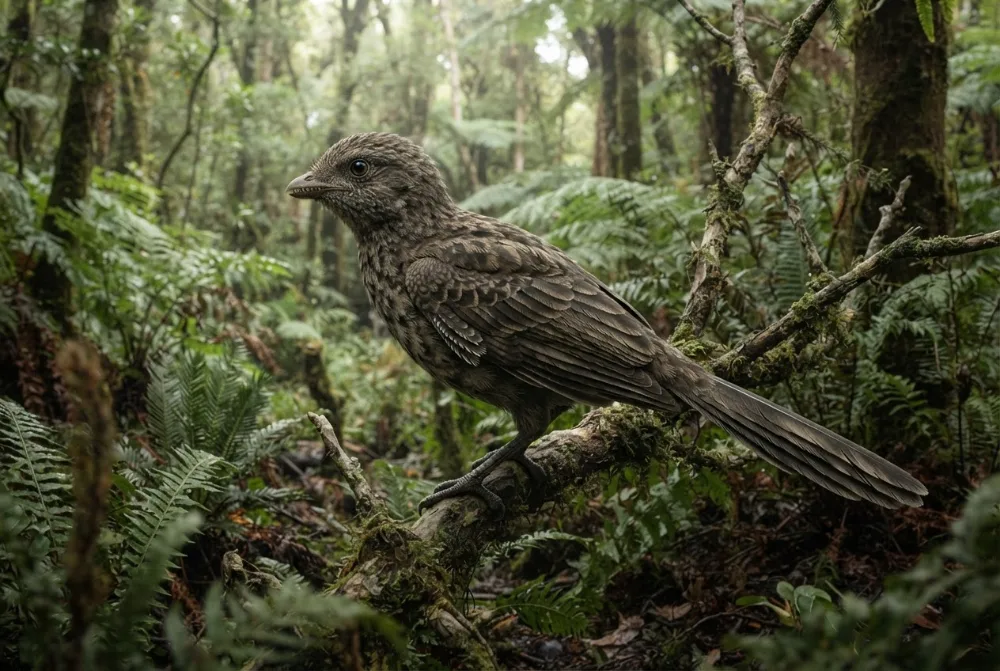
Orienantius was a tiny bird that lived about 130 million years ago in what is now China. It had feathers and could fly, but it was not like modern birds, it belonged to an ancient group called enantiornithines, which had a different way of flying.21
牠生活在什麼時候?
牠有多快?


趣味知識
Orienantius is known from two nearly complete skeletons that still have feathers and even soft tissues like wing skin preserved.12
It was about the size of a modern Eurasian Skylark, a small songbird.1
Orienantius could fly with high maneuverability and used a flap-gliding style, like some birds today.2
The holotype (main specimen) was not fully grown when it died, some of its bones had not yet fused together.1
Its name comes from Latin and Greek words meaning 'east' and 'opposite', referring to its discovery in East Asia and its group Enantiornithes.1
Orienantius lived during the Early Cretaceous, making it one of the oldest known enantiornithine birds.2
給恐龍專家
- 學名
- Orienantius
- 命名者
- Liu et al. 20193
- 類群
- 早期鳥類
- 科 / 演化支
- Enantiornithes3
- 分類
- Theropoda > Avialae3
- 岩石的年代
- 133 到 126 百萬年 (Hauterivian)3
- 岩層
- Huajiying3
- 國家
- 中國3
- 化石紀錄
- The Paleobiology Database 收錄 1 筆3
- 發現
- Orienantius was named in 2019 by Di Liu and colleagues based on two fossils from the Huajiying Formation in Hebei, China. The species name ritteri honors German scientist Johann Wilhelm Ritter.12
- 仍有爭議
- Scientists are still debating exactly how Orienantius and other early enantiornithines evolved their flight abilities, since they show features of both primitive and advanced birds.2
知識從哪裡來
- Orienantius (en.wikipedia.org)
- Soft tissue preservation in two new enantiornithine specimens (Aves) from the Lower Cretaceous Huajiying Formation of Hebei Province, China (sciencedirect.com)
- Orienantius in The Paleobiology Database (CC BY 4.0): 年代、地點、岩層、分類。
這一頁的每個知識都有一個編號,指向它的出處。如果我們有哪裡寫錯了,很抱歉,我們是恐龍迷,不是科學期刊。寫信到 [email protected] 告訴我們,我們會修正。
 Rex 肚子餓了! Dino Wiki 是一位爸爸為了熱愛恐龍的兒子做的網站,免費、沒有廣告也沒有追蹤器。大人可以請 Rex 吃點心,幫忙讓網站繼續上線。餵 Rex
 Archaeopteryx
 Hesperornis
 Ichthyornis
 Baptornis
 Jurapteryx
 Gobipteryx
 Stegosaurus
 Iguanodon
 Giganotosaurus
 Microraptor
 Deinonychus
 Baryonyx