 Woyɛ dino bɛn? Nsɛmmisa agoro
 Dino ko
 Dino mmirikatuo
 Dino agodie nketewa
 Stika nwoma
 Dino TOP nhyehyɛeɛ
 Ma me nwanwa!
Berɛ bɛn na ɛtenaa ase?

Na ne kɛseɛ yɛ sɛn?
Na ne tenten yɛ sɛn?
Na ne korɔn yɛ sɛn?
nsusuiɛ
Na ne mu yɛ duru sɛn?
Ambopteryx kɛseɛ yɛ sɛn sɛ wode toto WO ho a?
Akontaa nko ara wɔ wo browser mu. Yɛnkora biribiara so, na yɛmmfa biribiara nkɔ baabiara.
Na ɛyɛ ntɛm sɛn?


Nsɛm a ɛyɛ anigye
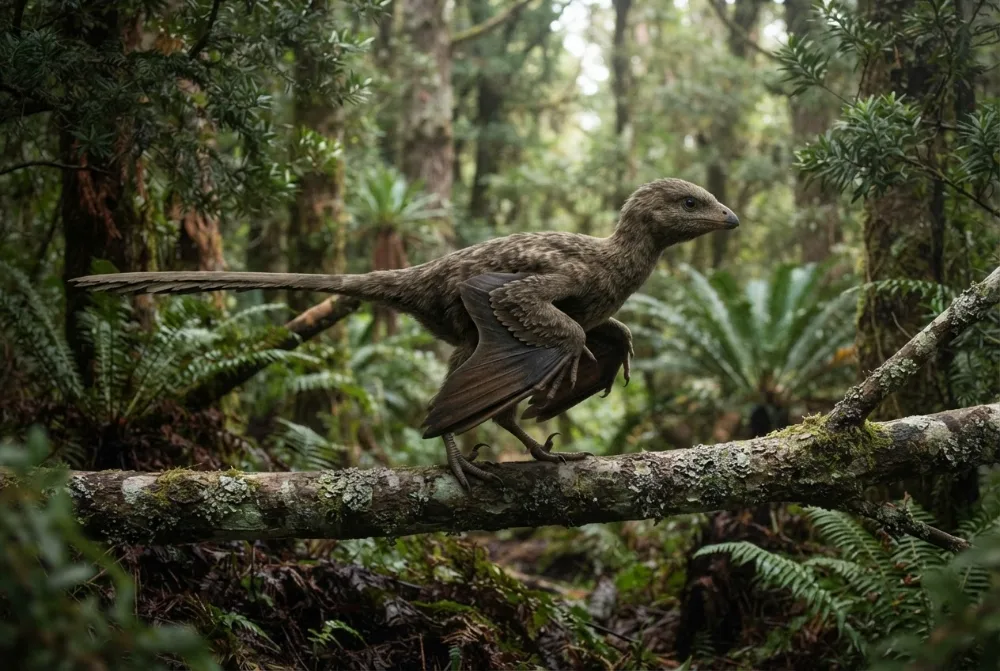
Ambopteryx had a long, rod-like bone sticking out from its wrist that helped support a wing membrane, just like in pterosaurs and bats.2
Its forelimbs were 1.3 times longer than its hindlimbs, which is unusual for a dinosaur.1
Ambopteryx had a short tail that ended in a fused pygostyle, a feature also seen in modern birds.1
This dinosaur was about the size of a modern pigeon, measuring only 32 cm (about 1 foot) long.1
The name Ambopteryx means 'both wing' because its wing was like a pterosaur's but it was a dinosaur.1
Fossilized feathers were found around its head, neck, and shoulders, showing it had a fluffy coat.1
Nsɛm a wɔbisa bebree fa Ambopteryx ho
?How big was Ambopteryx?
About 32 centimetres (13 inches) long and weighed around 306 grams (10.8 ounces), roughly the size of a modern pigeon.4
?What did Ambopteryx eat?
It was probably omnivorous. Its stomach contained gastroliths (gizzard stones) and bone fragments, suggesting it ate both plants and meat.45
?Could Ambopteryx fly?
It could probably glide between trees, like a flying squirrel. Scientists are still studying how well it could truly fly.5
?Did Ambopteryx have feathers?
Yes, it had dense layers of feathers on its head, neck, and shoulders, along with bat-like membranous wings.42
Atosɛm sɛefoɔ
Atosɛm: Some people think Ambopteryx could fly like a bird.
Nokorɛ: It probably could not flap its wings to fly. Instead, it likely glided from tree to tree using its skin wings.2
Ma dino ho animdefoɔ
- Nyansahu din
- Ambopteryx
- Obi a ɔtoo din
- Wang et al. 20196
- Kuo
- Dino a wɔwe nam
- Abusua / kuo kɛseɛ
- Scansoriopterygidae6
- Nkyekyɛmu
- Theropoda6
- Abotan no mfeɛ
- mfeɛ ɔpepem 162 kɔsi 143 (Oxfordian / Tithonian)6
- Aman
- Kyaena6
- Fɔsil nkyerɛwee
- 1 wɔ The Paleobiology Database mu6
- Nhunumu
- Ambopteryx was named in 2019 by Wang and colleagues. The only known fossil was found near Wubaiding Village in Liaoning, China, in rocks about 163 million years old.1
- Wɔda so gye ho akyinnye
- Scientists are not sure exactly how Ambopteryx moved through the air. It may have glided, but some think it could also climb trees.2
Baabi a nsɛm no firi
- Ambopteryx longibrachium Wang & O'Connor & Xu & Zhou 2019, gen. et sp. nov. (zenodo.org)
- A new Jurassic scansoriopterygid and the loss of membranous wings in theropod dinosaurs | Nature (nature.com)
- PBDB Taxon (paleobiodb.org)
- Ambopteryx (en.wikipedia.org)
- Ambopteryx, new species of bat-wing dinosaur, discovered in China | National Geographic (nationalgeographic.com)
- Ambopteryx in The Paleobiology Database (CC BY 4.0): mfeɛ, mmeaeɛ, abotan nhyehyɛeɛ, nkyekyɛmu.
Asɛm biara a ɛwɔ krataafa yi so wɔ nɔma a ɛkyerɛ baabi a ɛfiri. Sɛ yɛfom biribi a, kafra, yɛyɛ dino dɔfoɔ, yɛnyɛ nyansahu nsɛmma krataa. Ka kyerɛ yɛn wɔ [email protected] na yɛbɛsiesie.
 Ɔkɔm de Rex! Dino Wiki yɛ agya bi adwuma a ɔyɛɛ maa ne babarima a ɔdɔ dino. Ɛyɛ kwa, dawurubɔ biara nni mu, akyidifoɔ biara nni mu. Mpanimfoɔ bɛtumi ama Rex aduane kakra, na aboa ama Dino Wiki atena intanɛt so.Ma Rex aduane
 Allosaurus
 Carnotaurus
 Dilophosaurus
 Giganotosaurus
 Compsognathus
 Paronychodon
 Brachiosaurus
 Diplodocus
 Brontosaurus
 Camarasaurus
 Morosaurus
 Apatosaurus