 Woyɛ dino bɛn? Nsɛmmisa agoro
 Dino ko
 Dino mmirikatuo
 Dino agodie nketewa
 Stika nwoma
 Dino TOP nhyehyɛeɛ
 Ma me nwanwa!
Archaeornithomimus
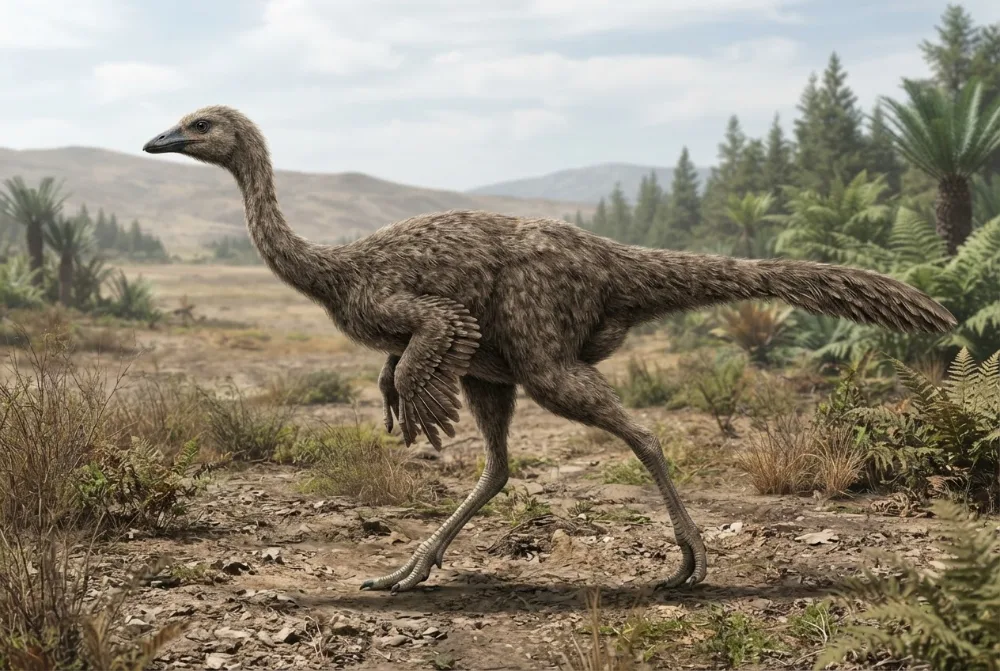
Archaeornithomimus was a fast, ostrich-like dinosaur that lived in Asia during the Late Cretaceous. It had a beak, long legs, and probably feathers. It could run quickly to escape predators or chase small prey.1
Berɛ bɛn na ɛtenaa ase?
Na ne kɛseɛ yɛ sɛn?
Na ne tenten yɛ sɛn?
Na ne korɔn yɛ sɛn?
nsusuiɛ
Na ne mu yɛ duru sɛn?
 ne tenten te sɛ nkraman 3 firi hwene kɔsi dua🍌ne tenten te sɛ kwadu 19 a wɔde abɔ toatoa so🍉ne mu duru te sɛ watamɛlɔn 14🧸ne mu duru te sɛ nkɔkɔaa sukuu mmofra 4🎒ne mu duru te sɛ sukuu mmofra 2🏃anka ɔbɛtumi atu mmirika mita 100 wɔ sikɛn 5.5 mu (onipa a ɔyɛ ntɛm sen biara hia 9.6)
Archaeornithomimus kɛseɛ yɛ sɛn sɛ wode toto WO ho a?
Akontaa nko ara wɔ wo browser mu. Yɛnkora biribiara so, na yɛmmfa biribiara nkɔ baabiara.
Na ɛyɛ ntɛm sɛn?


Nsɛm a ɛyɛ anigye
Its neck bones had air spaces inside, like modern birds, which made its neck lighter.1
Scientists think it had feathers that looked like those of an ostrich.1
It lived alongside the giant dinosaur Gigantoraptor and the predator Alectrosaurus.1
No stress fractures were found in its foot bones, meaning it probably didn't run too hard or too often.1
Its third toe bone was not pinched at the top, so its foot was not built for extreme speed like some other ornithomimids.1
The first fossils were found by an expedition led by Roy Chapman Andrews in 1923.1
Nsɛm a wɔbisa bebree fa Archaeornithomimus ho
?How big was Archaeornithomimus?
About 3.4 metres (11 feet) long and weighed over 71.5 kilograms (158 pounds).1
?What did Archaeornithomimus eat?
It was an omnivore with a horny beak, eating small mammals, plants, fruit, eggs, and even hatchlings of other dinosaurs.1
?Did Archaeornithomimus have feathers?
Yes, scientists think it had feathers that looked like those of an ostrich.1
?When did Archaeornithomimus live?
It lived during the Late Cretaceous period, about 96 million years ago.1
?Where was Archaeornithomimus found?
Its fossils were found in the Iren Dabasu Formation of Inner Mongolia, China.1
?Was Archaeornithomimus a dinosaur?
Yes, it was a theropod dinosaur, specifically an ornithomimosaurian.1
Ma dino ho animdefoɔ
- Nyansahu din
- Archaeornithomimus
- Obi a ɔtoo din
- Russell 19724
- Kuo
- Ɔstrik dino
- Abusua / kuo kɛseɛ
- Ornithomimidae4
- Nkyekyɛmu
- Theropoda > Ornithomimosauria4
- Abotan no mfeɛ
- mfeɛ ɔpepem 90 kɔsi 72 (Coniacian / Campanian)4
- Abotan nhyehyɛeɛ
- Iren Dabasu, Dabrazhin4
- Aman
- Kyaena, Kazakstan4
- Fɔsil nkyerɛwee
- 3 wɔ The Paleobiology Database mu4
- Nhunumu
- The first fossils were found in 1923 in Inner Mongolia by an American Museum of Natural History expedition. In 1933, Charles Gilmore named them Ornithomimus asiaticus. In 1972, Dale Russell gave them their own genus, Archaeornithomimus.1
- Wɔda so gye ho akyinnye
- Scientists are not sure whether Archaeornithomimus was a true ornithomimid or a more primitive ornithomimosaur. Some studies place it inside the family, others outside.1
Baabi a nsɛm no firi
- Archaeornithomimus (en.wikipedia.org)
- Archaeornithomimus | Natural History Museum (nhm.ac.uk)
- PBDB Taxon (paleobiodb.org)
- Archaeornithomimus in The Paleobiology Database (CC BY 4.0): mfeɛ, mmeaeɛ, abotan nhyehyɛeɛ, nkyekyɛmu.
Asɛm biara a ɛwɔ krataafa yi so wɔ nɔma a ɛkyerɛ baabi a ɛfiri. Sɛ yɛfom biribi a, kafra, yɛyɛ dino dɔfoɔ, yɛnyɛ nyansahu nsɛmma krataa. Ka kyerɛ yɛn wɔ [email protected] na yɛbɛsiesie.
 Ɔkɔm de Rex! Dino Wiki yɛ agya bi adwuma a ɔyɛɛ maa ne babarima a ɔdɔ dino. Ɛyɛ kwa, dawurubɔ biara nni mu, akyidifoɔ biara nni mu. Mpanimfoɔ bɛtumi ama Rex aduane kakra, na aboa ama Dino Wiki atena intanɛt so.Ma Rex aduane
 Gallimimus
 Ornithomimus
 Struthiomimus
 Deinocheirus
 Dromiceiomimus
 Anserimimus
 Tyrannosaurus
 Triceratops
 Velociraptor
 Spinosaurus
 Ankylosaurus
 Parasaurolophus