 Woyɛ dino bɛn? Nsɛmmisa agoro
 Dino ko
 Dino mmirikatuo
 Dino agodie nketewa
 Stika nwoma
 Dino TOP nhyehyɛeɛ
 Ma me nwanwa!
Berɛ bɛn na ɛtenaa ase?

Na ne kɛseɛ yɛ sɛn?
Na ne tenten yɛ sɛn?
Na ne korɔn yɛ sɛn?
Na ne mu yɛ duru sɛn?
 ne tenten te sɛ nkraman 5 firi hwene kɔsi dua🍌ne tenten te sɛ kwadu 27 a wɔde abɔ toatoa so🍉ne mu duru te sɛ watamɛlɔn 70🧸ne mu duru te sɛ nkɔkɔaa sukuu mmofra 18🎒ne mu duru te sɛ sukuu mmofra 11🏃anka ɔbɛtumi atu mmirika mita 100 wɔ sikɛn 5.1 mu (onipa a ɔyɛ ntɛm sen biara hia 9.6)
Struthiomimus kɛseɛ yɛ sɛn sɛ wode toto WO ho a?
Akontaa nko ara wɔ wo browser mu. Yɛnkora biribiara so, na yɛmmfa biribiara nkɔ baabiara.
Na ɛyɛ ntɛm sɛn?


Nsɛm a ɛyɛ anigye
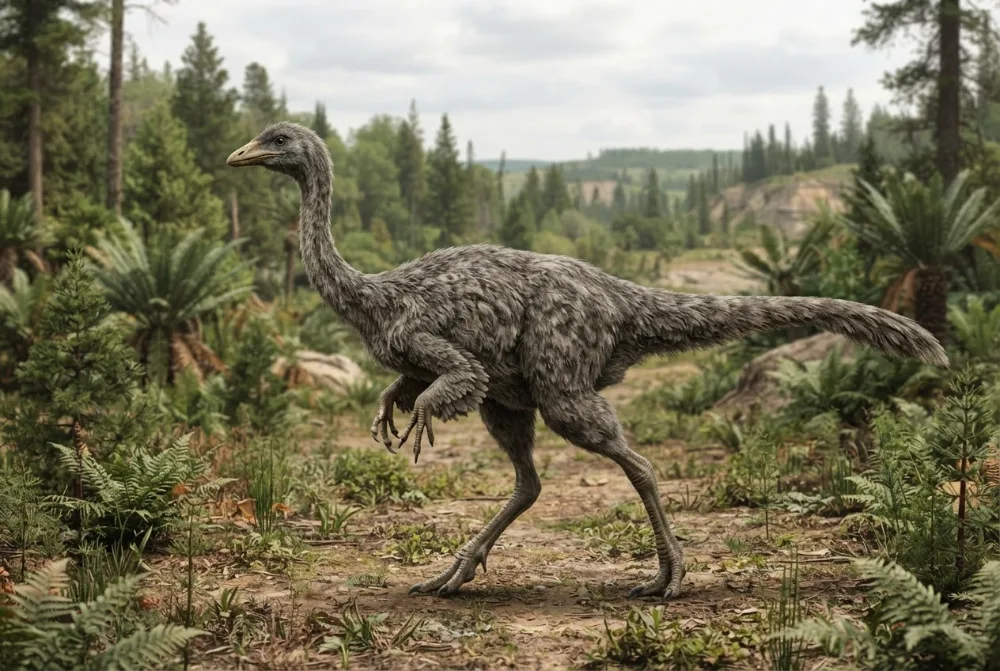
Struthiomimus looked a bit like a featherless ostrich with a long tail.1
Its neck made up about 40% of the length of its body in front of the hips.2
It had three fingers on each hand that were roughly the same length, which is unusual for a theropod.2
Its tail was relatively stiff and probably helped it keep balance while running.2
Some scientists think its hands worked like a hook or clamp to pull branches close, but others think they supported wing feathers.2
Nsɛm a wɔbisa bebree fa Struthiomimus ho
?How big was Struthiomimus?
About 4.3 metres (14 feet) long, 1.4 metres (4.5 feet) tall at the hips, and weighed around 150 kilograms (330 pounds). A larger specimen weighed about 234 kilograms (515 pounds).21
?How fast could Struthiomimus run?
It could run between 50 and 80 km/h (31 to 50 mph), using its long legs to escape predators like tyrannosaurs.2
?What did Struthiomimus eat?
It was probably an omnivore, eating both plants and small animals like insects, mammals, and reptiles. Its toothless beak was good for cropping plants and maybe filtering food from water.21
?Did Struthiomimus have feathers?
Yes, it likely had feathers all over its body. Its arm bones show adaptations that may have supported wing feathers.2
?Where did Struthiomimus live?
It lived in western North America, in what is now Canada and the United States, during the Late Cretaceous period.21
?Why is it called Struthiomimus?
Its name means 'ostrich mimic' because it looked a lot like a modern ostrich, with long legs, a long neck, and a toothless beak.21
?Was Struthiomimus bigger than a human?
Yes, it was about 4.3 metres long and stood about 1.4 metres tall at the hips, which is taller than most people.2
Atosɛm sɛefoɔ
Atosɛm: Struthiomimus was a fierce meat-eater like other theropods.
Nokorɛ: It had no teeth and a beak, and most scientists think it ate both plants and small animals, not just meat.2
Ma dino ho animdefoɔ
- Nyansahu din
- Struthiomimus
- Obi a ɔtoo din
- Osborn 19163
- Kuo
- Ɔstrik dino
- Abusua / kuo kɛseɛ
- Ornithomimidae3
- Nkyekyɛmu
- Theropoda > Ornithomimosauria3
- Abotan no mfeɛ
- mfeɛ ɔpepem 84 kɔsi 66 (Campanian / Maastrichtian)3
- Abotan nhyehyɛeɛ
- Oldman, Kirtland, Dinosaur Park3
- Aman
- Kanada, Amerika3
- Fɔsil nkyerɛwee
- 18 wɔ The Paleobiology Database mu3
- Nhunumu
- Lawrence Lambe found the first remains in 1901 and named them Ornithomimus altus. In 1914, Barnum Brown found a nearly complete skeleton in Alberta, and Henry Fairfield Osborn named it Struthiomimus in 1917.2
- Wɔda so gye ho akyinnye
- Scientists still debate what Struthiomimus ate. Some think it was a plant-eater, others think it was a meat-eater, and some even suggest it filtered food from water.2
Baabi a nsɛm no firi
- Struthiomimus | Natural History Museum (nhm.ac.uk)
- Struthiomimus (en.wikipedia.org)
- Struthiomimus in The Paleobiology Database (CC BY 4.0): mfeɛ, mmeaeɛ, abotan nhyehyɛeɛ, nkyekyɛmu.
Asɛm biara a ɛwɔ krataafa yi so wɔ nɔma a ɛkyerɛ baabi a ɛfiri. Sɛ yɛfom biribi a, kafra, yɛyɛ dino dɔfoɔ, yɛnyɛ nyansahu nsɛmma krataa. Ka kyerɛ yɛn wɔ [email protected] na yɛbɛsiesie.
 Ɔkɔm de Rex! Dino Wiki yɛ agya bi adwuma a ɔyɛɛ maa ne babarima a ɔdɔ dino. Ɛyɛ kwa, dawurubɔ biara nni mu, akyidifoɔ biara nni mu. Mpanimfoɔ bɛtumi ama Rex aduane kakra, na aboa ama Dino Wiki atena intanɛt so.Ma Rex aduane
 Gallimimus
 Ornithomimus
 Deinocheirus
 Dromiceiomimus
 Archaeornithomimus
 Anserimimus
 Tyrannosaurus
 Triceratops
 Velociraptor
 Spinosaurus
 Ankylosaurus
 Parasaurolophus