 Woyɛ dino bɛn? Nsɛmmisa agoro
 Dino ko
 Dino mmirikatuo
 Dino agodie nketewa
 Stika nwoma
 Dino TOP nhyehyɛeɛ
 Ma me nwanwa!
Berɛ bɛn na ɛtenaa ase?

Na ne kɛseɛ yɛ sɛn?
Na ne tenten yɛ sɛn?
Na ne korɔn yɛ sɛn?
nsusuiɛ
Na ne mu yɛ duru sɛn?
 ne tenten te sɛ fie agyinamoa 3 firi hwene kɔsi dua🍌ne tenten te sɛ kwadu 8 a wɔde abɔ toatoa so🍌ne mu duru te sɛ kwadu 120🏃anka ɔbɛtumi atu mmirika mita 100 wɔ sikɛn 9.5 mu (onipa a ɔyɛ ntɛm sen biara hia 9.6)
Avimimus kɛseɛ yɛ sɛn sɛ wode toto WO ho a?
Akontaa nko ara wɔ wo browser mu. Yɛnkora biribiara so, na yɛmmfa biribiara nkɔ baabiara.
Na ɛyɛ ntɛm sɛn?


Nsɛm a ɛyɛ anigye
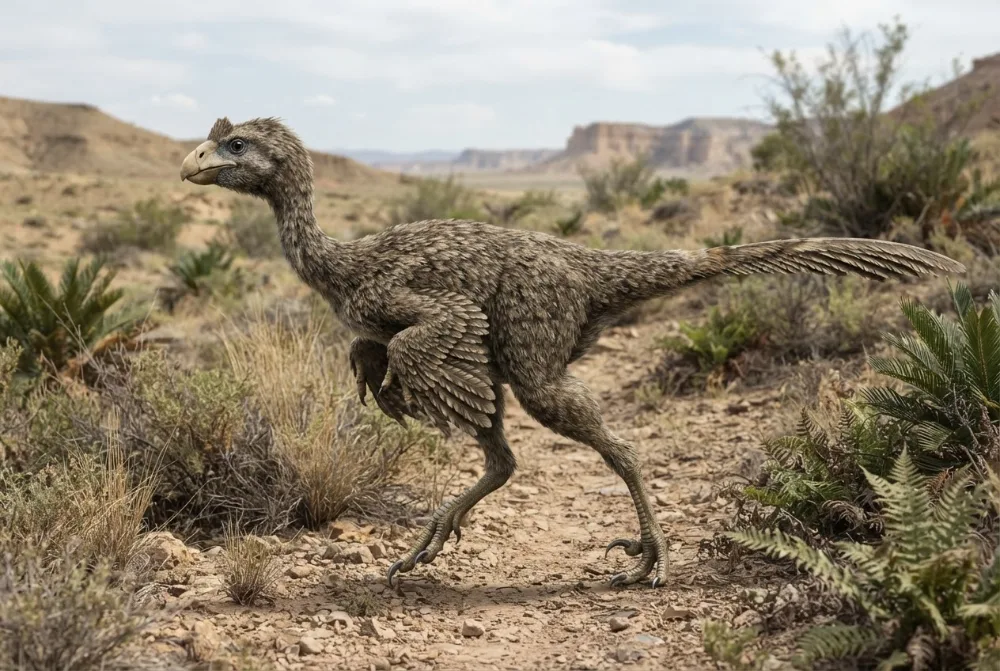
Avimimus had a large brain and big eyes, which helped it see well and think fast.2
Its legs were very long and slender, making it a fast runner. Its shins were longer than its thighs, just like in many speedy animals today.2
The bones in its hand were fused together, just like in modern birds. This is one reason scientists think it was very bird-like.2
A fossil bonebed in Mongolia contained at least ten Avimimus individuals together. This suggests they lived in groups, maybe for safety or to find mates.2
Avimimus had a beak with no teeth, but some later fossils show tiny teeth in the front of the upper jaw. Scientists are still studying this.2
When Avimimus was first discovered, scientists thought it had no tail. Later finds proved it did have a tail, just like other dinosaurs.2
Nsɛm a wɔbisa bebree fa Avimimus ho
?Did Avimimus have feathers?
Yes, most scientists now agree Avimimus had feathers. Quill knobs on its arm bones suggest feathers were attached there.24
?What did Avimimus eat?
It probably ate both plants and small animals, making it an omnivore. Its beak had no teeth, though some fossils show tiny front teeth.21
?How fast could Avimimus run?
It was a very fast runner, with long legs and shins longer than its thighs. One source compares its speed to an ostrich, which can reach 70 km/h.24
?When did Avimimus live?
It lived during the Late Cretaceous period, about 80 to 75 million years ago.14
?Is Avimimus a bird?
No, Avimimus is a dinosaur, not a bird. It belonged to a group of bird-like dinosaurs called oviraptorosaurs.2
Atosɛm sɛefoɔ
Atosɛm: Avimimus could fly.
Nokorɛ: Some scientists once thought Avimimus could fly because it had bumps on its arm bones that might have held feathers. But most now agree it could not fly and was a fast runner instead.2
Ma dino ho animdefoɔ
- Nyansahu din
- Avimimus
- Obi a ɔtoo din
- Kurzanov 19815
- Kuo
- Dino nwonwa a wɔwɔ ntakra
- Abusua / kuo kɛseɛ
- Oviraptorosauria5
- Nkyekyɛmu
- Theropoda > Oviraptorosauria5
- Abotan no mfeɛ
- mfeɛ ɔpepem 84 kɔsi 66 (Campanian / Maastrichtian)5
- Abotan nhyehyɛeɛ
- Nemegt, Baruungoyot, Dinosaur Park5
- Aman
- Mongolia, Kanada5
- Fɔsil nkyerɛwee
- 8 wɔ The Paleobiology Database mu5
- Nhunumu
- Avimimus was named by Russian paleontologist Sergei Kurzanov in 1981. He found the fossils in Mongolia and thought they came from the Djadokhta Formation, but later scientists think they actually came from the Nemegt Formation.25
- Wɔda so gye ho akyinnye
- Scientists are not sure what Avimimus ate. It might have been an herbivore, an insectivore, or an omnivore. The beak and possible tiny teeth give clues, but no one knows for sure.2
Baabi a nsɛm no firi
- Avimimus | Natural History Museum (nhm.ac.uk)
- Avimimus (en.wikipedia.org)
- Avimimus Kurzanov 1981 - Encyclopedia of Life (eol.org)
- Avimimus - ZoomDinosaurs.com (enchantedlearning.com)
- Avimimus in The Paleobiology Database (CC BY 4.0): mfeɛ, mmeaeɛ, abotan nhyehyɛeɛ, nkyekyɛmu.
Asɛm biara a ɛwɔ krataafa yi so wɔ nɔma a ɛkyerɛ baabi a ɛfiri. Sɛ yɛfom biribi a, kafra, yɛyɛ dino dɔfoɔ, yɛnyɛ nyansahu nsɛmma krataa. Ka kyerɛ yɛn wɔ [email protected] na yɛbɛsiesie.
 Ɔkɔm de Rex! Dino Wiki yɛ agya bi adwuma a ɔyɛɛ maa ne babarima a ɔdɔ dino. Ɛyɛ kwa, dawurubɔ biara nni mu, akyidifoɔ biara nni mu. Mpanimfoɔ bɛtumi ama Rex aduane kakra, na aboa ama Dino Wiki atena intanɛt so.Ma Rex aduane
 Therizinosaurus
 Oviraptor
 Chirostenotes
 Citipes
 Leptorhynchos
 Caenagnathus
 Tyrannosaurus
 Triceratops
 Velociraptor
 Spinosaurus
 Ankylosaurus
 Parasaurolophus