 Woyɛ dino bɛn? Nsɛmmisa agoro
 Dino ko
 Dino mmirikatuo
 Dino agodie nketewa
 Stika nwoma
 Dino TOP nhyehyɛeɛ
 Ma me nwanwa!
Berɛ bɛn na ɛtenaa ase?

Na ne kɛseɛ yɛ sɛn?
Na ne tenten yɛ sɛn?
Na ne korɔn yɛ sɛn?
nsusuiɛ
Na ne mu yɛ duru sɛn?

 ne tenten te sɛ fie agyinamoa 3 firi hwene kɔsi dua🍌ne tenten te sɛ kwadu 9 a wɔde abɔ toatoa so🍉ne mu duru te sɛ watamɛlɔn 20🧸ne mu duru te sɛ nkɔkɔaa sukuu mmofra 5🎒ne mu duru te sɛ sukuu mmofra 3🏃anka ɔbɛtumi atu mmirika mita 100 wɔ sikɛn 7.5 mu (onipa a ɔyɛ ntɛm sen biara hia 9.6)
Chirostenotes kɛseɛ yɛ sɛn sɛ wode toto WO ho a?
Akontaa nko ara wɔ wo browser mu. Yɛnkora biribiara so, na yɛmmfa biribiara nkɔ baabiara.
Na ɛyɛ ntɛm sɛn?


Nsɛm a ɛyɛ anigye
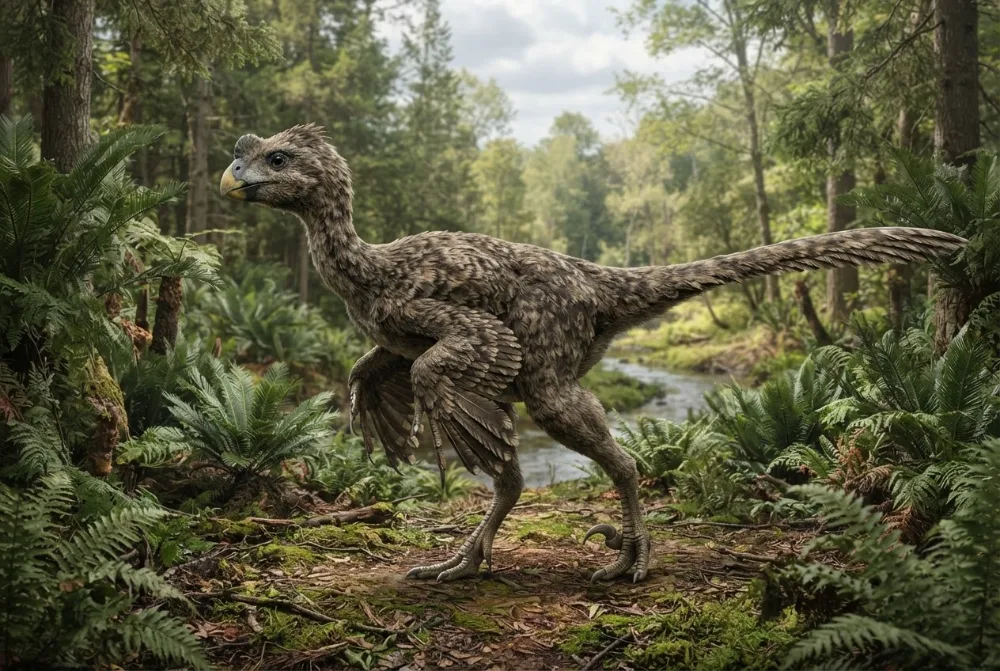
Chirostenotes belongs to a group called caenagnathids, which are oviraptorosaurs. These dinosaurs are known for their toothless beaks and often had crests on their heads.42
Its name means 'narrow-handed' because its hand bones were long and slender, with three fingers that ended in sharp claws.1
Chirostenotes lived between about 79 and 67 million years ago, during the Late Cretaceous period.1
Fossils of Chirostenotes have been found in the Dinosaur Park Formation in Alberta, Canada, and the Hell Creek Formation in Montana, USA.4
Scientists once thought Chirostenotes was a different dinosaur called Macrophalangia, which means 'big toes'. Now they know it's the same animal.4
A study of a well-preserved jaw showed that Chirostenotes had a strong, shearing bite, like some plant-eating animals today. This supports the idea that it ate tough plants.2
Nsɛm a wɔbisa bebree fa Chirostenotes ho
?How big was Chirostenotes?
About 2.5 metres (8.2 ft) long and weighed around 100 kg (220 lbs).3
?What did Chirostenotes eat?
It was an omnivore, eating both plants and small animals like grubs, amphibians, reptiles and mammals.32
?Did Chirostenotes have feathers?
Yes, it was a feathered theropod, and related oviraptorosaurs like Caudipteryx had large primary feathers on their hands.3
?When did Chirostenotes live?
It lived during the Late Cretaceous period, about 79 to 67 million years ago.1
?Why is it called Chirostenotes?
Its name means 'narrow-handed' because its hand bones were long and slender.1
Atosɛm sɛefoɔ
Atosɛm: Some people think Chirostenotes was a meat-eater like many other theropods.
Nokorɛ: Chirostenotes was actually an omnivore, eating both plants and small animals. Its toothless beak and jaw shape are better suited for slicing plants than for catching large prey.2
Ma dino ho animdefoɔ
- Nyansahu din
- Chirostenotes
- Obi a ɔtoo din
- Gilmore 19244
- Kuo
- Dino nwonwa a wɔwɔ ntakra
- Abusua / kuo kɛseɛ
- Caenagnathidae4
- Nkyekyɛmu
- Theropoda > Oviraptorosauria4
- Abotan no mfeɛ
- mfeɛ ɔpepem 84 kɔsi 66 (Campanian / Maastrichtian)4
- Abotan nhyehyɛeɛ
- Hell Creek, Dinosaur Park, Aguja4
- Aman
- Amerika, Kanada4
- Fɔsil nkyerɛwee
- 28 wɔ The Paleobiology Database mu4
- Wɔsan frɛ no
- Macrophalangia (din dada no nso, yɛkan no sɛ aboa korɔ no ara)4
- Nhunumu
- Chirostenotes was named in 1924 by paleontologist Charles W. Gilmore, based on a pair of hands found in Alberta, Canada. Later, more complete fossils showed it was a caenagnathid.41
- Wɔda so gye ho akyinnye
- Scientists are still debating exactly what Chirostenotes ate. Some think it was mostly a plant-eater, while others believe it ate a mix of plants and small animals.2
Baabi a nsɛm no firi
- Chirostenotes | Natural History Museum (nhm.ac.uk)
- A previously undescribed caenagnathid mandible from the late Campanian of Alberta, and insights into the diet of Chirostenotes pergracilis (Dinosauria: Oviraptorosauria) (cdnsciencepub.com)
- Chirostenotes (en.wikipedia.org)
- Chirostenotes in The Paleobiology Database (CC BY 4.0): mfeɛ, mmeaeɛ, abotan nhyehyɛeɛ, nkyekyɛmu.
Asɛm biara a ɛwɔ krataafa yi so wɔ nɔma a ɛkyerɛ baabi a ɛfiri. Sɛ yɛfom biribi a, kafra, yɛyɛ dino dɔfoɔ, yɛnyɛ nyansahu nsɛmma krataa. Ka kyerɛ yɛn wɔ [email protected] na yɛbɛsiesie.
 Ɔkɔm de Rex! Dino Wiki yɛ agya bi adwuma a ɔyɛɛ maa ne babarima a ɔdɔ dino. Ɛyɛ kwa, dawurubɔ biara nni mu, akyidifoɔ biara nni mu. Mpanimfoɔ bɛtumi ama Rex aduane kakra, na aboa ama Dino Wiki atena intanɛt so.Ma Rex aduane
 Therizinosaurus
 Oviraptor
 Citipes
 Leptorhynchos
 Avimimus
 Caenagnathus
 Tyrannosaurus
 Triceratops
 Velociraptor
 Spinosaurus
 Ankylosaurus
 Parasaurolophus