 Woyɛ dino bɛn? Nsɛmmisa agoro
 Dino ko
 Dino mmirikatuo
 Dino agodie nketewa
 Stika nwoma
 Dino TOP nhyehyɛeɛ
 Ma me nwanwa!
Chilantaisaurus
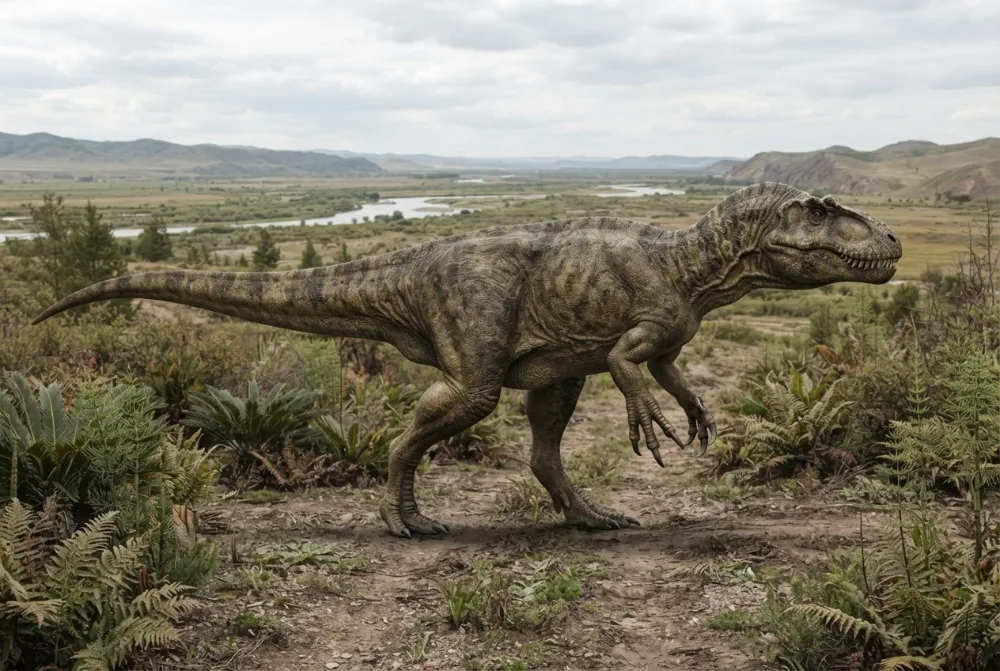
Chilantaisaurus was a huge meat-eating dinosaur that stomped around China during the Late Cretaceous. It was as long as a school bus and had powerful arms with big claws. Scientists think it was one of the biggest hunters of its time.1
Berɛ bɛn na ɛtenaa ase?
Na ne kɛseɛ yɛ sɛn?
Na ne tenten yɛ sɛn?
Na ne korɔn yɛ sɛn?
Na ne mu yɛ duru sɛn?
 ne tenten te sɛ kaa 2.5 a wɔde agyina toatoa so🍌ne tenten te sɛ kwadu 61 a wɔde abɔ toatoa so
 ne mu duru te sɛ nkraman 200🍉ne mu duru te sɛ watamɛlɔn 800🎒ne mu duru te sɛ sukuu klaas mũ 5 mu mmofra🐻❄️ne mu duru te sɛ polar bea 9🏃anka ɔbɛtumi atu mmirika mita 100 wɔ sikɛn 13 mu (onipa a ɔyɛ ntɛm sen biara hia 9.6)
Chilantaisaurus kɛseɛ yɛ sɛn sɛ wode toto WO ho a?
Akontaa nko ara wɔ wo browser mu. Yɛnkora biribiara so, na yɛmmfa biribiara nkɔ baabiara.
Na ɛyɛ ntɛm sɛn?


Nsɛm a ɛyɛ anigye
Chilantaisaurus had one of the largest upper arm bones of any meat-eating dinosaur, measuring 58 centimetres (23 inches) long.1
Its arms were long compared to its legs, similar to spinosaurids like Suchomimus, but different from other big predators.1
The first fossils were found in 1960 by a joint Sino-Soviet expedition, about 60 kilometres (37 miles) north of Jilantai Salt Lake.1
Scientists are not sure exactly how old the rocks are, but they are definitely younger than 92 million years, and maybe from the Santonian or Campanian stages.1
Some bones once thought to belong to Chilantaisaurus were later shown to be from other dinosaurs, like a tooth from a theropod and a vertebra from a sauropod.1
Nsɛm a wɔbisa bebree fa Chilantaisaurus ho
?How big was Chilantaisaurus?
Chilantaisaurus was about 11 metres (36 ft) long and weighed between 2.5 and 4 metric tons (2.8 to 4.4 short tons). That is about as long as a school bus.1
?Was Chilantaisaurus bigger than T. rex?
Chilantaisaurus was about the same size as Tyrannosaurus. It was around 11 metres (36 ft) long and weighed up to 4 metric tons, while T. rex was similar in length but often heavier.1
?What did Chilantaisaurus eat?
Chilantaisaurus was a meat-eating dinosaur, so it hunted other animals. Its big claws and powerful arms helped it catch prey.1
?Did Chilantaisaurus have feathers?
Nobody knows for sure. No feathers have been found with Chilantaisaurus fossils, but many theropods were feathered.1
?When did Chilantaisaurus live?
Chilantaisaurus lived during the Late Cretaceous period, probably between 85.7 and 72.2 million years ago. But scientists are not completely sure of the exact date.1
?Where was Chilantaisaurus found?
Chilantaisaurus fossils were found in Inner Mongolia, China, about 60 kilometres (37 miles) north of Jilantai Salt Lake. They were discovered in 1960 by a joint Sino-Soviet expedition.1
Ma dino ho animdefoɔ
- Nyansahu din
- Chilantaisaurus
- Obi a ɔtoo din
- Hu 19643
- Kuo
- Dino a wɔwe nam
- Abusua / kuo kɛseɛ
- Neovenatoridae3
- Nkyekyɛmu
- Theropoda > Allosauroidea3
- Abotan no mfeɛ
- mfeɛ ɔpepem 94 kɔsi 84 (Turonian / Santonian)3
- Abotan nhyehyɛeɛ
- Tangshang, Ulansuhai3
- Aman
- Kyaena3
- Fɔsil nkyerɛwee
- 2 wɔ The Paleobiology Database mu3
- Nhunumu
- Chinese paleontologist Hu Show-Yung named Chilantaisaurus in 1964 after fossils were found in Inner Mongolia. The bones were fragmentary, including arm and leg parts, and were cataloged as IVPP V.2884.1.1
- Wɔda so gye ho akyinnye
- Scientists still debate how Chilantaisaurus is related to other dinosaurs, with some thinking it was a carcharodontosaur and others a megaraptoran.1
Baabi a nsɛm no firi
- Chilantaisaurus (en.wikipedia.org)
- Chilantaisaurus | Part of the Theropod Family of Dinosaurs (dinosaurmadness.com)
- Chilantaisaurus in The Paleobiology Database (CC BY 4.0): mfeɛ, mmeaeɛ, abotan nhyehyɛeɛ, nkyekyɛmu.
Asɛm biara a ɛwɔ krataafa yi so wɔ nɔma a ɛkyerɛ baabi a ɛfiri. Sɛ yɛfom biribi a, kafra, yɛyɛ dino dɔfoɔ, yɛnyɛ nyansahu nsɛmma krataa. Ka kyerɛ yɛn wɔ [email protected] na yɛbɛsiesie.
 Ɔkɔm de Rex! Dino Wiki yɛ agya bi adwuma a ɔyɛɛ maa ne babarima a ɔdɔ dino. Ɛyɛ kwa, dawurubɔ biara nni mu, akyidifoɔ biara nni mu. Mpanimfoɔ bɛtumi ama Rex aduane kakra, na aboa ama Dino Wiki atena intanɛt so.Ma Rex aduane
 Allosaurus
 Carnotaurus
 Dilophosaurus
 Giganotosaurus
 Compsognathus
 Paronychodon
 Tyrannosaurus
 Triceratops
 Velociraptor
 Spinosaurus
 Ankylosaurus
 Parasaurolophus