 Woyɛ dino bɛn? Nsɛmmisa agoro
 Dino ko
 Dino mmirikatuo
 Dino agodie nketewa
 Stika nwoma
 Dino TOP nhyehyɛeɛ
 Ma me nwanwa!
Dactylosaurus
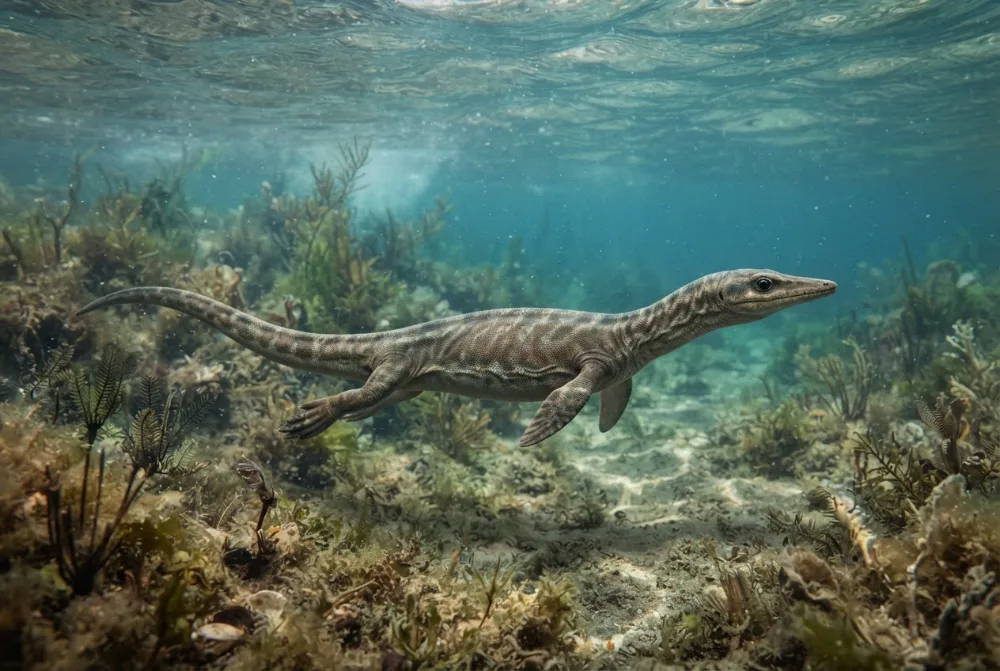
Dactylosaurus was a tiny marine reptile that swam in warm, shallow seas during the Triassic Period. It had a long body, a small head, and paddle-like limbs for moving through the water. Even though it was small, it was one of the earliest pachypleurosaurs in Europe.12
Berɛ bɛn na ɛtenaa ase?
Na ne kɛseɛ yɛ sɛn?
Na ne tenten yɛ sɛn?
Dactylosaurus kɛseɛ yɛ sɛn sɛ wode toto WO ho a?
Akontaa nko ara wɔ wo browser mu. Yɛnkora biribiara so, na yɛmmfa biribiara nkɔ baabiara.
Na ɛyɛ ntɛm sɛn?


Nsɛm a ɛyɛ anigye
Dactylosaurus was one of the smallest members of its family, Pachypleurosauridae, measuring only about 50 cm (1.6 ft) long.1
Its name comes from Greek words meaning 'finger lizard', because of its long, slender fingers.1
Dactylosaurus had 17 neck vertebrae and its skull had large, kidney-shaped openings behind the eyes.1
The first fossil of Dactylosaurus was a partial skeleton of a juvenile, and scientists originally thought it was a different species called D. schroederi.1
Dactylosaurus lived about 247 to 241 million years ago, during the Early and Middle Triassic.3
Its bones became hard (ossified) at a much smaller size than other pachypleurosaurs, which helped scientists identify it.2
Dactylosaurus fossils are often found in shelly limestone called Muschelkalk in Poland and the Netherlands.1
Ma dino ho animdefoɔ
- Nyansahu din
- Dactylosaurus
- Obi a ɔtoo din
- Gürich 18843
- Kuo
- Ɛpo mu mmoa a wɔwea
- Abusua / kuo kɛseɛ
- Pachypleurosauridae3
- Nkyekyɛmu
- Sauropterygia3
- Abotan no mfeɛ
- mfeɛ ɔpepem 247 kɔsi 241 ()3
- Abotan nhyehyɛeɛ
- Vossenveld, Karchowice, Chorzow3
- Aman
- Poland, Nɛdalands3
- Fɔsil nkyerɛwee
- 4 wɔ The Paleobiology Database mu3
- Nhunumu
- Dactylosaurus was named by German paleontologist Georg Gürich in 1884, based on fossils from Upper Silesia (now Poland).31
- Wɔda so gye ho akyinnye
- Scientists are still unsure about the exact diet of Dactylosaurus, since its teeth and jaw shape suggest it ate small prey, but direct evidence is missing.3
Baabi a nsɛm no firi
- Dactylosaurus (en.wikipedia.org)
- The pachypleurosaurid Dactylosaurus schroederi (Diapsida: Sauropterygia) (cdnsciencepub.com)
- Dactylosaurus in The Paleobiology Database (CC BY 4.0): mfeɛ, mmeaeɛ, abotan nhyehyɛeɛ, nkyekyɛmu.
Asɛm biara a ɛwɔ krataafa yi so wɔ nɔma a ɛkyerɛ baabi a ɛfiri. Sɛ yɛfom biribi a, kafra, yɛyɛ dino dɔfoɔ, yɛnyɛ nyansahu nsɛmma krataa. Ka kyerɛ yɛn wɔ [email protected] na yɛbɛsiesie.
 Ɔkɔm de Rex! Dino Wiki yɛ agya bi adwuma a ɔyɛɛ maa ne babarima a ɔdɔ dino. Ɛyɛ kwa, dawurubɔ biara nni mu, akyidifoɔ biara nni mu. Mpanimfoɔ bɛtumi ama Rex aduane kakra, na aboa ama Dino Wiki atena intanɛt so.Ma Rex aduane
 Nothosaurus
 Placodus
 Lariosaurus
 Cyamodus
 Cymatosaurus
 Proneusticosaurus
 Chonespondylus
 Cymbospondylus
 Phalarodon
 Mixosaurus
 Chaohusaurus
 Chensaurus