 Woyɛ dino bɛn? Nsɛmmisa agoro
 Dino ko
 Dino mmirikatuo
 Dino agodie nketewa
 Stika nwoma
 Dino TOP nhyehyɛeɛ
 Ma me nwanwa!
Dianmeisaurus
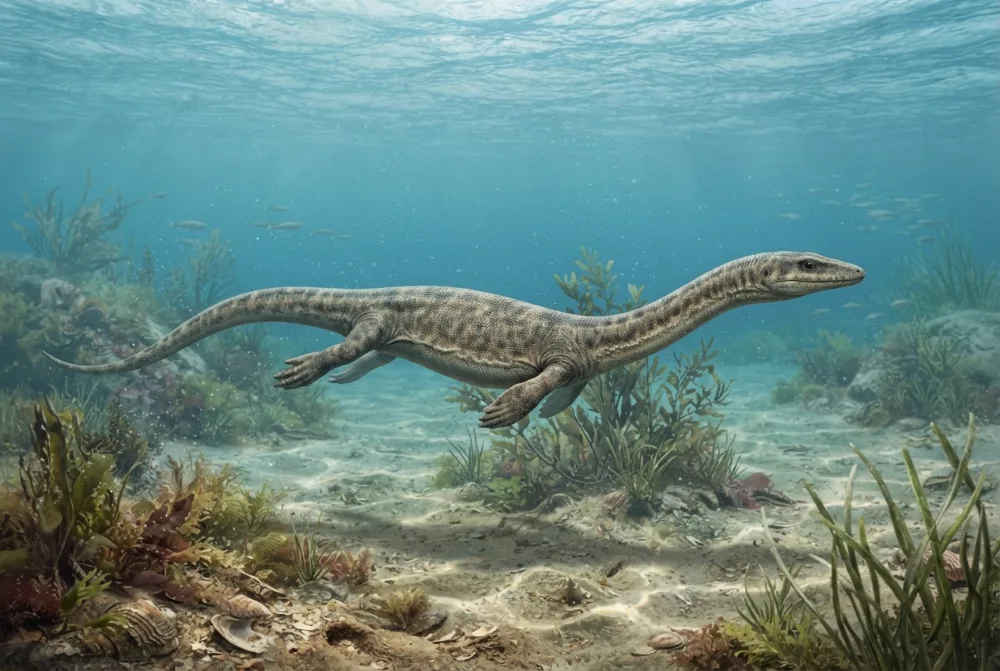
Dianmeisaurus was a tiny, slender marine reptile that swam in warm seas during the Middle Triassic, about 245 million years ago. It had a long body and a small head with big eyes, and it probably hunted small fish and shrimp in the water.23
Berɛ bɛn na ɛtenaa ase?
Na ne kɛseɛ yɛ sɛn?
Na ne tenten yɛ sɛn?
Dianmeisaurus kɛseɛ yɛ sɛn sɛ wode toto WO ho a?
Akontaa nko ara wɔ wo browser mu. Yɛnkora biribiara so, na yɛmmfa biribiara nkɔ baabiara.
Na ɛyɛ ntɛm sɛn?


Nsɛm a ɛyɛ anigye
Dianmeisaurus was very small, with a total body length of less than 50 centimetres (about 20 inches).3
It had 41 vertebrae in its neck and back before the hips, which is a lot for such a small reptile.3
Its eyes were very large compared to the openings behind them on the skull, helping it see in dim water.3
The space between its eyes was extremely narrow, a feature that helps scientists tell it apart from similar reptiles.21
Dianmeisaurus lived alongside two other small marine reptiles in the same ancient sea: Diandongosaurus and Dianopachysaurus.3
The second species, Dianmeisaurus mutaensis, was named in 2024 and its skeleton probably came from a young animal.1
Its front leg bones (the ulna) were wider at the top than at the bottom, which is unusual.3
Ma dino ho animdefoɔ
- Nyansahu din
- Dianmeisaurus
- Obi a ɔtoo din
- Shang and Li 20154
- Kuo
- Ɛpo mu mmoa a wɔwea
- Abusua / kuo kɛseɛ
- Pachypleurosauria4
- Nkyekyɛmu
- Sauropterygia4
- Abotan no mfeɛ
- mfeɛ ɔpepem 247 kɔsi 241 ()4
- Abotan nhyehyɛeɛ
- Guanling4
- Aman
- Kyaena4
- Fɔsil nkyerɛwee
- 2 wɔ The Paleobiology Database mu4
- Nhunumu
- The first species, Dianmeisaurus gracilis, was named by Shang Qinghua and Li Chun in 2015 based on a nearly complete skeleton from Luoping, Yunnan, China. A second species, D. mutaensis, was added in 2024 by Hu, Li and Liu.213
- Wɔda so gye ho akyinnye
- Scientists are still debating whether Dianmeisaurus is more closely related to European pachypleurosaurs or to the nothosauroid group of marine reptiles.3
Baabi a nsɛm no firi
- Dianmeisaurus (en.wikipedia.org)
- PBDB Taxon (paleobiodb.org)
- A new small-sized eosauropterygian(Diapsida:Sauropterygia) from the Middle Triassic of Luoping,Yunnan,southwestern China Chinese Full Text (cnki.net)
- Dianmeisaurus in The Paleobiology Database (CC BY 4.0): mfeɛ, mmeaeɛ, abotan nhyehyɛeɛ, nkyekyɛmu.
Asɛm biara a ɛwɔ krataafa yi so wɔ nɔma a ɛkyerɛ baabi a ɛfiri. Sɛ yɛfom biribi a, kafra, yɛyɛ dino dɔfoɔ, yɛnyɛ nyansahu nsɛmma krataa. Ka kyerɛ yɛn wɔ [email protected] na yɛbɛsiesie.
 Ɔkɔm de Rex! Dino Wiki yɛ agya bi adwuma a ɔyɛɛ maa ne babarima a ɔdɔ dino. Ɛyɛ kwa, dawurubɔ biara nni mu, akyidifoɔ biara nni mu. Mpanimfoɔ bɛtumi ama Rex aduane kakra, na aboa ama Dino Wiki atena intanɛt so.Ma Rex aduane
 Nothosaurus
 Placodus
 Lariosaurus
 Cyamodus
 Cymatosaurus
 Proneusticosaurus
 Chonespondylus
 Cymbospondylus
 Phalarodon
 Mixosaurus
 Chaohusaurus
 Chensaurus