 Woyɛ dino bɛn? Nsɛmmisa agoro
 Dino ko
 Dino mmirikatuo
 Dino agodie nketewa
 Stika nwoma
 Dino TOP nhyehyɛeɛ
 Ma me nwanwa!
Globidens
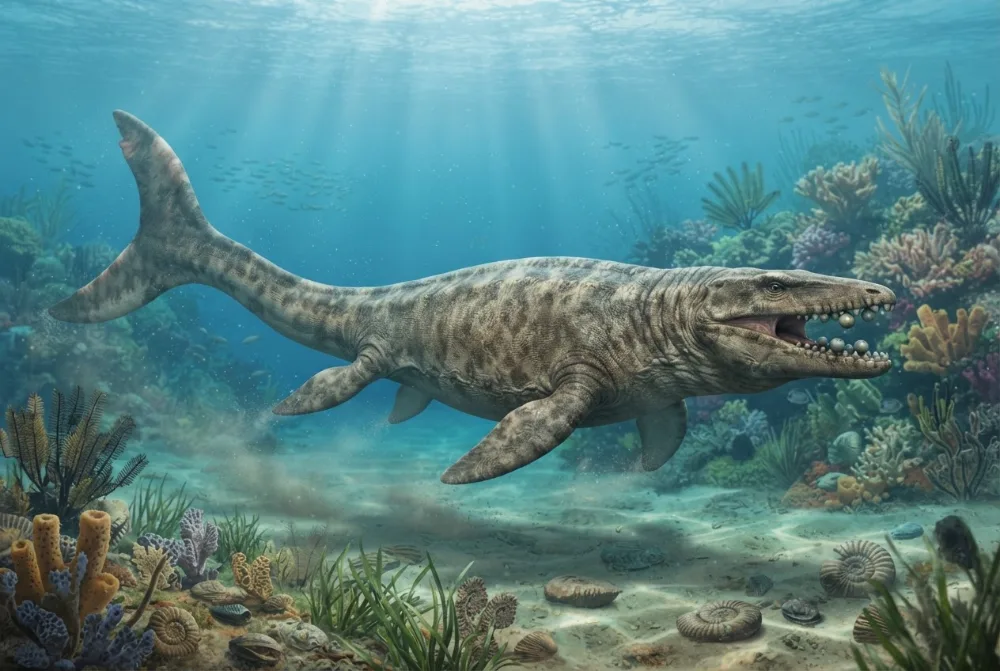
Globidens was a marine lizard that lived in the warm, shallow seas of the Late Cretaceous. It had strange, round teeth like little balls, perfect for crushing the hard shells of its prey. Unlike many other sea reptiles, Globidens was a shell-crushing specialist!1
Berɛ bɛn na ɛtenaa ase?
Na ne kɛseɛ yɛ sɛn?
Na ne tenten yɛ sɛn?
 ne tenten te sɛ nkraman 6 firi hwene kɔsi dua🍌ne tenten te sɛ kwadu 33 a wɔde abɔ toatoa so🏊anka ɔbɛtumi aguare nsuguarebea kɛseɛ (50 m) tenten wɔ sikɛn 4.7 mu
Globidens kɛseɛ yɛ sɛn sɛ wode toto WO ho a?
Akontaa nko ara wɔ wo browser mu. Yɛnkora biribiara so, na yɛmmfa biribiara nkɔ baabiara.
Na ɛyɛ ntɛm sɛn?


Nsɛm a ɛyɛ anigye
Globidens had round, globe-shaped teeth that were different from the sharp teeth of most other mosasaurs.1
Scientists found stomach contents inside a Globidens fossil from South Dakota, showing it ate clams called inoceramids.1
Globidens lived about 84 to 66 million years ago, during the Late Cretaceous period.3
The first Globidens fossil was a partial skull and a neck bone found in Alabama, USA, and named in 1912 by Charles W. Gilmore.1
Globidens had a strong, robust skull and a powerful bite to crush the shells of its prey.1
Nsɛm a wɔbisa bebree fa Globidens ho
?How big was Globidens?
Globidens was a medium-sized mosasaur, measuring about 5 to 6 metres (16 to 20 feet) long.1
?What did Globidens eat?
Globidens ate hard-shelled prey like turtles, ammonites, nautili, and bivalves. Stomach contents from a fossil found in South Dakota showed it ate clams called inoceramids.12
?Why did Globidens have round teeth?
Globidens had round, globe-shaped teeth that were perfect for crushing tough shells. Unlike most mosasaurs with sharp teeth for grabbing slippery prey, Globidens was a shell-crushing specialist.1
?Was Globidens a dinosaur?
No, Globidens was not a dinosaur. It was a marine lizard, a type of mosasaur that lived in the sea during the Late Cretaceous.1
?When did Globidens live?
Globidens lived during the Late Cretaceous period, about 84 to 66 million years ago.1
?Where have Globidens fossils been found?
Globidens fossils have been found in Angola, Brazil, Colombia, Morocco, Syria, and the United States.1
Ma dino ho animdefoɔ
- Nyansahu din
- Globidens
- Obi a ɔtoo din
- Gilmore 19123
- Kuo
- Mosasɔɔ
- Abusua / kuo kɛseɛ
- Mosasauridae3
- Nkyekyɛmu
- Mosasauroidea3
- Abotan no mfeɛ
- mfeɛ ɔpepem 90 kɔsi 66 (Coniacian / Maastrichtian)3
- Abotan nhyehyɛeɛ
- Pierre Shale, Wolfe City/Sprinkle, Phosphates3
- Aman
- Amerika, Moroko, Siria, Yɔdan, Misraim, Angola3
- Fɔsil nkyerɛwee
- 32 wɔ The Paleobiology Database mu3
- Nhunumu
- Globidens was first described in 1912 by Charles W. Gilmore, based on an incomplete skull and a neck bone from Alabama, USA. The name means 'globe tooth' because of its round teeth.1
- Wɔda so gye ho akyinnye
- Scientists are still debating exactly how many species of Globidens existed, as some fossils have been moved to other groups like Prognathodon.1
Baabi a nsɛm no firi
- Globidens (en.wikipedia.org)
- Stomach contents of Globidens, a shell-crushing mosasaur (Squamata), from the Late Cretaceous Pierre Shale Group, Big Bend area of the Missouri River, central South Dakota (exa.ai)
- Globidens in The Paleobiology Database (CC BY 4.0): mfeɛ, mmeaeɛ, abotan nhyehyɛeɛ, nkyekyɛmu.
Asɛm biara a ɛwɔ krataafa yi so wɔ nɔma a ɛkyerɛ baabi a ɛfiri. Sɛ yɛfom biribi a, kafra, yɛyɛ dino dɔfoɔ, yɛnyɛ nyansahu nsɛmma krataa. Ka kyerɛ yɛn wɔ [email protected] na yɛbɛsiesie.
 Ɔkɔm de Rex! Dino Wiki yɛ agya bi adwuma a ɔyɛɛ maa ne babarima a ɔdɔ dino. Ɛyɛ kwa, dawurubɔ biara nni mu, akyidifoɔ biara nni mu. Mpanimfoɔ bɛtumi ama Rex aduane kakra, na aboa ama Dino Wiki atena intanɛt so.Ma Rex aduane
 Mosasaurus
 Prognathodon
 Tylosaurus
 Platecarpus
 Clidastes
 Halisaurus
 Tyrannosaurus
 Triceratops
 Velociraptor
 Spinosaurus
 Ankylosaurus
 Parasaurolophus