 Woyɛ dino bɛn? Nsɛmmisa agoro
 Dino ko
 Dino mmirikatuo
 Dino agodie nketewa
 Stika nwoma
 Dino TOP nhyehyɛeɛ
 Ma me nwanwa!
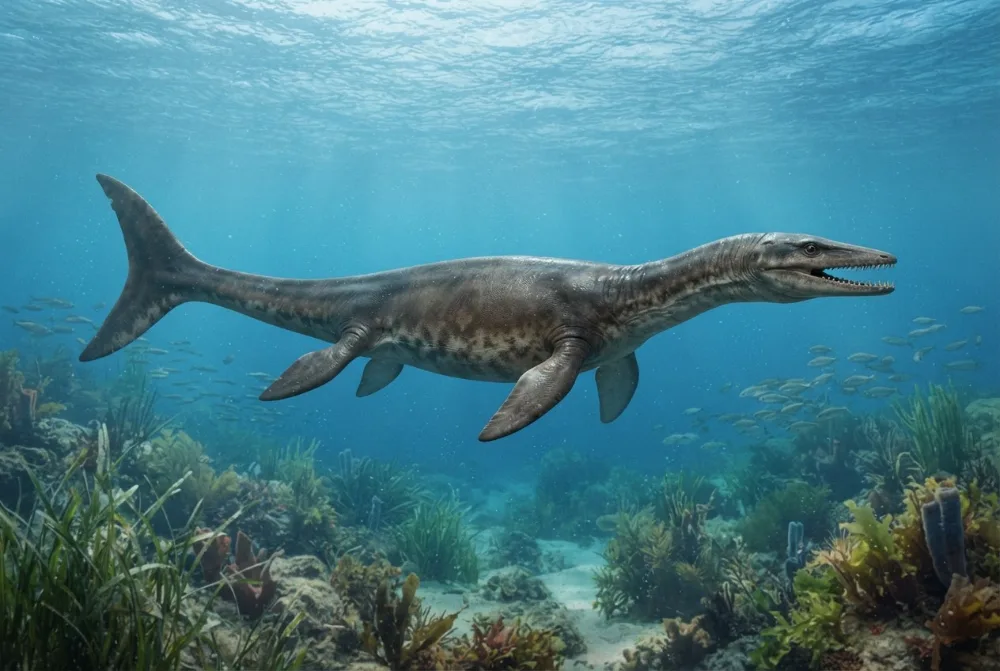
Halisaurus
Halisaurus was a small, sleek marine lizard that swam in the warm seas of the Late Cretaceous. It was not a dinosaur, but a mosasaur, a relative of today's monitor lizards. It used its long tail and flippers to chase fish and other prey.1
Berɛ bɛn na ɛtenaa ase?
Na ne kɛseɛ yɛ sɛn?
Na ne tenten yɛ sɛn?
 ne tenten te sɛ nkraman 4 firi hwene kɔsi dua🍌ne tenten te sɛ kwadu 22 a wɔde abɔ toatoa so🏊anka ɔbɛtumi aguare nsuguarebea kɛseɛ (50 m) tenten wɔ sikɛn 4.9 mu
Halisaurus kɛseɛ yɛ sɛn sɛ wode toto WO ho a?
Akontaa nko ara wɔ wo browser mu. Yɛnkora biribiara so, na yɛmmfa biribiara nkɔ baabiara.
Na ɛyɛ ntɛm sɛn?


Nsɛm a ɛyɛ anigye
Halisaurus was named by famous fossil hunter Othniel Charles Marsh in 1869.1
It was a small mosasaur, only about 3 to 4 metres long, much smaller than giants like Tylosaurus.1
Its flippers were not as specialized as those of later mosasaurs, so it was probably a slower swimmer.1
Fossils of Halisaurus have been found on every continent except Australia and Antarctica.2
The species Halisaurus onchognathus is known only from remains that were destroyed during World War II, so scientists are not sure if it was a real species.1
Halisaurus lived from about 85 to 66 million years ago, during the Late Cretaceous.2
Nsɛm a wɔbisa bebree fa Halisaurus ho
?How big was Halisaurus?
Halisaurus was about 3 to 4 metres (9.8 to 13.1 feet) long, making it small for a mosasaur.1
?Was Halisaurus a dinosaur?
No, Halisaurus was not a dinosaur. It was a mosasaur, a marine lizard related to today's monitor lizards.1
?What did Halisaurus eat?
Halisaurus likely ate small fish and other small prey, based on its slender jaws and numerous small teeth.1
?Could Halisaurus swim fast?
Maybe up to about 37 km/h (23 mph) in a short burst. This is an estimate from its size. But it was probably not a great swimmer over long distances, because its flippers were not as good as those of later mosasaurs.1
?When did Halisaurus live?
Halisaurus lived during the Late Cretaceous, from about 86 to 66 million years ago.1
?Where have Halisaurus fossils been found?
Fossils have been found on every continent except Australia and Antarctica, including North America and North Africa.1
Atosɛm sɛefoɔ
Atosɛm: Halisaurus was a dinosaur.
Nokorɛ: Halisaurus was a mosasaur, a marine reptile closely related to modern monitor lizards, not a dinosaur.1
Ma dino ho animdefoɔ
- Nyansahu din
- Halisaurus
- Obi a ɔtoo din
- Marsh 18692
- Kuo
- Mosasɔɔ
- Abusua / kuo kɛseɛ
- Mosasauridae2
- Nkyekyɛmu
- Mosasauroidea2
- Abotan no mfeɛ
- mfeɛ ɔpepem 86 kɔsi 62 (Santonian / Danian)2
- Abotan nhyehyɛeɛ
- Navesink, Severn, Marshalltown2
- Aman
- Amerika, Moroko, Kyili, Peru, Yɔdan, Angola2
- Fɔsil nkyerɛwee
- 30 wɔ The Paleobiology Database mu2
- Nhunumu
- Halisaurus was named by Othniel Charles Marsh in 1869 based on a partial skull and vertebrae found near Hornerstown, New Jersey.1
- Wɔda so gye ho akyinnye
- Scientists are not sure how many species of Halisaurus really existed, because some fossils are very fragmentary.1
Baabi a nsɛm no firi
- Halisaurus (en.wikipedia.org)
- Halisaurus in The Paleobiology Database (CC BY 4.0): mfeɛ, mmeaeɛ, abotan nhyehyɛeɛ, nkyekyɛmu.
Asɛm biara a ɛwɔ krataafa yi so wɔ nɔma a ɛkyerɛ baabi a ɛfiri. Sɛ yɛfom biribi a, kafra, yɛyɛ dino dɔfoɔ, yɛnyɛ nyansahu nsɛmma krataa. Ka kyerɛ yɛn wɔ [email protected] na yɛbɛsiesie.
 Ɔkɔm de Rex! Dino Wiki yɛ agya bi adwuma a ɔyɛɛ maa ne babarima a ɔdɔ dino. Ɛyɛ kwa, dawurubɔ biara nni mu, akyidifoɔ biara nni mu. Mpanimfoɔ bɛtumi ama Rex aduane kakra, na aboa ama Dino Wiki atena intanɛt so.Ma Rex aduane
 Mosasaurus
 Prognathodon
 Tylosaurus
 Platecarpus
 Clidastes
 Globidens
 Tyrannosaurus
 Triceratops
 Velociraptor
 Spinosaurus
 Ankylosaurus
 Parasaurolophus