 Woyɛ dino bɛn? Nsɛmmisa agoro
 Dino ko
 Dino mmirikatuo
 Dino agodie nketewa
 Stika nwoma
 Dino TOP nhyehyɛeɛ
 Ma me nwanwa!
Goronyosaurus
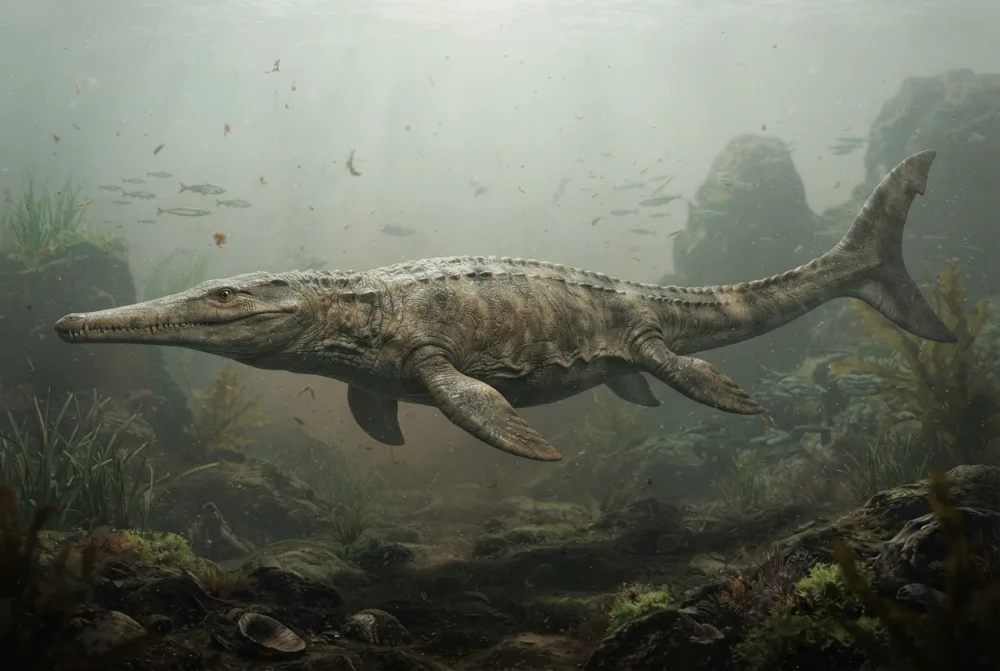
Goronyosaurus was a marine lizard that lived in the warm, murky waters of an ancient inland sea in West Africa. It had a long, tube-like snout and blunt teeth for smashing hard-shelled prey, like a crocodile of the sea.2
Berɛ bɛn na ɛtenaa ase?
Na ne kɛseɛ yɛ sɛn?
Na ne tenten yɛ sɛn?
 ne tenten te sɛ nkraman 7 firi hwene kɔsi dua🍌ne tenten te sɛ kwadu 39 a wɔde abɔ toatoa so🏊anka ɔbɛtumi aguare nsuguarebea kɛseɛ (50 m) tenten wɔ sikɛn 4.9 mu
Goronyosaurus kɛseɛ yɛ sɛn sɛ wode toto WO ho a?
Akontaa nko ara wɔ wo browser mu. Yɛnkora biribiara so, na yɛmmfa biribiara nkɔ baabiara.
Na ɛyɛ ntɛm sɛn?


Nsɛm a ɛyɛ anigye
Goronyosaurus had straight, rounded teeth instead of the sharp, cutting teeth of most other mosasaurs. These teeth were perfect for crushing, not slicing.2
Its skull was narrow and flattened, with a long snout and small nostrils placed far back. This helped it hunt in murky, shallow waters.2
The bones of its pelvis were fused together, which is unusual for mosasaurs. This may have made its swimming more powerful.1
Goronyosaurus lived about 70 to 66 million years ago, during the very end of the Age of Dinosaurs.2
It shared its coastal lagoon home with other mosasaurs, crocodiles, turtles, and large fish.2
Scientists think Goronyosaurus was starting to adapt to freshwater rivers, but the big extinction 66 million years ago stopped it.2
Nsɛm a wɔbisa bebree fa Goronyosaurus ho
?How big was Goronyosaurus?
About 5.14 metres (16.9 feet) long. That is roughly as long as a small car.2
?What did Goronyosaurus eat?
It ate hard-shelled animals like shellfish and turtles. Its blunt, rounded teeth were perfect for smashing shells.2
?Was Goronyosaurus a dinosaur?
No, it was a marine lizard, not a dinosaur. It belonged to a group called mosasaurs.2
?When did Goronyosaurus live?
It lived about 70 to 66 million years ago, during the very end of the Age of Dinosaurs.2
Atosɛm sɛefoɔ
Atosɛm: Some people think Goronyosaurus was a dinosaur.
Nokorɛ: Goronyosaurus was a mosasaur, a type of marine lizard, not a dinosaur. Mosasaurs are more closely related to modern snakes and monitor lizards.2
Ma dino ho animdefoɔ
- Nyansahu din
- Goronyosaurus
- Obi a ɔtoo din
- Azzaroli et al. 19723
- Kuo
- Mosasɔɔ
- Abusua / kuo kɛseɛ
- Mosasauridae3
- Nkyekyɛmu
- Mosasauroidea3
- Abotan no mfeɛ
- mfeɛ ɔpepem 72 kɔsi 66 (Maastrichtian)3
- Abotan nhyehyɛeɛ
- Dukamaje, Rima3
- Aman
- Naigyeria, Naigya3
- Fɔsil nkyerɛwee
- 3 wɔ The Paleobiology Database mu3
- Nhunumu
- The first fossils were found in Nigeria and named Mosasaurus nigeriensis by W. E. Swinton in 1930. In 1972, a new skull from Taloka, Nigeria, showed it was so different that scientists gave it its own genus name Goronyosaurus.21
- Wɔda so gye ho akyinnye
- Scientists are not sure exactly how Goronyosaurus is related to other mosasaurs. Its strange skull and teeth make it hard to place in the family tree.2
Baabi a nsɛm no firi
- bdim.eu (bdim.eu)
- Goronyosaurus (en.wikipedia.org)
- Goronyosaurus in The Paleobiology Database (CC BY 4.0): mfeɛ, mmeaeɛ, abotan nhyehyɛeɛ, nkyekyɛmu.
Asɛm biara a ɛwɔ krataafa yi so wɔ nɔma a ɛkyerɛ baabi a ɛfiri. Sɛ yɛfom biribi a, kafra, yɛyɛ dino dɔfoɔ, yɛnyɛ nyansahu nsɛmma krataa. Ka kyerɛ yɛn wɔ [email protected] na yɛbɛsiesie.
 Ɔkɔm de Rex! Dino Wiki yɛ agya bi adwuma a ɔyɛɛ maa ne babarima a ɔdɔ dino. Ɛyɛ kwa, dawurubɔ biara nni mu, akyidifoɔ biara nni mu. Mpanimfoɔ bɛtumi ama Rex aduane kakra, na aboa ama Dino Wiki atena intanɛt so.Ma Rex aduane
 Mosasaurus
 Prognathodon
 Tylosaurus
 Platecarpus
 Clidastes
 Globidens
 Tyrannosaurus
 Triceratops
 Velociraptor
 Spinosaurus
 Ankylosaurus
 Parasaurolophus