 Woyɛ dino bɛn? Nsɛmmisa agoro
 Dino ko
 Dino mmirikatuo
 Dino agodie nketewa
 Stika nwoma
 Dino TOP nhyehyɛeɛ
 Ma me nwanwa!
Helioceratops
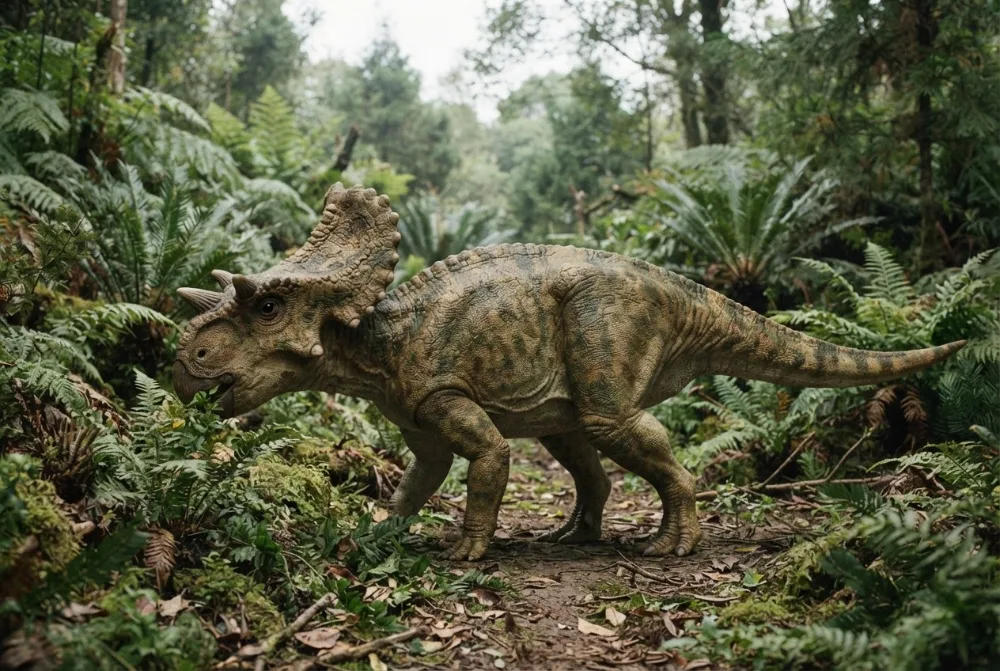
Helioceratops was a small, plant-eating dinosaur that lived about 100 million years ago in what is now China. It had a short lower jaw and walked on four legs. Its name means 'sun horned face' because scientists think horned dinosaurs like it first appeared in the East, where the sun rises.1
Berɛ bɛn na ɛtenaa ase?
Na ne kɛseɛ yɛ sɛn?
Na ne tenten yɛ sɛn?
Na ne korɔn yɛ sɛn?
Na ne mu yɛ duru sɛn?
 ne tenten te sɛ fie agyinamoa 2.5 firi hwene kɔsi dua🍌ne tenten te sɛ kwadu 7 a wɔde abɔ toatoa so🍉ne mu duru te sɛ watamɛlɔn 4🏃anka ɔbɛtumi atu mmirika mita 100 wɔ sikɛn 11 mu (onipa a ɔyɛ ntɛm sen biara hia 9.6)
Helioceratops kɛseɛ yɛ sɛn sɛ wode toto WO ho a?
Akontaa nko ara wɔ wo browser mu. Yɛnkora biribiara so, na yɛmmfa biribiara nkɔ baabiara.
Na ɛyɛ ntɛm sɛn?


Nsɛm a ɛyɛ anigye
Helioceratops is known from only two jaw bones: a right lower jaw (the holotype) and a left upper jaw (the paratype). They were found close together and may belong to the same animal.1
Its lower jaw is very short and deep. The tooth row is only 60% longer than the height of the jawbone.1
The teeth of Helioceratops have an unusual pattern of ridges: up to nine ridges in front of the main ridge but only four behind it.1
Helioceratops lived during the Albian to Cenomanian stages, about 100 million years ago, at the boundary between the Early and Late Cretaceous.1
Scientists think Helioceratops is a close relative of Auroraceratops, which means 'dawn horned face'.1
Nsɛm a wɔbisa bebree fa Helioceratops ho
?How big was Helioceratops?
Helioceratops was a relatively small dinosaur. In 2010, Gregory S. Paul estimated it was about 1.3 metres (4.3 feet) long and weighed about 20 kilograms (44 pounds).1
?What did Helioceratops eat?
Helioceratops was a herbivore, meaning it ate plants. It lived on land and likely shared its habitat with another plant-eating dinosaur called Changchunsaurus.1
?When did Helioceratops live?
Helioceratops lived about 100 million years ago, during the Albian to Cenomanian stages, which is the boundary between the Early and Late Cretaceous. Its fossils were found in the Quantou Formation in China.14
?Why is it called Helioceratops?
The name means 'sun horned face' because scientists think horned dinosaurs first appeared in the East, where the sun rises. It also refers to its close relationship with Auroraceratops, the 'dawn horned face'.1
Ma dino ho animdefoɔ
- Nyansahu din
- Helioceratops
- Obi a ɔtoo din
- Jin et al. 20094
- Kuo
- Dino a wɔwɔ mmɛn
- Abusua / kuo kɛseɛ
- Leptoceratopsidae4
- Nkyekyɛmu
- Ornithischia > Ceratopsia4
- Abotan no mfeɛ
- mfeɛ ɔpepem 121 kɔsi 100 (Aptian / Albian)4
- Abotan nhyehyɛeɛ
- Quantou4
- Aman
- Kyaena4
- Fɔsil nkyerɛwee
- 1 wɔ The Paleobiology Database mu4
- Nhunumu
- Helioceratops was named in 2009 by Jin Liyong, Chen Jun, Zan Shuqin and Pascal Godefroit. The fossils were dug up in 2000 and 2002 at the Liufangzi site in Jilin Province, China.12
- Wɔda so gye ho akyinnye
- Scientists are not sure whether Helioceratops had horns. No horn cores have been found, but it is a ceratopsian, so it may have had small horns on its face.1
Baabi a nsɛm no firi
- Helioceratops (en.wikipedia.org)
- Newly Discovered Dinosaur Speicies Named 'Helioceratops' -- Beijing Review (bjreview.com)
- Helioceratops | The Sun-Horned Face of Cretaceous China (thedinosaurs.org)
- Helioceratops in The Paleobiology Database (CC BY 4.0): mfeɛ, mmeaeɛ, abotan nhyehyɛeɛ, nkyekyɛmu.
Asɛm biara a ɛwɔ krataafa yi so wɔ nɔma a ɛkyerɛ baabi a ɛfiri. Sɛ yɛfom biribi a, kafra, yɛyɛ dino dɔfoɔ, yɛnyɛ nyansahu nsɛmma krataa. Ka kyerɛ yɛn wɔ [email protected] na yɛbɛsiesie.
 Ɔkɔm de Rex! Dino Wiki yɛ agya bi adwuma a ɔyɛɛ maa ne babarima a ɔdɔ dino. Ɛyɛ kwa, dawurubɔ biara nni mu, akyidifoɔ biara nni mu. Mpanimfoɔ bɛtumi ama Rex aduane kakra, na aboa ama Dino Wiki atena intanɛt so.Ma Rex aduane
 Triceratops
 Protoceratops
 Ojoceratops
 Tatankaceratops
 Psittacosaurus
 Centrosaurus
 Stegosaurus
 Iguanodon
 Archaeopteryx
 Giganotosaurus
 Microraptor
 Deinonychus