 Woyɛ dino bɛn? Nsɛmmisa agoro
 Dino ko
 Dino mmirikatuo
 Dino agodie nketewa
 Stika nwoma
 Dino TOP nhyehyɛeɛ
 Ma me nwanwa!
Archaeopteryx
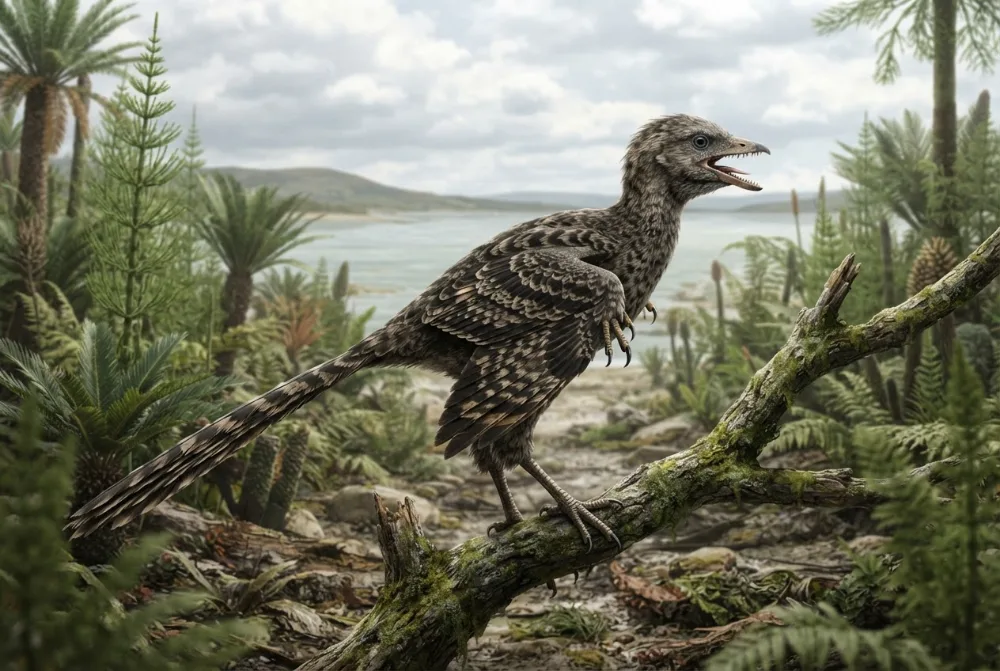
Archaeopteryx was a small, bird-like dinosaur that lived about 150 million years ago. It had feathers and wings like a bird, but also sharp teeth and a long bony tail like other dinosaurs. Scientists think it could fly or glide, making it one of the earliest known flying dinosaurs.21
Berɛ bɛn na ɛtenaa ase?
Na ne kɛseɛ yɛ sɛn?
Na ne tenten yɛ sɛn?
Na ne korɔn yɛ sɛn?
nsusuiɛ
Na ne mu yɛ duru sɛn?
Archaeopteryx kɛseɛ yɛ sɛn sɛ wode toto WO ho a?
Akontaa nko ara wɔ wo browser mu. Yɛnkora biribiara so, na yɛmmfa biribiara nkɔ baabiara.
Na ɛyɛ ntɛm sɛn?


Nsɛm a ɛyɛ anigye
Archaeopteryx was about the size of a magpie or a raven, with a body length of up to 50 centimetres.1
It had broad, rounded wings and a long tail, and its feathers were very similar to those of modern birds.1
All known fossils of Archaeopteryx come from limestone quarries near Solnhofen in Germany, which was once a lagoon surrounded by subtropical islands.21
The first Archaeopteryx fossil was discovered in 1861, and it was the first dinosaur ever found with feathers.21
Scientists are not sure if Archaeopteryx could truly fly or if it only glided from tree to tree.2
Nsɛm a wɔbisa bebree fa Archaeopteryx ho
?Was Archaeopteryx a bird or a dinosaur?
It was both: a bird-like dinosaur and one of the earliest known birds. Scientists call it a transitional fossil between non-avian dinosaurs and modern birds.12
?How big was Archaeopteryx?
About 50 centimetres long, similar in size to a magpie or a raven. Its wingspan was up to 70 centimetres.12
?Could Archaeopteryx fly?
Scientists are not sure. It had broad, feathered wings and could probably glide, but it may not have been able to flap its wings like modern birds.12
?What did Archaeopteryx eat?
It was carnivorous and probably ate small reptiles, mammals, and insects.2
?When did Archaeopteryx live?
It lived during the Late Jurassic Period, about 150 million years ago.12
?Where was Archaeopteryx found?
All fossils come from limestone quarries near Solnhofen in Germany. Back then, that area was a warm, tropical lagoon.12
?Did Archaeopteryx have teeth?
Yes, it had small, sharp teeth, unlike modern birds. It also had a long, bony tail and claws on its wings.12
?Why is Archaeopteryx important?
It was the first dinosaur found with feathers, and it helped prove that birds evolved from dinosaurs. It is one of the most important fossils ever discovered.123
?How many Archaeopteryx fossils have been found?
Fourteen body fossils have been discovered, plus one single feather. Most are in museums in Germany and England.1
Atosɛm sɛefoɔ
Atosɛm: Archaeopteryx is the oldest known bird.
Nokorɛ: Older bird-like dinosaurs such as Anchiornis, Xiaotingia, and Aurornis have since been discovered, so Archaeopteryx is no longer considered the oldest.1
Ma dino ho animdefoɔ
- Nyansahu din
- Archaeopteryx
- Obi a ɔtoo din
- Meyer 18614
- Kuo
- Nnomaa a wɔdii kan
- Abusua / kuo kɛseɛ
- Avialae4
- Nkyekyɛmu
- Theropoda > Avialae4
- Abotan no mfeɛ
- mfeɛ ɔpepem 149 kɔsi 121 (Tithonian / Barremian)4
- Abotan nhyehyɛeɛ
- Altmühltal, Solnhofen, Camarillas4
- Aman
- Gyaaman, Spania4
- Fɔsil nkyerɛwee
- 10 wɔ The Paleobiology Database mu4
- Wɔsan frɛ no
- Archaeornis, Griphosaurus (din dada no nso, yɛkan no sɛ aboa korɔ no ara)4
- Nhunumu
- Archaeopteryx was named by German paleontologist Hermann von Meyer in 1861, based on a single feather found in the Solnhofen limestone in Germany. The first skeleton was discovered later that same year.421
- Wɔda so gye ho akyinnye
- Scientists still debate whether Archaeopteryx was mainly a ground-dweller or lived in trees, and whether it could truly fly or only glide.12
Baabi a nsɛm no firi
- Archaeopteryx (en.wikipedia.org)
- Archaeopteryx | Natural History Museum (nhm.ac.uk)
- Archaeopteryx (ucmp.berkeley.edu)
- Archaeopteryx in The Paleobiology Database (CC BY 4.0): mfeɛ, mmeaeɛ, abotan nhyehyɛeɛ, nkyekyɛmu.
Asɛm biara a ɛwɔ krataafa yi so wɔ nɔma a ɛkyerɛ baabi a ɛfiri. Sɛ yɛfom biribi a, kafra, yɛyɛ dino dɔfoɔ, yɛnyɛ nyansahu nsɛmma krataa. Ka kyerɛ yɛn wɔ [email protected] na yɛbɛsiesie.
 Ɔkɔm de Rex! Dino Wiki yɛ agya bi adwuma a ɔyɛɛ maa ne babarima a ɔdɔ dino. Ɛyɛ kwa, dawurubɔ biara nni mu, akyidifoɔ biara nni mu. Mpanimfoɔ bɛtumi ama Rex aduane kakra, na aboa ama Dino Wiki atena intanɛt so.Ma Rex aduane
 Hesperornis
 Ichthyornis
 Baptornis
 Jurapteryx
 Gobipteryx
 Martinavis
 Stegosaurus
 Iguanodon
 Giganotosaurus
 Microraptor
 Deinonychus
 Baryonyx