 Woyɛ dino bɛn? Nsɛmmisa agoro
 Dino ko
 Dino mmirikatuo
 Dino agodie nketewa
 Stika nwoma
 Dino TOP nhyehyɛeɛ
 Ma me nwanwa!
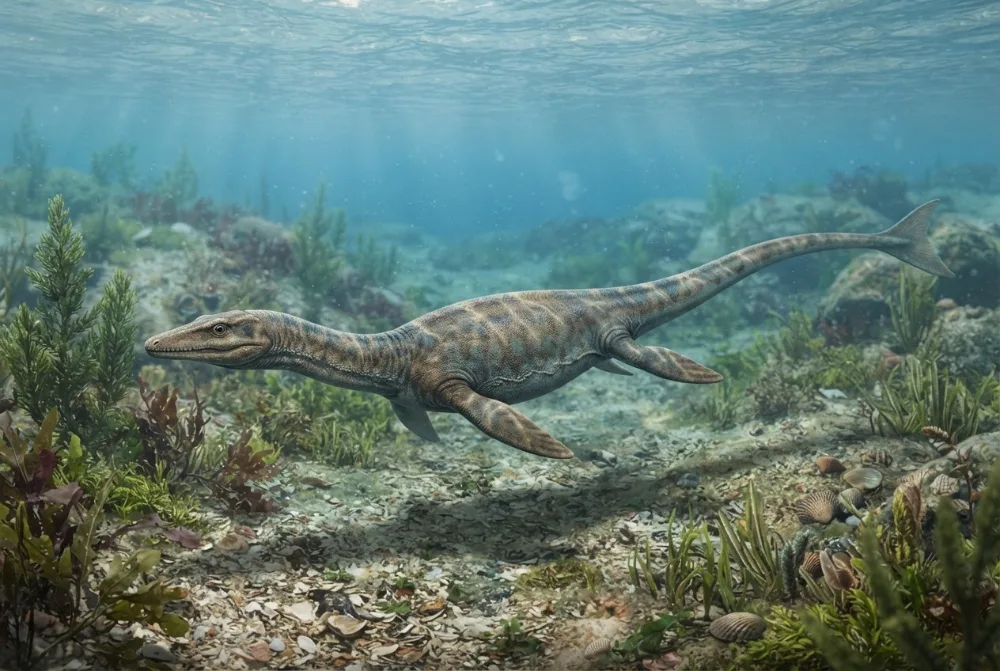
Honghesaurus
Honghesaurus was a small, lizard-like marine reptile that swam in the warm Tethys Ocean about 244 million years ago. It had an incredibly long tail, longer than any other pachypleurosaur, which helped it wiggle through the water like a fish.1
Berɛ bɛn na ɛtenaa ase?
Na ne kɛseɛ yɛ sɛn?
Na ne tenten yɛ sɛn?
Honghesaurus kɛseɛ yɛ sɛn sɛ wode toto WO ho a?
Akontaa nko ara wɔ wo browser mu. Yɛnkora biribiara so, na yɛmmfa biribiara nkɔ baabiara.
Na ɛyɛ ntɛm sɛn?


Nsɛm a ɛyɛ anigye
Honghesaurus had 121 vertebrae in total, including 69 in its tail, making it the longest-tailed pachypleurosaur known.1
Its long trunk and tail gave it an advantage in maneuverability and energy efficiency for swimming with side-to-side movements.1
It had a unique feature: two fossae (small pits) in its retroarticular process, a part of the jaw, which is not seen in any other pachypleurosaur.1
Its tail was mostly laterally compressed because it had only five pairs of caudal ribs, helping it move through water efficiently.1
Honghesaurus had 29 dorsal (back) vertebrae, more than most other pachypleurosaurs, which usually have 25 or fewer.1
It lived in a semi-enclosed sea called the Yangtze Sea, part of the eastern Palaeotethys Ocean, during the Middle Triassic.1
Ma dino ho animdefoɔ
- Nyansahu din
- Honghesaurus
- Obi a ɔtoo din
- Xu et al. 20222
- Kuo
- Ɛpo mu mmoa a wɔwea
- Abusua / kuo kɛseɛ
- Pachypleurosauridae2
- Nkyekyɛmu
- Sauropterygia2
- Abotan no mfeɛ
- mfeɛ ɔpepem 244 kɔsi 243 ()2
- Abotan nhyehyɛeɛ
- Guanling2
- Aman
- Kyaena2
- Fɔsil nkyerɛwee
- 1 wɔ The Paleobiology Database mu2
- Nhunumu
- The fossil was collected in 2021 during autumn fieldwork led by the first author, from the Guanling Formation in Luxi, Yunnan, China. It was named by Xu and colleagues in 2022.12
- Wɔda so gye ho akyinnye
- Scientists are still debating how Honghesaurus and other pachypleurosaurs are related to each other, and whether they all came from Europe or spread from the east.1
Baabi a nsɛm no firi
- A long-tailed marine reptile from China provides new insights into the Middle Triassic pachypleurosaur radiation | Scientific Reports (nature.com)
- Honghesaurus in The Paleobiology Database (CC BY 4.0): mfeɛ, mmeaeɛ, abotan nhyehyɛeɛ, nkyekyɛmu.
Asɛm biara a ɛwɔ krataafa yi so wɔ nɔma a ɛkyerɛ baabi a ɛfiri. Sɛ yɛfom biribi a, kafra, yɛyɛ dino dɔfoɔ, yɛnyɛ nyansahu nsɛmma krataa. Ka kyerɛ yɛn wɔ [email protected] na yɛbɛsiesie.
 Ɔkɔm de Rex! Dino Wiki yɛ agya bi adwuma a ɔyɛɛ maa ne babarima a ɔdɔ dino. Ɛyɛ kwa, dawurubɔ biara nni mu, akyidifoɔ biara nni mu. Mpanimfoɔ bɛtumi ama Rex aduane kakra, na aboa ama Dino Wiki atena intanɛt so.Ma Rex aduane
 Nothosaurus
 Placodus
 Lariosaurus
 Cyamodus
 Cymatosaurus
 Proneusticosaurus
 Chonespondylus
 Cymbospondylus
 Phalarodon
 Mixosaurus
 Chaohusaurus
 Chensaurus