 Woyɛ dino bɛn? Nsɛmmisa agoro
 Dino ko
 Dino mmirikatuo
 Dino agodie nketewa
 Stika nwoma
 Dino TOP nhyehyɛeɛ
 Ma me nwanwa!
Ichthyovenator
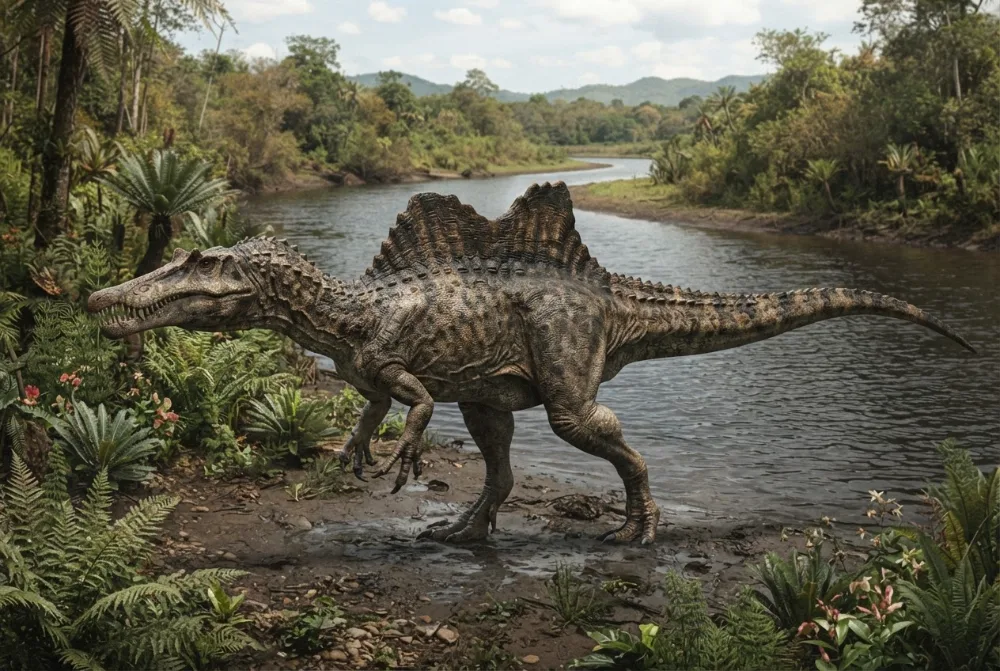
Ichthyovenator was a fish-eating dinosaur with a wavy sail on its back. It lived in what is now Laos during the Early Cretaceous period, about 120 to 113 million years ago. Its sail was shaped like two waves, which made it different from other sail-backed dinosaurs.1
Berɛ bɛn na ɛtenaa ase?
Na ne kɛseɛ yɛ sɛn?
Na ne tenten yɛ sɛn?
Na ne korɔn yɛ sɛn?
Na ne mu yɛ duru sɛn?
 ne tenten te sɛ kaa 2.5 a wɔde agyina toatoa so🍌ne tenten te sɛ kwadu 58 a wɔde abɔ toatoa so
 ne mu duru te sɛ nkraman 120🍉ne mu duru te sɛ watamɛlɔn 480🎒ne mu duru te sɛ sukuu klaas mũ 3 mu mmofra🐻❄️ne mu duru te sɛ polar bea 5🏃anka ɔbɛtumi atu mmirika mita 100 wɔ sikɛn 16 mu (onipa a ɔyɛ ntɛm sen biara hia 9.6)
Ichthyovenator kɛseɛ yɛ sɛn sɛ wode toto WO ho a?
Akontaa nko ara wɔ wo browser mu. Yɛnkora biribiara so, na yɛmmfa biribiara nkɔ baabiara.
Na ɛyɛ ntɛm sɛn?


Nsɛm a ɛyɛ anigye
Ichthyovenator had a sail on its back that was shaped like two waves, curving down over its hips. No other spinosaurid dinosaur had a sail like that.1
Its tail had unusually tall spines, which may have helped it swim like modern crocodiles.1
Ichthyovenator lived alongside sauropods, iguanodonts, turtles, and fish in a river or lake environment.1
The first fossils were found in 2010 in a red sandstone layer, all within an area smaller than 2 square metres.1
Ichthyovenator was the first definite spinosaurid dinosaur discovered in Asia.1
Its teeth were straight and without serrations, perfect for grabbing slippery fish.1
Nsɛm a wɔbisa bebree fa Ichthyovenator ho
?How big was Ichthyovenator?
Ichthyovenator was about 8.5 to 10.5 metres (28 to 34 feet) long and weighed around 2 to 2.4 tonnes (2.2 to 2.6 short tons).1
?What did Ichthyovenator eat?
Ichthyovenator mainly ate fish, as its name means 'fish hunter'. It may also have eaten small dinosaurs and pterosaurs.1
?Why did Ichthyovenator have a wavy sail?
Scientists think the wavy sail was used for display, like attracting mates or recognizing its own species, not for controlling body temperature.12
?Could Ichthyovenator swim?
Yes, it likely could swim. Its tail had unusually tall spines, similar to modern crocodiles, which may have helped it paddle through water.1
?Where was Ichthyovenator found?
Ichthyovenator was found in Laos, in the Savannakhet Basin, from a red sandstone layer in the Grès supérieurs Formation.1
?Is Ichthyovenator a dinosaur?
Yes, Ichthyovenator is a dinosaur. It is a type of spinosaurid theropod that lived during the Early Cretaceous period.1
Atosɛm sɛefoɔ
Atosɛm: Ichthyovenator was a slow, clumsy dinosaur that only ate fish.
Nokorɛ: Ichthyovenator was likely a good swimmer and may have also hunted small dinosaurs and pterosaurs, not just fish.1
Ma dino ho animdefoɔ
- Nyansahu din
- Ichthyovenator
- Obi a ɔtoo din
- Allain et al. 20123
- Kuo
- Spinosɔɔ
- Abusua / kuo kɛseɛ
- Spinosauridae3
- Nkyekyɛmu
- Theropoda > Spinosauridae3
- Abotan no mfeɛ
- mfeɛ ɔpepem 121 kɔsi 113 (Aptian)3
- Abotan nhyehyɛeɛ
- Grès supérieurs3
- Aman
- Laos3
- Fɔsil nkyerɛwee
- 1 wɔ The Paleobiology Database mu3
- Nhunumu
- Ichthyovenator was named in 2012 by paleontologist Ronan Allain and his team. The fossils were found in 2010 at Ban Kalum in Laos, and more bones were dug up in 2012.1
- Wɔda so gye ho akyinnye
- Scientists are not sure whether Ichthyovenator belonged to the spinosaurine or baryonychine group. Recent studies place it as a primitive spinosaurine.1
Baabi a nsɛm no firi
- Ichthyovenator (en.wikipedia.org)
- Ichthyovenator: The Sail-Backed Fish Hunter of Laos (smithsonianmag.com)
- Ichthyovenator in The Paleobiology Database (CC BY 4.0): mfeɛ, mmeaeɛ, abotan nhyehyɛeɛ, nkyekyɛmu.
Asɛm biara a ɛwɔ krataafa yi so wɔ nɔma a ɛkyerɛ baabi a ɛfiri. Sɛ yɛfom biribi a, kafra, yɛyɛ dino dɔfoɔ, yɛnyɛ nyansahu nsɛmma krataa. Ka kyerɛ yɛn wɔ [email protected] na yɛbɛsiesie.
 Ɔkɔm de Rex! Dino Wiki yɛ agya bi adwuma a ɔyɛɛ maa ne babarima a ɔdɔ dino. Ɛyɛ kwa, dawurubɔ biara nni mu, akyidifoɔ biara nni mu. Mpanimfoɔ bɛtumi ama Rex aduane kakra, na aboa ama Dino Wiki atena intanɛt so.Ma Rex aduane
 Spinosaurus
 Baryonyx
 Suchomimus
 Angaturama
 Camarillasaurus
 Ceratosuchops
 Stegosaurus
 Iguanodon
 Archaeopteryx
 Giganotosaurus
 Microraptor
 Deinonychus