 Woyɛ dino bɛn? Nsɛmmisa agoro
 Dino ko
 Dino mmirikatuo
 Dino agodie nketewa
 Stika nwoma
 Dino TOP nhyehyɛeɛ
 Ma me nwanwa!
Jormungandr
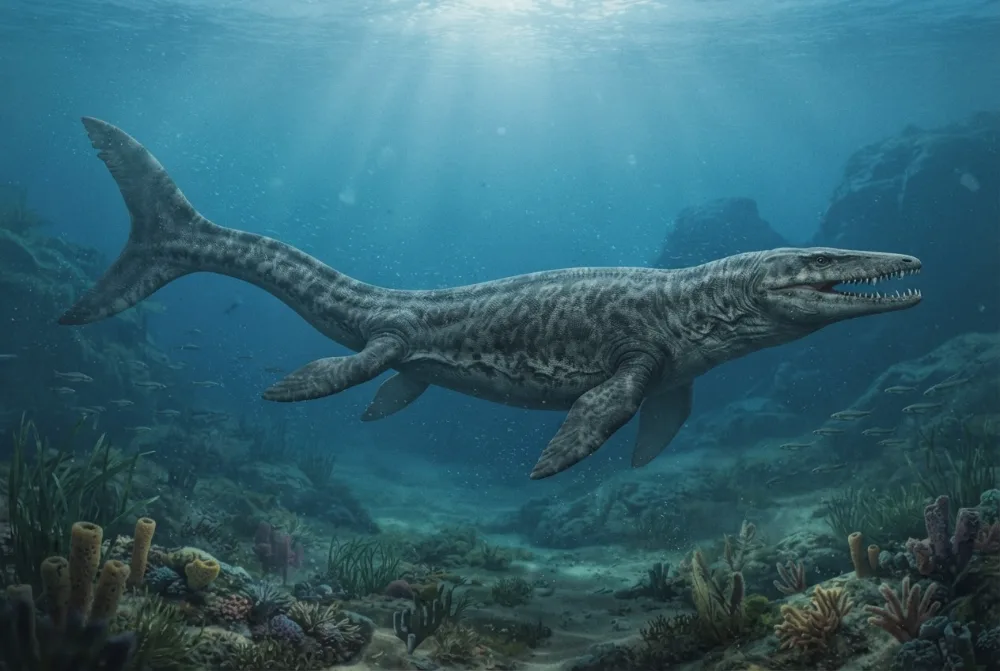
Jormungandr was a huge, swimming lizard that lived in the sea during the time of dinosaurs. It had a long body, strong jaws, and sharp teeth for catching fish and other sea creatures. This marine reptile was not a dinosaur, but a fierce predator of the ancient oceans.1
Berɛ bɛn na ɛtenaa ase?
Na ne kɛseɛ yɛ sɛn?
Na ne tenten yɛ sɛn?
 ne tenten te sɛ nkraman 7 firi hwene kɔsi dua🍌ne tenten te sɛ kwadu 41 a wɔde abɔ toatoa so🏊anka ɔbɛtumi aguare nsuguarebea kɛseɛ (50 m) tenten wɔ sikɛn 4.9 mu
Jormungandr kɛseɛ yɛ sɛn sɛ wode toto WO ho a?
Akontaa nko ara wɔ wo browser mu. Yɛnkora biribiara so, na yɛmmfa biribiara nkɔ baabiara.
Na ɛyɛ ntɛm sɛn?


Nsɛm a ɛyɛ anigye
Jormungandr's skull was about 72 centimeters (28 inches) long, and its lower jaw measured 80.8 centimeters (31.8 inches).1
The fossil was discovered in 2015 by a fossil collector named Deborah Shepherd near Walhalla, North Dakota.1
Jormungandr lived about 80 million years ago, during the Late Cretaceous period.1
The fourth dorsal vertebra of Jormungandr has marks that scientists think are bite marks from another mosasaur, possibly from a fight or scavenging.1
Jormungandr shares features with both primitive mosasaurs like Clidastes and more advanced ones like Mosasaurus, making it a 'missing link' in mosasaur evolution.1
The species name walhallaensis comes from the town of Walhalla, which is named after Valhalla, the hall of slain warriors in Norse mythology.1
Atosɛm sɛefoɔ
Atosɛm: Some people think Jormungandr was a dinosaur.
Nokorɛ: Jormungandr was a mosasaur, a type of marine lizard, not a dinosaur. Mosasaurs are reptiles but belong to a different group than dinosaurs.1
Ma dino ho animdefoɔ
- Nyansahu din
- Jormungandr
- Obi a ɔtoo din
- Zietlow et al. 20232
- Kuo
- Mosasɔɔ
- Abusua / kuo kɛseɛ
- Mosasauridae2
- Nkyekyɛmu
- Mosasauroidea2
- Abotan no mfeɛ
- mfeɛ ɔpepem 84 kɔsi 72 (Campanian)2
- Abotan nhyehyɛeɛ
- Pierre Shale2
- Aman
- Amerika2
- Fɔsil nkyerɛwee
- 1 wɔ The Paleobiology Database mu2
- Nhunumu
- The only known fossil of Jormungandr was found in 2015 by fossil collector Deborah Shepherd near Walhalla, North Dakota. It was later described and named by paleontologists Amelia Zietlow, Clint Boyd, and Nathan Van Vranken in 2023.1
- Wɔda so gye ho akyinnye
- Scientists are not sure if Jormungandr is a distinct genus or just a new species of Clidastes. Some researchers think it might be renamed Clidastes walhallaensis in the future.1
Baabi a nsɛm no firi
- Jormungandr walhallaensis (en.wikipedia.org)
- Jormungandr in The Paleobiology Database (CC BY 4.0): mfeɛ, mmeaeɛ, abotan nhyehyɛeɛ, nkyekyɛmu.
Asɛm biara a ɛwɔ krataafa yi so wɔ nɔma a ɛkyerɛ baabi a ɛfiri. Sɛ yɛfom biribi a, kafra, yɛyɛ dino dɔfoɔ, yɛnyɛ nyansahu nsɛmma krataa. Ka kyerɛ yɛn wɔ [email protected] na yɛbɛsiesie.
 Ɔkɔm de Rex! Dino Wiki yɛ agya bi adwuma a ɔyɛɛ maa ne babarima a ɔdɔ dino. Ɛyɛ kwa, dawurubɔ biara nni mu, akyidifoɔ biara nni mu. Mpanimfoɔ bɛtumi ama Rex aduane kakra, na aboa ama Dino Wiki atena intanɛt so.Ma Rex aduane
 Mosasaurus
 Prognathodon
 Tylosaurus
 Platecarpus
 Clidastes
 Globidens
 Tyrannosaurus
 Triceratops
 Velociraptor
 Spinosaurus
 Ankylosaurus
 Parasaurolophus