 Woyɛ dino bɛn? Nsɛmmisa agoro
 Dino ko
 Dino mmirikatuo
 Dino agodie nketewa
 Stika nwoma
 Dino TOP nhyehyɛeɛ
 Ma me nwanwa!
Berɛ bɛn na ɛtenaa ase?

Na ne kɛseɛ yɛ sɛn?
Na ne tenten yɛ sɛn?
 ne tenten te sɛ fie agyinamoa 2.5 firi hwene kɔsi dua🍌ne tenten te sɛ kwadu 7 a wɔde abɔ toatoa so🏃anka ɔbɛtumi atu mmirika mita 100 wɔ sikɛn 10 mu (onipa a ɔyɛ ntɛm sen biara hia 9.6)
Koreaceratops kɛseɛ yɛ sɛn sɛ wode toto WO ho a?
Akontaa nko ara wɔ wo browser mu. Yɛnkora biribiara so, na yɛmmfa biribiara nkɔ baabiara.
Na ɛyɛ ntɛm sɛn?


Nsɛm a ɛyɛ anigye
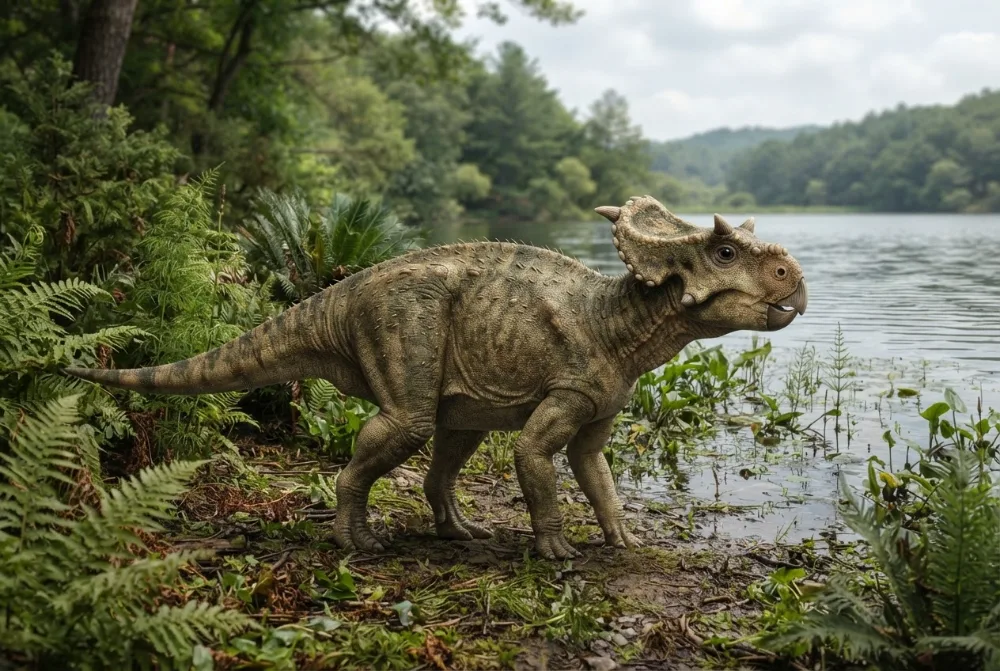
Koreaceratops had very tall spines on its tail bones, some over five times the height of the bone they attached to.12
Scientists think those tall tail spines might have helped Koreaceratops swim, like a paddle or a fin.12
The only known fossil of Koreaceratops was found in a sandstone block that had been used to build a dam.1
The type specimen was about eight years old when it died and had not yet reached full size or maturity.1
Koreaceratops lived in a semiarid environment, like a dry or dusty landscape.1
Nsɛm a wɔbisa bebree fa Koreaceratops ho
?How big was Koreaceratops?
About 1.3 metres (4.3 feet) long, based on an estimate by paleontologist Thomas Holtz.1
?Could Koreaceratops swim?
Maybe! Scientists think its very tall tail spines might have helped it swim like a paddle, but the evidence is not certain.31
?What did Koreaceratops eat?
Koreaceratops was a plant-eater, like other ceratopsian dinosaurs.1
Ma dino ho animdefoɔ
- Nyansahu din
- Koreaceratops
- Obi a ɔtoo din
- Lee et al. 20104
- Kuo
- Dino a wɔwɔ mmɛn
- Abusua / kuo kɛseɛ
- Leptoceratopsidae4
- Nkyekyɛmu
- Ornithischia > Ceratopsia4
- Abotan no mfeɛ
- mfeɛ ɔpepem 113 kɔsi 100 (Albian)4
- Abotan nhyehyɛeɛ
- Tando beds4
- Aman
- Korea Anaafoɔ4
- Fɔsil nkyerɛwee
- 1 wɔ The Paleobiology Database mu4
- Nhunumu
- Koreaceratops was named in 2011 by Yuong-Nam Lee and colleagues. The fossil was first noticed by a public official in 2008, after it had been built into a dam in Hwaseong City, South Korea.1
- Wɔda so gye ho akyinnye
- Scientists are not sure exactly where Koreaceratops fits on the ceratopsian family tree. Some studies place it near Archaeoceratops, while a 2022 study suggests it is closer to Protoceratops.1
Baabi a nsɛm no firi
- Koreaceratops (en.wikipedia.org)
- The first ceratopsian dinosaur from South Korea - Seoul National University (snu.elsevierpure.com)
- Koreaceratops—A Swimming Ceratopsian? (smithsonianmag.com)
- Koreaceratops in The Paleobiology Database (CC BY 4.0): mfeɛ, mmeaeɛ, abotan nhyehyɛeɛ, nkyekyɛmu.
Asɛm biara a ɛwɔ krataafa yi so wɔ nɔma a ɛkyerɛ baabi a ɛfiri. Sɛ yɛfom biribi a, kafra, yɛyɛ dino dɔfoɔ, yɛnyɛ nyansahu nsɛmma krataa. Ka kyerɛ yɛn wɔ [email protected] na yɛbɛsiesie.
 Ɔkɔm de Rex! Dino Wiki yɛ agya bi adwuma a ɔyɛɛ maa ne babarima a ɔdɔ dino. Ɛyɛ kwa, dawurubɔ biara nni mu, akyidifoɔ biara nni mu. Mpanimfoɔ bɛtumi ama Rex aduane kakra, na aboa ama Dino Wiki atena intanɛt so.Ma Rex aduane
 Triceratops
 Protoceratops
 Ojoceratops
 Tatankaceratops
 Psittacosaurus
 Centrosaurus
 Stegosaurus
 Iguanodon
 Archaeopteryx
 Giganotosaurus
 Microraptor
 Deinonychus