 Woyɛ dino bɛn? Nsɛmmisa agoro
 Dino ko
 Dino mmirikatuo
 Dino agodie nketewa
 Stika nwoma
 Dino TOP nhyehyɛeɛ
 Ma me nwanwa!
Kourisodon
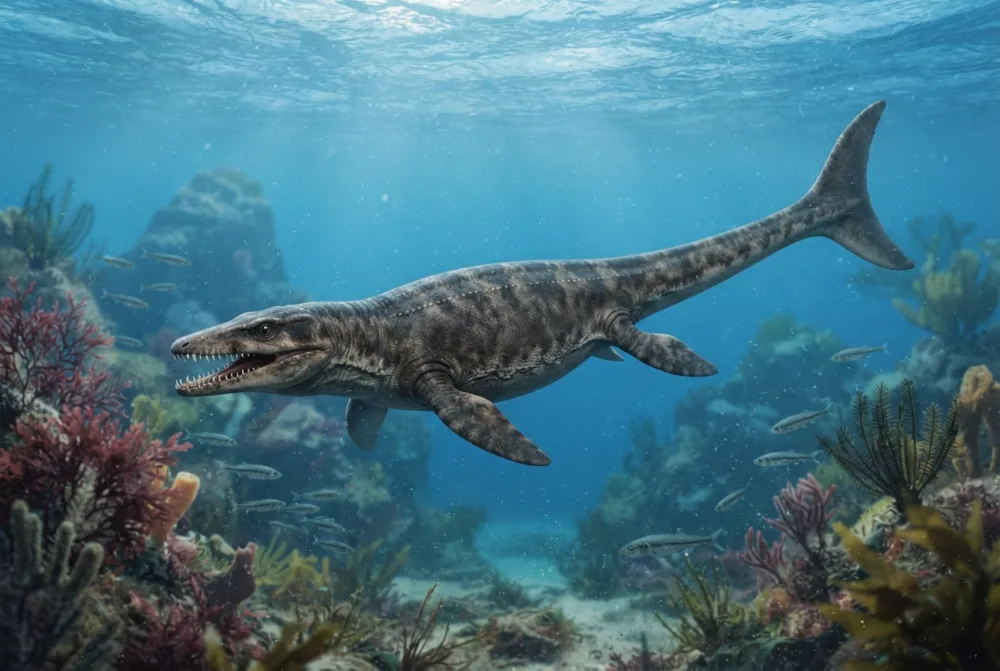
Kourisodon was a small, fast-swimming marine lizard that lived in the late Cretaceous seas. It had sharp, blade-like teeth for slicing through fish and other prey. Even though it was a mosasaur, not a dinosaur, it was a fierce predator in its ocean home.1
Berɛ bɛn na ɛtenaa ase?
Na ne kɛseɛ yɛ sɛn?
Na ne tenten yɛ sɛn?
 ne tenten te sɛ nkraman 4 firi hwene kɔsi dua🍌ne tenten te sɛ kwadu 21 a wɔde abɔ toatoa so🏊anka ɔbɛtumi aguare nsuguarebea kɛseɛ (50 m) tenten wɔ sikɛn 4.9 mu
Kourisodon kɛseɛ yɛ sɛn sɛ wode toto WO ho a?
Akontaa nko ara wɔ wo browser mu. Yɛnkora biribiara so, na yɛmmfa biribiara nkɔ baabiara.
Na ɛyɛ ntɛm sɛn?


Nsɛm a ɛyɛ anigye
Kourisodon was a small mosasaur, only about 3.75 metres (12.3 feet) long, much smaller than giants like Mosasaurus.1
Its name means 'razor tooth' in Greek, because its teeth were shaped like blades.1
Fossils of Kourisodon have been found in both Canada and Japan, showing it lived in the Pacific Ocean.12
The first Kourisodon fossil was discovered along the Puntledge River on Vancouver Island, and the species was named K. puntledgensis after that river.1
A life-sized replica of the Puntledge River specimen is on display at the Canadian Fossil Discovery Centre in Morden, Manitoba.1
Kourisodon lived alongside long-necked plesiosaurs (elasmosaurids), turtles, and other mosasaurs, but no short-necked plesiosaurs (polycotylids) were found in its Canadian home.1
Ma dino ho animdefoɔ
- Nyansahu din
- Kourisodon
- Obi a ɔtoo din
- Nicholls and Meckert 20023
- Kuo
- Mosasɔɔ
- Abusua / kuo kɛseɛ
- Mosasauridae3
- Nkyekyɛmu
- Mosasauroidea3
- Abotan no mfeɛ
- mfeɛ ɔpepem 86 kɔsi 66 (Santonian / Maastrichtian)3
- Abotan nhyehyɛeɛ
- Pender, Hiketa, Mutsuo3
- Aman
- Gyapan, Kanada3
- Fɔsil nkyerɛwee
- 3 wɔ The Paleobiology Database mu3
- Nhunumu
- Kourisodon was named in 2002 by paleontologists Elizabeth Nicholls and Dirk Meckert, based on a fossil found on Vancouver Island, Canada. The type species is K. puntledgensis.13
- Wɔda so gye ho akyinnye
- Scientists are not sure if the Japanese fossils belong to a second, unnamed species of Kourisodon, because they have slightly different teeth.1
Baabi a nsɛm no firi
- Kourisodon (en.wikipedia.org)
- Kourisodon sp. (Mosasauridae) from the Upper Cretaceous Izumi Group (Upper Campanian) of Kanewari, Tawa, Sanuki City, Kagawa Prefecture, Southwest Japan (gbank.gsj.jp)
- Kourisodon in The Paleobiology Database (CC BY 4.0): mfeɛ, mmeaeɛ, abotan nhyehyɛeɛ, nkyekyɛmu.
Asɛm biara a ɛwɔ krataafa yi so wɔ nɔma a ɛkyerɛ baabi a ɛfiri. Sɛ yɛfom biribi a, kafra, yɛyɛ dino dɔfoɔ, yɛnyɛ nyansahu nsɛmma krataa. Ka kyerɛ yɛn wɔ [email protected] na yɛbɛsiesie.
 Ɔkɔm de Rex! Dino Wiki yɛ agya bi adwuma a ɔyɛɛ maa ne babarima a ɔdɔ dino. Ɛyɛ kwa, dawurubɔ biara nni mu, akyidifoɔ biara nni mu. Mpanimfoɔ bɛtumi ama Rex aduane kakra, na aboa ama Dino Wiki atena intanɛt so.Ma Rex aduane
 Mosasaurus
 Prognathodon
 Tylosaurus
 Platecarpus
 Clidastes
 Globidens
 Tyrannosaurus
 Triceratops
 Velociraptor
 Spinosaurus
 Ankylosaurus
 Parasaurolophus