 Woyɛ dino bɛn? Nsɛmmisa agoro
 Dino ko
 Dino mmirikatuo
 Dino agodie nketewa
 Stika nwoma
 Dino TOP nhyehyɛeɛ
 Ma me nwanwa!
Kunbarrasaurus
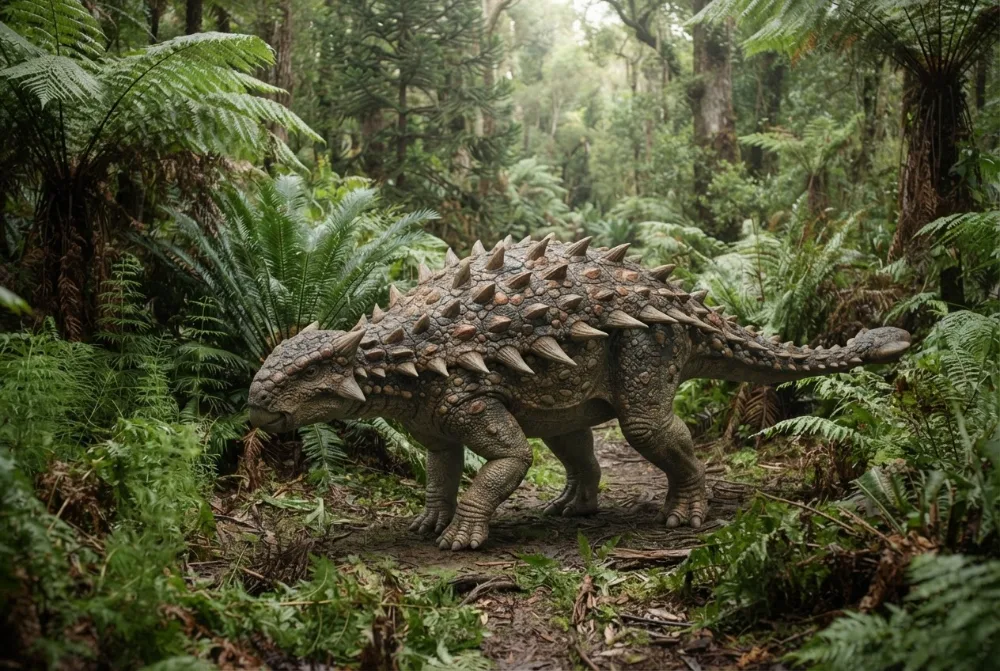
Kunbarrasaurus was a small, armoured dinosaur that walked on four legs and munched on plants. It had bony plates and spikes all over its body, like a walking tank. This dinosaur lived in Australia during the Early Cretaceous, about 105 million years ago.13
Berɛ bɛn na ɛtenaa ase?
Na ne kɛseɛ yɛ sɛn?
Na ne tenten yɛ sɛn?
Na ne korɔn yɛ sɛn?
nsusuiɛ
 ne tenten te sɛ nkraman 4 firi hwene kɔsi dua🍌ne tenten te sɛ kwadu 19 a wɔde abɔ toatoa so🏃anka ɔbɛtumi atu mmirika mita 100 wɔ sikɛn 16 mu (onipa a ɔyɛ ntɛm sen biara hia 9.6)
Kunbarrasaurus kɛseɛ yɛ sɛn sɛ wode toto WO ho a?
Akontaa nko ara wɔ wo browser mu. Yɛnkora biribiara so, na yɛmmfa biribiara nkɔ baabiara.
Na ɛyɛ ntɛm sɛn?


Nsɛm a ɛyɛ anigye
Kunbarrasaurus is one of the most complete armoured dinosaurs ever found, with most of its skeleton and skull preserved.1
Its gut contents show it ate fibrous plant parts, seeds, and fruiting bodies, and it probably chopped food in its mouth instead of using stomach stones.1
The dinosaur had a ring of scutes around its neck, and its body was covered with small, keeled plates and spikes.1
Kunbarrasaurus had a very large inner ear, unlike any other dinosaur known, which may have helped with balance or hearing.2
The fossil was found in marine rocks, so the dinosaur may have washed out to sea after death.1
It is the second genus of armoured dinosaur from Australia, and its name means 'shield lizard' in the local Aboriginal language.1
Nsɛm a wɔbisa bebree fa Kunbarrasaurus ho
?How big was Kunbarrasaurus?
About 2.5 to 3.5 metres long. That is roughly the size of a large motorcycle.1
?What did Kunbarrasaurus eat?
It ate plants, including fibrous leaves, seeds and fruiting bodies. Scientists know this because its last meal was preserved inside its fossil.1
?Did Kunbarrasaurus have a tail club?
Probably not. Its tail is not fully preserved, but some of its relatives had a flat, blade-like structure at the tail tip instead of a club.1
?Where was Kunbarrasaurus found?
In Queensland, Australia, near Richmond. The fossil was discovered in marine rocks, so the dinosaur may have washed out to sea after death.1
?When did Kunbarrasaurus live?
It lived during the Early Cretaceous, about 105 million years ago.1
?Is Kunbarrasaurus a dinosaur?
Yes, it is a small armoured dinosaur called an ankylosaurian.1
Atosɛm sɛefoɔ
Atosɛm: Kunbarrasaurus used its tail like a club to defend itself.
Nokorɛ: There is no evidence of a tail club in Kunbarrasaurus. Its tail had triangular plates and scutes, but no club.1
Ma dino ho animdefoɔ
- Nyansahu din
- Kunbarrasaurus
- Obi a ɔtoo din
- Leahey et al. 20153
- Kuo
- Dino a wɔwɔ akyɛm
- Abusua / kuo kɛseɛ
- Parankylosauria3
- Nkyekyɛmu
- Ornithischia > Ankylosauria > Thyreophora3
- Abotan no mfeɛ
- mfeɛ ɔpepem 106 kɔsi 100 (Albian)3
- Abotan nhyehyɛeɛ
- Toolebuc3
- Aman
- Ɔstrelia3
- Fɔsil nkyerɛwee
- 2 wɔ The Paleobiology Database mu3
- Nhunumu
- The skeleton was found in 1989 by Ian Ievers on Marathon Station in Queensland, Australia. It was named Kunbarrasaurus ieversi in 2015 by scientists including Lucy Leahey.1
- Wɔda so gye ho akyinnye
- Scientists are still debating whether Kunbarrasaurus is a primitive or derived ankylosaur, because it has a mix of both ancient and advanced features.2
Baabi a nsɛm no firi
- Kunbarrasaurus (en.wikipedia.org)
- doi:10.7717/peerj.1475 (people.ohio.edu)
- Kunbarrasaurus in The Paleobiology Database (CC BY 4.0): mfeɛ, mmeaeɛ, abotan nhyehyɛeɛ, nkyekyɛmu.
Asɛm biara a ɛwɔ krataafa yi so wɔ nɔma a ɛkyerɛ baabi a ɛfiri. Sɛ yɛfom biribi a, kafra, yɛyɛ dino dɔfoɔ, yɛnyɛ nyansahu nsɛmma krataa. Ka kyerɛ yɛn wɔ [email protected] na yɛbɛsiesie.
 Ɔkɔm de Rex! Dino Wiki yɛ agya bi adwuma a ɔyɛɛ maa ne babarima a ɔdɔ dino. Ɛyɛ kwa, dawurubɔ biara nni mu, akyidifoɔ biara nni mu. Mpanimfoɔ bɛtumi ama Rex aduane kakra, na aboa ama Dino Wiki atena intanɛt so.Ma Rex aduane
 Ankylosaurus
 Sauropelta
 Pinacosaurus
 Scutellosaurus
 Struthiosaurus
 Euoplocephalus
 Stegosaurus
 Iguanodon
 Archaeopteryx
 Giganotosaurus
 Microraptor
 Deinonychus