 Woyɛ dino bɛn? Nsɛmmisa agoro
 Dino ko
 Dino mmirikatuo
 Dino agodie nketewa
 Stika nwoma
 Dino TOP nhyehyɛeɛ
 Ma me nwanwa!
Berɛ bɛn na ɛtenaa ase?

Na ne kɛseɛ yɛ sɛn?
Na ne tenten yɛ sɛn?
Na ne korɔn yɛ sɛn?
nsusuiɛ
Na ne mu yɛ duru sɛn?
 ne tenten te sɛ nkraman 4 firi hwene kɔsi dua🍌ne tenten te sɛ kwadu 25 a wɔde abɔ toatoa so🍉ne mu duru te sɛ watamɛlɔn 32🧸ne mu duru te sɛ nkɔkɔaa sukuu mmofra 8🎒ne mu duru te sɛ sukuu mmofra 5🏃anka ɔbɛtumi atu mmirika mita 100 wɔ sikɛn 7.2 mu (onipa a ɔyɛ ntɛm sen biara hia 9.6)
Lourinhanosaurus kɛseɛ yɛ sɛn sɛ wode toto WO ho a?
Akontaa nko ara wɔ wo browser mu. Yɛnkora biribiara so, na yɛmmfa biribiara nkɔ baabiara.
Na ɛyɛ ntɛm sɛn?


Nsɛm a ɛyɛ anigye
Lourinhanosaurus was the first non-bird theropod dinosaur ever found with gastroliths, or stomach stones. Scientists found 32 smooth pebbles in its rib cage.21
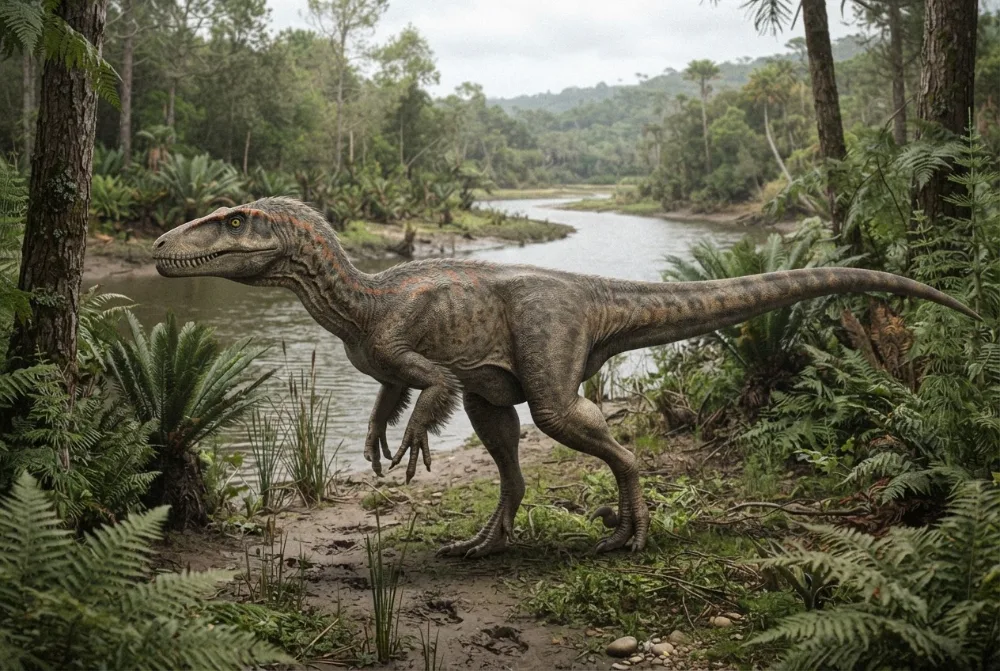
The holotype specimen was a sub-adult, about 14 to 17 years old when it died. It measured about 4.5 metres (15 feet) long and weighed around 160 kilograms (350 pounds).1
Its name means 'Lourinhã lizard', after the town of Lourinhã in Portugal where its fossils were found. The species name antunesi honors Portuguese paleontologist Miguel Telles Antunes.12
The first fossils were discovered in 1982, but the dinosaur was not named and described until 1998 by Portuguese paleontologist Octávio Mateus.1
Lourinhanosaurus lived alongside other large predators like Torvosaurus gurneyi, Allosaurus europaeus, and Ceratosaurus in the Lourinhã Formation.1
Scientists are not sure exactly which group of theropods Lourinhanosaurus belongs to. It has been placed in Allosauroidea, Carnosauria, Megalosaurinidae, Sinraptoridae, and even Coelurosauria by different experts.3
Nsɛm a wɔbisa bebree fa Lourinhanosaurus ho
?How big was Lourinhanosaurus?
About 4.5 metres (15 feet) long and weighed around 160 kilograms (350 pounds). That is about as long as a small car.1
?What did Lourinhanosaurus eat?
It was a meat-eater that probably hunted other dinosaurs. It also swallowed stones called gastroliths to help grind up food in its stomach.12
?Did Lourinhanosaurus have feathers?
Nobody knows for sure. No feathers have been found with its fossils, and scientists are not sure which group of theropods it belongs to.1
?When did Lourinhanosaurus live?
It lived during the Late Jurassic Period, about 152 to 145 million years ago.1
?Where was Lourinhanosaurus found?
Its fossils were found near the town of Lourinhã in Portugal, at a place called Peralta.12
?Is Lourinhanosaurus a dinosaur?
Yes, it is a carnivorous theropod dinosaur.1
Ma dino ho animdefoɔ
- Nyansahu din
- Lourinhanosaurus
- Obi a ɔtoo din
- Mateus 19984
- Kuo
- Dino a wɔwe nam
- Abusua / kuo kɛseɛ
- Coelurosauria4
- Nkyekyɛmu
- Theropoda4
- Abotan no mfeɛ
- mfeɛ ɔpepem 152 kɔsi 145 (Kimmeridgian / Tithonian)4
- Abotan nhyehyɛeɛ
- Lourinhã4
- Aman
- Pɔtugal4
- Fɔsil nkyerɛwee
- 2 wɔ The Paleobiology Database mu4
- Nhunumu
- The first remains of Lourinhanosaurus were found in 1982 at Peralta, near Lourinhã, Portugal. Portuguese paleontologist Octávio Mateus named and described the dinosaur in 1998, naming the species L. antunesi after paleontologist Miguel Telles Antunes.12
- Wɔda so gye ho akyinnye
- Scientists still debate which group of theropods Lourinhanosaurus belongs to. It has been classified as an allosauroid, a carnosaur, a megalosaurinid, a sinraptorid, and even a coelurosaur.3
Baabi a nsɛm no firi
- Lourinhanosaurus (en.wikipedia.org)
- Lourinhanosaurus antunesi, A New Upper Jurassic Allosauroid (Dinosauria: Theropoda) from Lourinhã, Portugal (docentes.fct.unl.pt)
- PBDB Taxon (paleobiodb.org)
- Lourinhanosaurus in The Paleobiology Database (CC BY 4.0): mfeɛ, mmeaeɛ, abotan nhyehyɛeɛ, nkyekyɛmu.
Asɛm biara a ɛwɔ krataafa yi so wɔ nɔma a ɛkyerɛ baabi a ɛfiri. Sɛ yɛfom biribi a, kafra, yɛyɛ dino dɔfoɔ, yɛnyɛ nyansahu nsɛmma krataa. Ka kyerɛ yɛn wɔ [email protected] na yɛbɛsiesie.
 Ɔkɔm de Rex! Dino Wiki yɛ agya bi adwuma a ɔyɛɛ maa ne babarima a ɔdɔ dino. Ɛyɛ kwa, dawurubɔ biara nni mu, akyidifoɔ biara nni mu. Mpanimfoɔ bɛtumi ama Rex aduane kakra, na aboa ama Dino Wiki atena intanɛt so.Ma Rex aduane
 Allosaurus
 Carnotaurus
 Dilophosaurus
 Giganotosaurus
 Compsognathus
 Paronychodon
 Brachiosaurus
 Diplodocus
 Brontosaurus
 Camarasaurus
 Morosaurus
 Apatosaurus