 Woyɛ dino bɛn? Nsɛmmisa agoro
 Dino ko
 Dino mmirikatuo
 Dino agodie nketewa
 Stika nwoma
 Dino TOP nhyehyɛeɛ
 Ma me nwanwa!
Berɛ bɛn na ɛtenaa ase?

Na ne kɛseɛ yɛ sɛn?
Na ne tenten yɛ sɛn?
Na ne korɔn yɛ sɛn?
nsusuiɛ
Na ne mu yɛ duru sɛn?
 ne tenten te sɛ kaa 2 a wɔde agyina toatoa so🍌ne tenten te sɛ kwadu 56 a wɔde abɔ toatoa so
 ne mu duru bɛyɛ sɛ ɔsono🍉ne mu duru te sɛ watamɛlɔn 1000🎒ne mu duru te sɛ sukuu klaas mũ 6 mu mmofra🐻❄️ne mu duru te sɛ polar bea 11🏃anka ɔbɛtumi atu mmirika mita 100 wɔ sikɛn 13 mu (onipa a ɔyɛ ntɛm sen biara hia 9.6)
Maip kɛseɛ yɛ sɛn sɛ wode toto WO ho a?
Akontaa nko ara wɔ wo browser mu. Yɛnkora biribiara so, na yɛmmfa biribiara nkɔ baabiara.
Na ɛyɛ ntɛm sɛn?


Nsɛm a ɛyɛ anigye
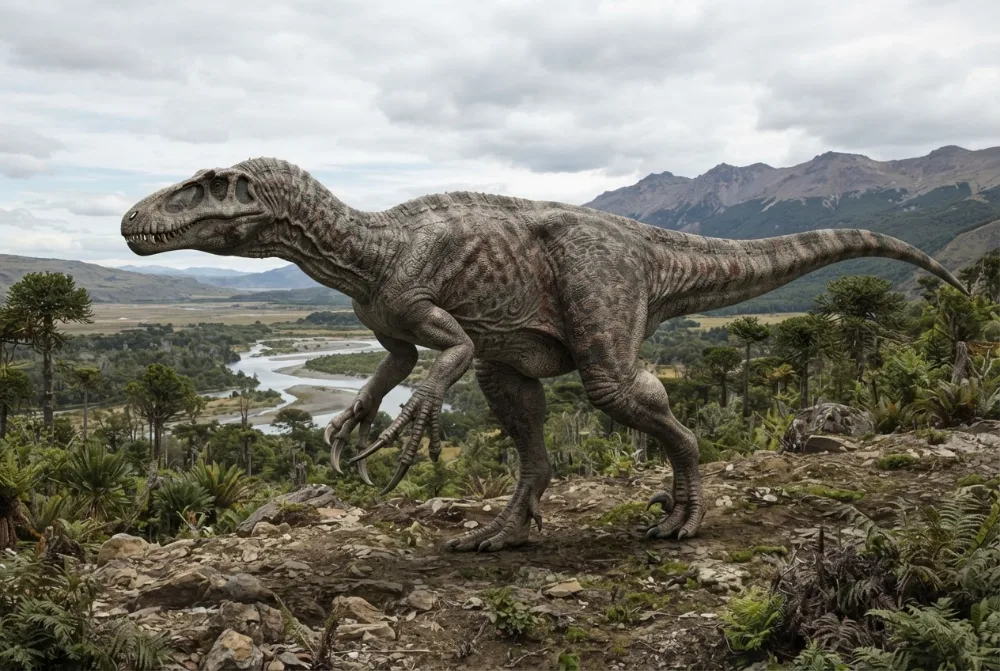
Maip is the biggest megaraptorid dinosaur ever found, reaching about 9 to 10 metres long.1
Its name comes from a monster in the mythology of the Aonikenk people that kills with cold wind.1
Maip had a very wide chest, more than 1.2 metres across, which is why its species name is 'macrothorax' meaning 'big chest'.1
It lived near the end of the Age of Dinosaurs, about 72 to 66 million years ago.6
Maip is known from a partial skeleton including many back bones, ribs, and part of the shoulder.1
Its teeth were short, strongly curved, and shaped like an '8' in cross-section.2
Nsɛm a wɔbisa bebree fa Maip ho
?How big was Maip?
Maip was about 9 to 10 metres (30 to 33 feet) long and weighed over 1.3 metric tons (1.4 short tons). It is the largest known megaraptorid.54
?What did Maip eat?
Maip was a meat-eater. It used its long arms and 35-centimetre-long claws to grab and tear apart its prey, and its teeth were sharp but small.4
?When did Maip live?
Maip lived near the end of the Age of Dinosaurs, about 72 to 66 million years ago, during the Late Cretaceous period.5
?Where was Maip found?
Maip's fossils were discovered on a farm called La Anita, about 30 kilometres west of El Calafate in Santa Cruz, Argentina.5
?Why is it called Maip?
Maip is named after a monster from Aonikenk mythology that kills with cold wind. The name was chosen because the dinosaur lived in a cold, mountainous area.54
?Did Maip have feathers?
No direct feather fossils have been found for Maip, but it is a coelurosaur, a group that includes feathered dinosaurs. Scientists are not sure if it had feathers.5
?Was Maip bigger than T. rex?
No, Maip was smaller than T. rex. T. rex could reach about 12 metres (40 feet) long and weigh over 8 metric tons, while Maip was about 9 to 10 metres long and weighed over 1.3 metric tons.5
?How fast could Maip run?
Scientists do not know exactly how fast Maip could run, but its long legs and light, hollow bones suggest it was a relatively agile predator.4
Ma dino ho animdefoɔ
- Nyansahu din
- Maip
- Obi a ɔtoo din
- Aranciaga Rolando et al. 20226
- Kuo
- Dino a wɔwe nam
- Abusua / kuo kɛseɛ
- Megaraptoridae6
- Nkyekyɛmu
- Theropoda > Megaraptora6
- Abotan no mfeɛ
- mfeɛ ɔpepem 72 kɔsi 66 (Maastrichtian)6
- Abotan nhyehyɛeɛ
- Chorrillo6
- Aman
- Argentina6
- Fɔsil nkyerɛwee
- 1 wɔ The Paleobiology Database mu6
- Nhunumu
- Maip was named in 2022 by a team of scientists led by Alexis Aranciaga Rolando. The fossils were found at La Anita Farm in southern Argentina.61
- Wɔda so gye ho akyinnye
- Scientists are not sure whether megaraptorids like Maip are more closely related to allosauroids or to coelurosaurs.2
Baabi a nsɛm no firi
- A large Megaraptoridae (Theropoda: Coelurosauria) from Upper Cretaceous (Maastrichtian) of Patagonia, Argentina (dinodata.de)
- A large Megaraptoridae (Theropoda: Coelurosauria) from Upper Cretaceous (Maastrichtian) of Patagonia, Argentina - PubMed (pubmed.ncbi.nlm.nih.gov)
- Maip (Wikipedia) (Wikipedia)
- Maip: the huge carnivorous predator that was one of the last dinosaurs before extinction | CONICET (conicet.gov.ar)
- Maip (en.wikipedia.org)
- Maip in The Paleobiology Database (CC BY 4.0): mfeɛ, mmeaeɛ, abotan nhyehyɛeɛ, nkyekyɛmu.
Asɛm biara a ɛwɔ krataafa yi so wɔ nɔma a ɛkyerɛ baabi a ɛfiri. Sɛ yɛfom biribi a, kafra, yɛyɛ dino dɔfoɔ, yɛnyɛ nyansahu nsɛmma krataa. Ka kyerɛ yɛn wɔ [email protected] na yɛbɛsiesie.
 Ɔkɔm de Rex! Dino Wiki yɛ agya bi adwuma a ɔyɛɛ maa ne babarima a ɔdɔ dino. Ɛyɛ kwa, dawurubɔ biara nni mu, akyidifoɔ biara nni mu. Mpanimfoɔ bɛtumi ama Rex aduane kakra, na aboa ama Dino Wiki atena intanɛt so.Ma Rex aduane
 Allosaurus
 Carnotaurus
 Dilophosaurus
 Giganotosaurus
 Compsognathus
 Paronychodon
 Tyrannosaurus
 Triceratops
 Velociraptor
 Spinosaurus
 Ankylosaurus
 Parasaurolophus